
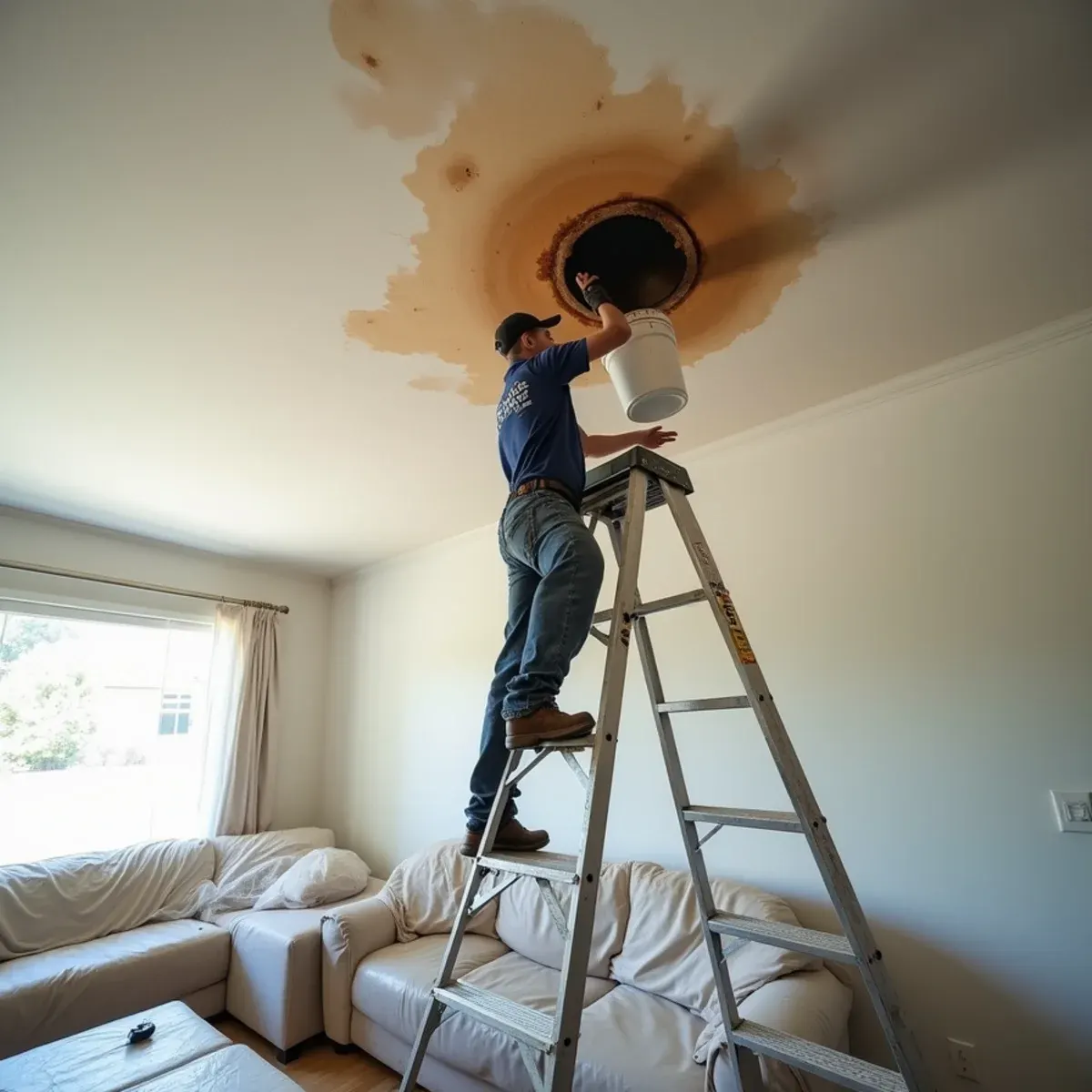
What works on an Olinda Ranch or Blackstone roof is close to useless on a small 1920s house near downtown Brea, and the two are a five-minute drive apart. The hillside tracts from the 1990s and 2000s carry concrete or clay tile over trussed attics with real headroom, ridge venting and long uninterrupted planes, so a leak there is usually a discrete underlayment or flashing failure we can isolate. Downtown, the oil-town cottages have shallow rafter attics you cross on your stomach, skip sheathing, and composition shingle stacked over whatever was already there.
Carbon Canyon changes the weather on the north side of the city. Storms arrive concentrated, wind runs up the canyon and drives rain at the roof from below the angle it was designed to shed, and the oaks and eucalyptus above Carbon Canyon Regional Park load valleys and crickets with debris that nothing washes off. A roof that handles straight-down rain without complaint will leak in a canyon storm. That is also why an inspection on a clear day can honestly come back inconclusive, and we would rather say so than guess.
What Brea Changes About Ceiling & Roof Leaks
1Canyon wind drives rain under tile
Up toward Carbon Canyon, rain does not fall so much as get pushed. Water travels uphill under the tile course, past head laps and around ridge closures that work fine in normal weather. When we water-test these roofs we test at an angle and from below the entry, because a garden hose run straight down the field will not reproduce what the canyon does in a storm.
2Downtown attics you cannot stand in
The early-century houses near downtown Brea have rafter attics with perhaps two feet of clearance and no walkboards. Equipment placement is limited, and so is how far we can safely track a leak from inside. On those houses we do more from the exterior and use small ceiling inspection openings in closets, which is a slower way to work and worth explaining before we start.
3Canyon oaks and eucalyptus load the valleys
Eucalyptus bark and oak litter behave differently than the leaf drop in flat Orange County neighborhoods. It mats, holds water like a sponge, and does not blow off a tile roof. Debris packed in a valley or behind a chimney cricket backs water above the flashing line, and that is where a large share of our hillside Brea ceiling leaks start.
How the Work Runs
The method is the same one we use on every ceiling & roof leaks job, documented to the IICRC S500:2025 standard. Here it is in short — the full ceiling & roof leak water damage process explains each stage in detail.
- Emergency tarping or temporary dry-in
- Controlled relief of trapped water
- Trace the intrusion to its real source
- Remove wet insulation and compromised drywall
- Dry the attic and the ceiling assembly
- Restore the ceiling completely
The Brea Background Worth Knowing
Brea's hillside tracts were designed to handle rain. Terrace drains catch runoff partway up a slope, v-ditches carry it around the toe, area drains take the flat yard, and everything ties into a system that moves water past the house rather than through it. The design works. What fails is maintenance. Over a dry summer those inlets fill with eucalyptus leaf litter, decomposed granite, and whatever the wind brought down the canyon, and nobody looks at them because they sit on a slope behind a fence. The first hard storm of the season finds every one that is blocked.
There is more on the housing stock, drainage and plumbing history of this city on our water damage restoration in Brea page.
Brea at a glance
- Dominant construction era
- 1920–2005
- Foundation type
- mixed on grade
- Supply piping found here
- galvanized steel, under-slab copper, PEX in newer hillside tracts
- Drain line materials
- cast iron, clay, ABS
- Terrain and water table
- hillside-mixed, deep water table
- Most common local failure
- canyon and hillside runoff overwhelming slope drainage during concentrated storms
- Highest-value local prevention
- keeping Carbon Canyon-side slope drains, v-ditches and downspout extensions genuinely clear
What It Costs in Brea
We do not quote a number over the phone before seeing the property — anyone who does is guessing. The variables that actually move the price on a ceiling & roof leaks job are how long the leak has been active, ceiling texture and finish, attic access and insulation type, and they are broken down in full on the ceiling & roof leak water damage page. The assessment and the written estimate are free anywhere in Brea, day or night, with no obligation.
Ceiling & Roof Leaks Questions from Brea Homeowners
That happens on the canyon side more than anywhere else we work, and we would rather set the expectation up front. Some of these roofs only leak when wind is driving rain up under the covering at an angle a hose cannot reproduce. When a dry inspection is inconclusive, we say so, install monitoring where the stain is, and where it is safe we ask to come back during weather. Guessing at an entry point costs you a repair that does not fix anything.
Clear the room and keep everyone out from underneath it, including pets. Move furniture if you can do it from the side. Put a bucket down if you can place it safely without standing under the bulge. Then call us — we relieve it deliberately, which is safer and preserves much more of the ceiling than letting it fail on its own.
We tarp immediately to stop the intrusion and coordinate the roofing repair with a licensed roofer, then handle all the interior restoration ourselves. You get one point of contact and one schedule instead of managing two trades during a storm week.
Usually not under a standard homeowners policy. Water that runs across the ground and enters a building is surface water, and that is an excluded cause on nearly every form, whether it came off a Carbon Canyon slope or out of the street. Separate flood coverage handles it. Damage from a covered failure is a different story, so let us document the entry point and cause before anything gets cleaned up.