
The hardest sentence to hear on a Pico Rivera claim is that the water came up rather than out. This city was built on the strip of ground between two flood-control channels — the San Gabriel River on one side, the Rio Hondo on the other — with a shallow water table under the whole thing. In sustained rain the ground saturates fast, and pressure can push moisture up through slab joints and along footings. That's ground water. Homeowners policies exclude it, and no amount of documentation changes the category.
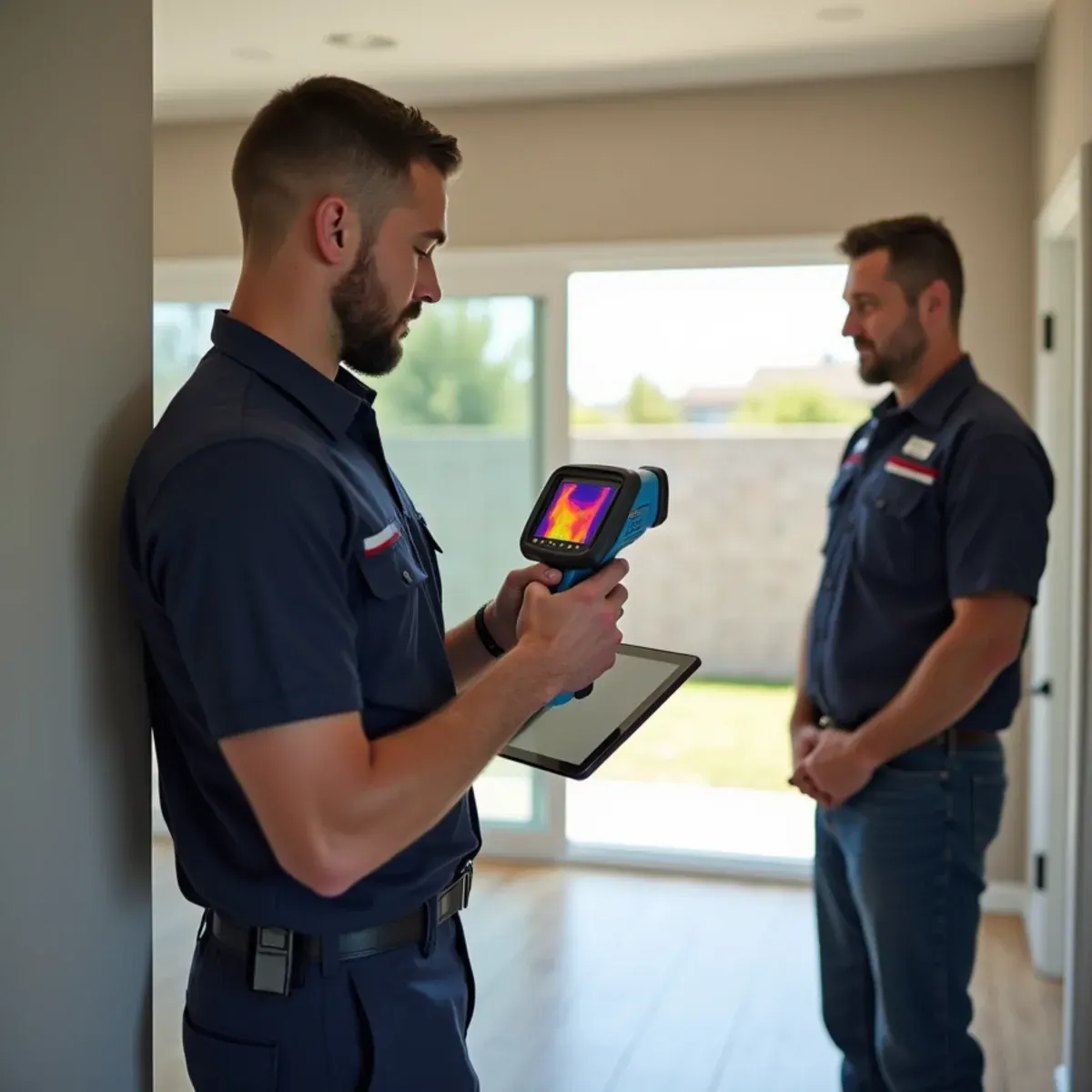
So the first job on a wet floor here is honestly determining the source, not assuming it. A 1950s under-slab copper failure and a saturation event can look identical on a bedroom carpet. The tests are different, though. A meter test with everything shut off, pressure isolation on the domestic lines, thermal imaging for a hot-side leak, and moisture patterning that shows whether the wetting starts at a point or arrives along the perimeter. Pico Rivera formed in 1958 when Pico and Rivera merged, and the postwar tract stock across it is consistent enough that these tests read clearly.
What Pico Rivera Changes About Insurance Claim Help
1Perimeter wetting versus point-source wetting
A plumbing failure wets outward from one spot. Ground saturation shows up along exterior walls and at slab joints, often in more than one room at once, and it tracks the storm rather than the water meter. We map the pattern before making any claim about cause, because the pattern is the clearest evidence available and it stays readable for only a day or two.
2Shallow water table extends drying time
With the water table close and the surrounding ground already loaded, a slab here keeps releasing moisture longer than the same slab would inland. Drying runs long and equipment stays out. That gets questioned unless the daily log shows outdoor conditions, slab readings and a curve that's still moving. We record it each day rather than reconstructing it at the end.
3Two channels shape the storm-event timeline
Because the whole city sits between the San Gabriel and the Rio Hondo, neighborhoods respond to sustained rain on a similar schedule. Tying the date and hour of your discovery to the storm sequence matters, particularly when a plumbing failure and a storm overlap. We timestamp everything, including exterior conditions, so the two events stay separable in the file.
How the Work Runs
The method is the same one we use on every insurance claim help job, documented to the IICRC S500:2025 standard. Here it is in short — the full water damage insurance claim assistance process explains each stage in detail.
- Photograph before anything moves
- Map moisture and set the category
- Open the file with the right facts
- Write the scope in their platform
- Daily drying logs and supplements
- Completion documents that release depreciation
The Pico Rivera Background Worth Knowing
On a hillside, storm water leaves. In Pico Rivera it soaks in, and when the soil is already near capacity it stops soaking in and simply stands. That is why a yard here can hold water two days after the rain stops while a yard up in the Whittier hills is dry by morning. The lawn is not draining badly. The ground underneath it is full. Once that happens, every path water can take toward your house becomes the path it takes: the garage threshold, the slider track, the gap where a patio slab has settled back toward the wall.
There is more on the housing stock, drainage and plumbing history of this city on our water damage restoration in Pico Rivera page.
Pico Rivera at a glance
- Dominant construction era
- 1945–1965
- Foundation type
- slab on grade
- Supply piping found here
- original galvanized steel, copper
- Drain line materials
- cast iron
- Terrain and water table
- flat, shallow water table
- Most common local failure
- ground saturating fast during sustained storms because the water table between two channels sits high
- Highest-value local prevention
- clearing area drains and confirming downspouts discharge well away from the foundation
What It Costs in Pico Rivera
We do not quote a number over the phone before seeing the property — anyone who does is guessing. The variables that actually move the price on a insurance claim help job are how quickly the loss was documented, category and class of water, whether the materials still match, and they are broken down in full on the water damage insurance claim assistance page. The assessment and the written estimate are free anywhere in Pico Rivera, day or night, with no obligation.
Insurance Claim Help Questions from Pico Rivera Homeowners
Probably not, and I'd rather say so before we start. Water entering through or under a slab from saturated ground is excluded on standard homeowners policies, and Pico Rivera's position between two channels with a shallow water table makes that the likely explanation. We'll still test for a plumbing source, because occasionally a storm coincides with a real leak. If it turns out to be ground water, we'll document it accurately and price the drying honestly.
No, and the distinction matters. A public adjuster is licensed to represent you in negotiating your settlement and charges a percentage of it. We are a restoration contractor. We document the loss, write and defend the scope of the physical work, and bill your carrier directly for it. If your claim turns into a genuine coverage dispute rather than a scope disagreement, that is the point to consider a public adjuster or an attorney, and we will say so.
Sometimes no. If the total loss is close to or below your deductible, filing puts a claim on your record without producing a payment worth having, and claim history affects renewal in California's current market. Get a written estimate first and compare it to your deductible before you call your carrier. We will give you that number without a claim being open. Any company that pushes you to file before you have seen an estimate has told you something.
Not in the way people picture it. The channels are engineered, and what we actually see is a groundwater and surface drainage problem rather than a channel overtopping. Because the water table between the two runs high and the ground is flat, soil here reaches saturation faster than it does a few miles inland. Once it does, storm water stops soaking in and starts looking for the lowest opening in your house, which is almost always the garage.