
A Quaker town founded in 1887 shows its age in the walls. Uptown around Greenleaf Avenue still holds late-Victorian bay windows, Craftsman with deep porches, and 1920s Spanish Revival under clay tile — nearly all on raised foundations, much of it with original-era systems still in service. Losses in that stock go down before they go out. Water drips into the crawl space, the dirt takes it, and the first sign upstairs is a floor that feels different underfoot weeks later. Establishing when it started is the hard part of the claim.
Then the ground changes. College Hills, subdivided in 1923 as the city's first planned hillside development, runs steep grades and curving streets, and Friendly Hills and the Whittier Hills climb toward Turnbull Canyon behind it. Up there the failures are drainage — slope water, retaining walls, storm flow that finds a path around what was built for it. East Whittier is conventional postwar slab and behaves like the tract cities south of here. Three claim types in one city, and the file for each gets built around a different question.
What Whittier Changes About Insurance Claim Help
1Original-era systems under raised floors
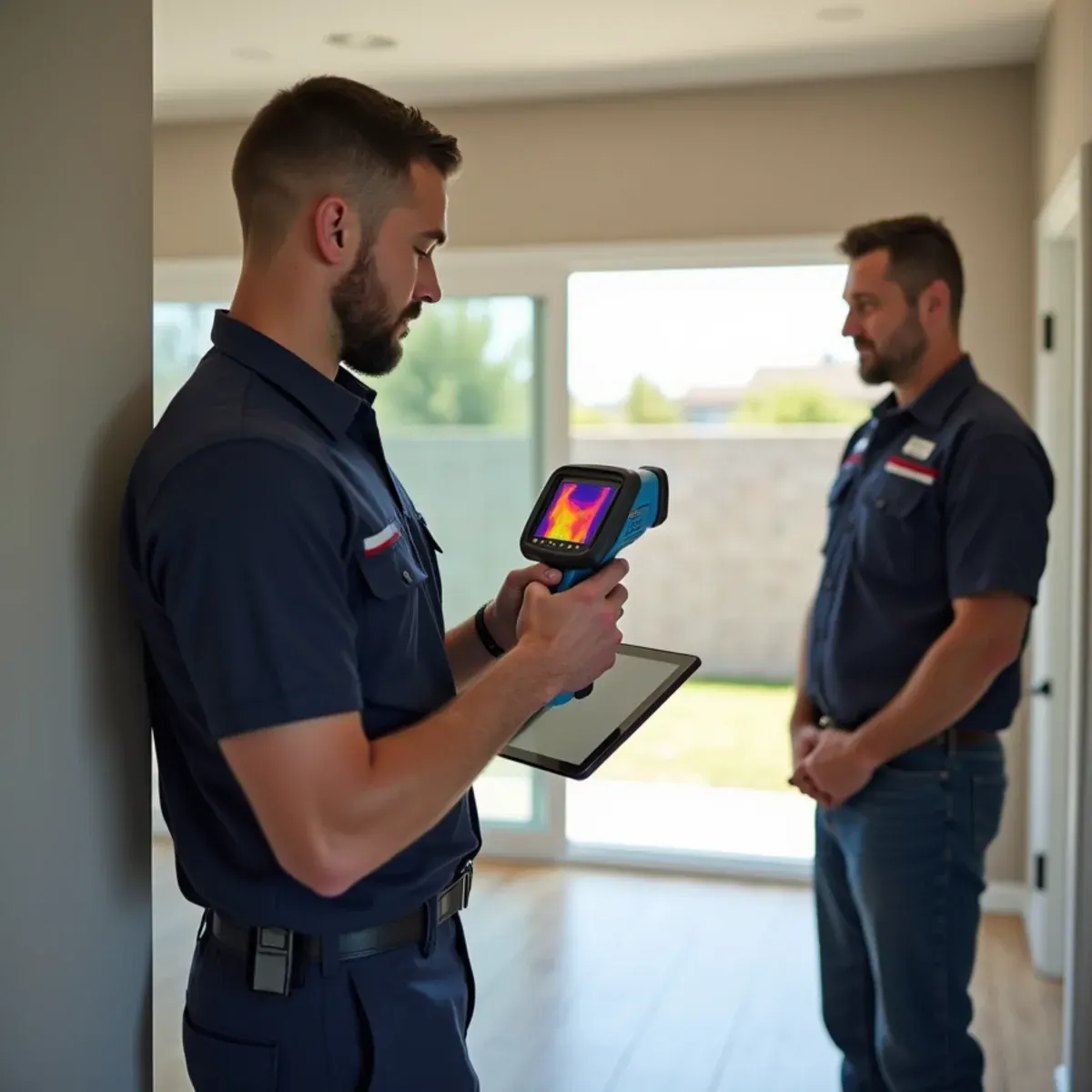
Uptown houses often still run galvanized and cast iron installed generations ago, under floors nobody has been beneath in years. We get under there with cameras and meters before writing anything, documenting joist moisture content, soil saturation and the condition of the failure itself. Carriers pay for damage they can see documented. Nobody pays for a crawl space described from the hatch.
2Historic finishes and matching line items
Bay window casing, quarter-sawn flooring and lime plaster around Greenleaf have no modern equivalent. We itemize matching materials and specialty labor as their own lines with photographs, and we push controlled drying over demolition wherever the readings allow. Whether your policy pays to match is its wording and your carrier's call, but an unspecific estimate guarantees stock replacement.
3Slope drainage in College Hills and Friendly Hills
On the hill streets water arrives with grade behind it and enters at the uphill wall, often through a drain that stopped working two storms ago. We photograph the flow path and the blocked outlet before anything is cleared. Surface water coverage is limited on most policies, so the honest value of that documentation is an accurate determination rather than a favorable one.
How the Work Runs
The method is the same one we use on every insurance claim help job, documented to the IICRC S500:2025 standard. Here it is in short — the full water damage insurance claim assistance process explains each stage in detail.
- Photograph before anything moves
- Map moisture and set the category
- Open the file with the right facts
- Write the scope in their platform
- Daily drying logs and supplements
- Completion documents that release depreciation
The Whittier Background Worth Knowing
A leak under a raised foundation does not announce itself the way a slab leak does. There is no puddle on the floor and no warm spot underfoot, because the water drips down into the soil and stays there. What you get instead is a smell that is stronger in the morning, a board that feels slightly soft, and eventually a floor that has been quietly feeding fungal growth for months. By the time an Uptown homeowner calls us about a crawl space leak, the question is rarely how to dry it. It is how much of the joist and subfloor is still doing its job.
There is more on the housing stock, drainage and plumbing history of this city on our water damage restoration in Whittier page.
Whittier at a glance
- Dominant construction era
- 1890–1980
- Foundation type
- mixed on grade
- Supply piping found here
- original turn-of-century piping, galvanized steel, under-slab copper
- Drain line materials
- cast iron, clay
- Terrain and water table
- hillside-mixed, moderate water table
- Most common local failure
- raised-foundation crawl-space leaks in Uptown, and slope drainage failures in the hillside tracts
- Highest-value local prevention
- an annual crawl-space or slope-drain check, depending which Whittier you live in
What It Costs in Whittier
We do not quote a number over the phone before seeing the property — anyone who does is guessing. The variables that actually move the price on a insurance claim help job are how quickly the loss was documented, category and class of water, whether the materials still match, and they are broken down in full on the water damage insurance claim assistance page. The assessment and the written estimate are free anywhere in Whittier, day or night, with no obligation.
Insurance Claim Help Questions from Whittier Homeowners
Not necessarily, but the answer depends on how long it's been running, and in these houses that's genuinely the crux. Most policies exclude damage from repeated seepage over an extended period. We get under the floor, measure joist and soil moisture, look at corrosion at the failure and the extent of any growth, and report what the evidence supports. Sometimes that helps you. Sometimes it doesn't, and we'll say so before you file.
No, and the distinction matters. A public adjuster is licensed to represent you in negotiating your settlement and charges a percentage of it. We are a restoration contractor. We document the loss, write and defend the scope of the physical work, and bill your carrier directly for it. If your claim turns into a genuine coverage dispute rather than a scope disagreement, that is the point to consider a public adjuster or an attorney, and we will say so.
Sometimes no. If the total loss is close to or below your deductible, filing puts a claim on your record without producing a payment worth having, and claim history affects renewal in California's current market. Get a written estimate first and compare it to your deductible before you call your carrier. We will give you that number without a claim being open. Any company that pushes you to file before you have seen an estimate has told you something.
It cuts both ways. A crawl space leak hides longer, because the water drips into soil instead of pooling on your floor, so it often runs for months and reaches the framing before anyone notices. The upside is real though: the plumbing is accessible, so locating and repairing it does not mean breaking concrete. On balance, detection is your weak point in Uptown, which is why an annual look under the house is worth doing.