
Jean Vandruff's Cinderella Homes put turrets, steep cross gables, scalloped bargeboards and gingerbread trim on ordinary 1950s tract houses, and that decorative roofline is exactly why ceiling leaks here need a lighter hand. Every pretty intersection is also a flashing point. Cross gables meet in valleys, the turret roofs are small and steeply pitched with tight transitions no one wants to walk, and the deep ornamental eaves catch debris and hold it. More intersections means more places for a seventy-year-old detail to quietly give up, and it means tarping has to be fitted rather than thrown.
Underneath the detailing it is straightforward 1950s construction: slab foundation, conventional framing, and coved plaster or early drywall ceilings with texture work that nobody does anymore. That trim cannot be bought. So we push hard toward drying in place, using small inspection openings in closets and at eave ends, drying the cavity from the attic where the plan allows, and removing material only where the readings say it will not come back. S500:2025 supports that judgment, and on these houses the extra monitoring days are worth paying for.
What Downey Changes About Ceiling & Roof Leaks
1More valleys per roof than the tract next door
A Cinderella Home's cross gables, dormers and turrets create far more flashing and valley footage than a plain postwar hip roof of the same square footage. That is where the leaks are, almost every time. We inspect valley metal, sidewall step flashing and the transitions at the turret first, because the field of the shingle is rarely the problem on these houses.
2Detailing you cannot buy back
Coved plaster ceilings, arched openings, gingerbread trim and original texture are the reason these houses hold their value. Cutting them out is fast and permanent. We dry through the smallest openings that work, place equipment to move air across the ceiling face rather than tearing it down, and document readings daily so the decision to keep material is defensible to your adjuster.
3Turret roofs are too small to tarp normally
A standard tarp does not fit a small steep turret, and nailing through decorative fascia to hold one down does damage that outlasts the storm. We use fitted sections, ballast and edge-sealed methods that keep fasteners out of the ornamental woodwork wherever we can. It takes longer in the rain, and it is the difference between an emergency measure and a second repair.
How the Work Runs
The method is the same one we use on every ceiling & roof leaks job, documented to the IICRC S500:2025 standard. Here it is in short — the full ceiling & roof leak water damage process explains each stage in detail.
- Emergency tarping or temporary dry-in
- Controlled relief of trapped water
- Trace the intrusion to its real source
- Remove wet insulation and compromised drywall
- Dry the attic and the ceiling assembly
- Restore the ceiling completely
The Downey Background Worth Knowing
The instinct on a wet wall is to open it, and sometimes that is correct. But IICRC S500:2025 is built around restoring rather than replacing wherever the drying goals can genuinely be met, and on a house with original arched casings and applied gingerbread, meeting those goals is worth some patience. We would rather spend three extra days with equipment running than pull a run of trim that would have to be milled from scratch to come back. The standard supports that choice and so does the arithmetic on the estimate, because custom millwork is not cheap and matching a fifties profile is not quick.
There is more on the housing stock, drainage and plumbing history of this city on our water damage restoration in Downey page.
Downey at a glance
- Dominant construction era
- 1950–1965
- Foundation type
- slab on grade
- Supply piping found here
- galvanized steel, under-slab copper
- Drain line materials
- cast iron
- Terrain and water table
- flat, moderate water table
- Most common local failure
- 1950s slab and galvanized failures in houses whose decorative woodwork makes careful, low-demolition drying worth paying for
- Highest-value local prevention
- drying in place wherever readings allow, because the trim and detailing on these houses cannot be bought
What It Costs in Downey
We do not quote a number over the phone before seeing the property — anyone who does is guessing. The variables that actually move the price on a ceiling & roof leaks job are how long the leak has been active, ceiling texture and finish, attic access and insulation type, and they are broken down in full on the ceiling & roof leak water damage page. The assessment and the written estimate are free anywhere in Downey, day or night, with no obligation.
Ceiling & Roof Leaks Questions from Downey Homeowners
Only where it is structurally unsafe or the readings will not come down. Coved plaster is heavy when wet, so if a section is bulging we relieve it in a controlled way rather than letting it fall. Everything else gets dried from above through the attic where the plan allows, monitored daily, and kept if it dries to the same readings as unaffected ceiling in the house. On Downey's decorative stock, we will spend extra drying days to avoid a demolition you cannot undo.
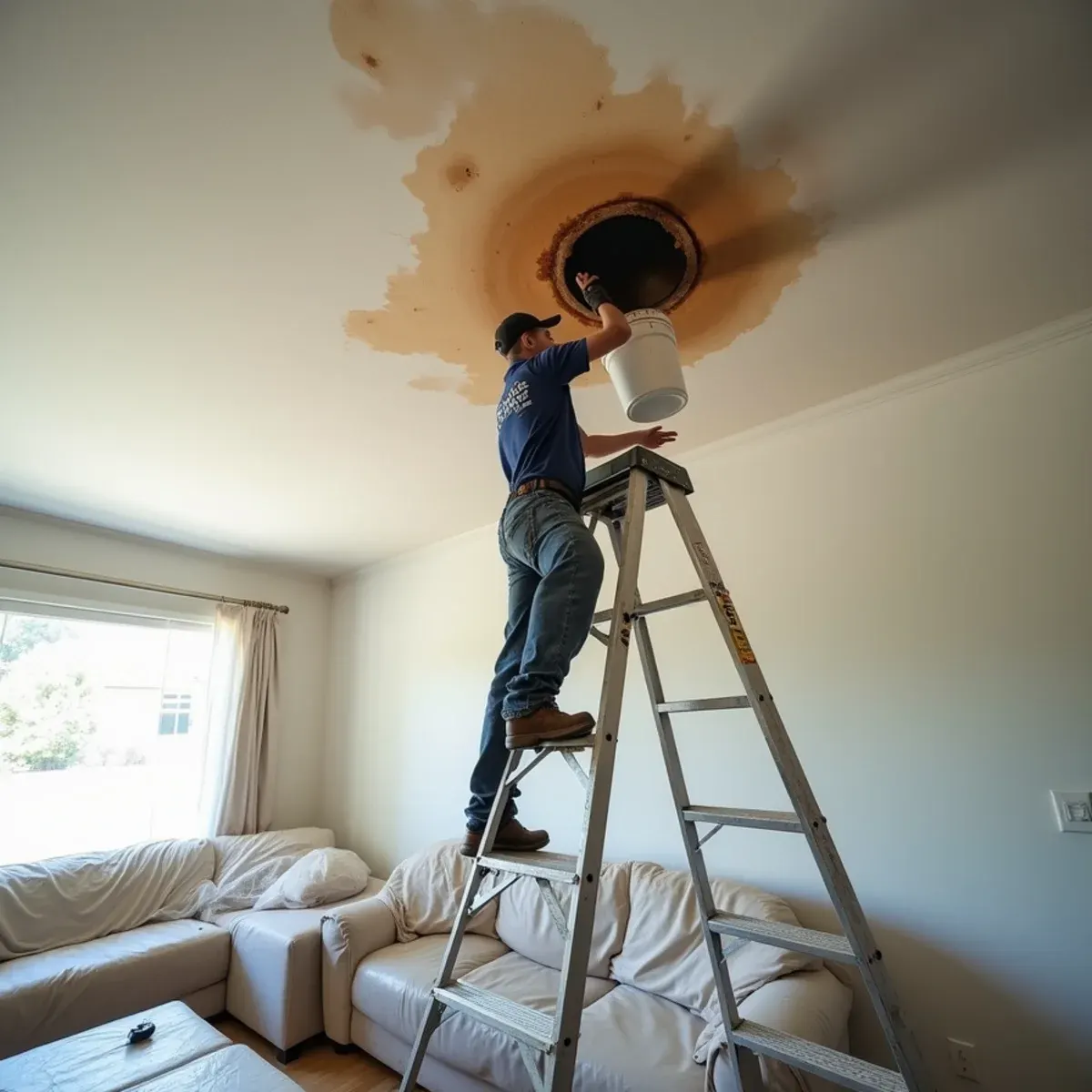
Clear the room and keep everyone out from underneath it, including pets. Move furniture if you can do it from the side. Put a bucket down if you can place it safely without standing under the bulge. Then call us — we relieve it deliberately, which is safer and preserves much more of the ceiling than letting it fail on its own.
We tarp immediately to stop the intrusion and coordinate the roofing repair with a licensed roofer, then handle all the interior restoration ourselves. You get one point of contact and one schedule instead of managing two trades during a storm week.
Usually, yes. We go into the wall cavity through small ports low on the wall, hidden behind shoe molding or inside a closet, and dry from the inside out rather than taking the finished face off. That takes longer and needs more equipment than gutting the wall would, which is exactly the trade we think is worth making on a house with millwork that cannot be bought. Where it will not work, we tell you early.