
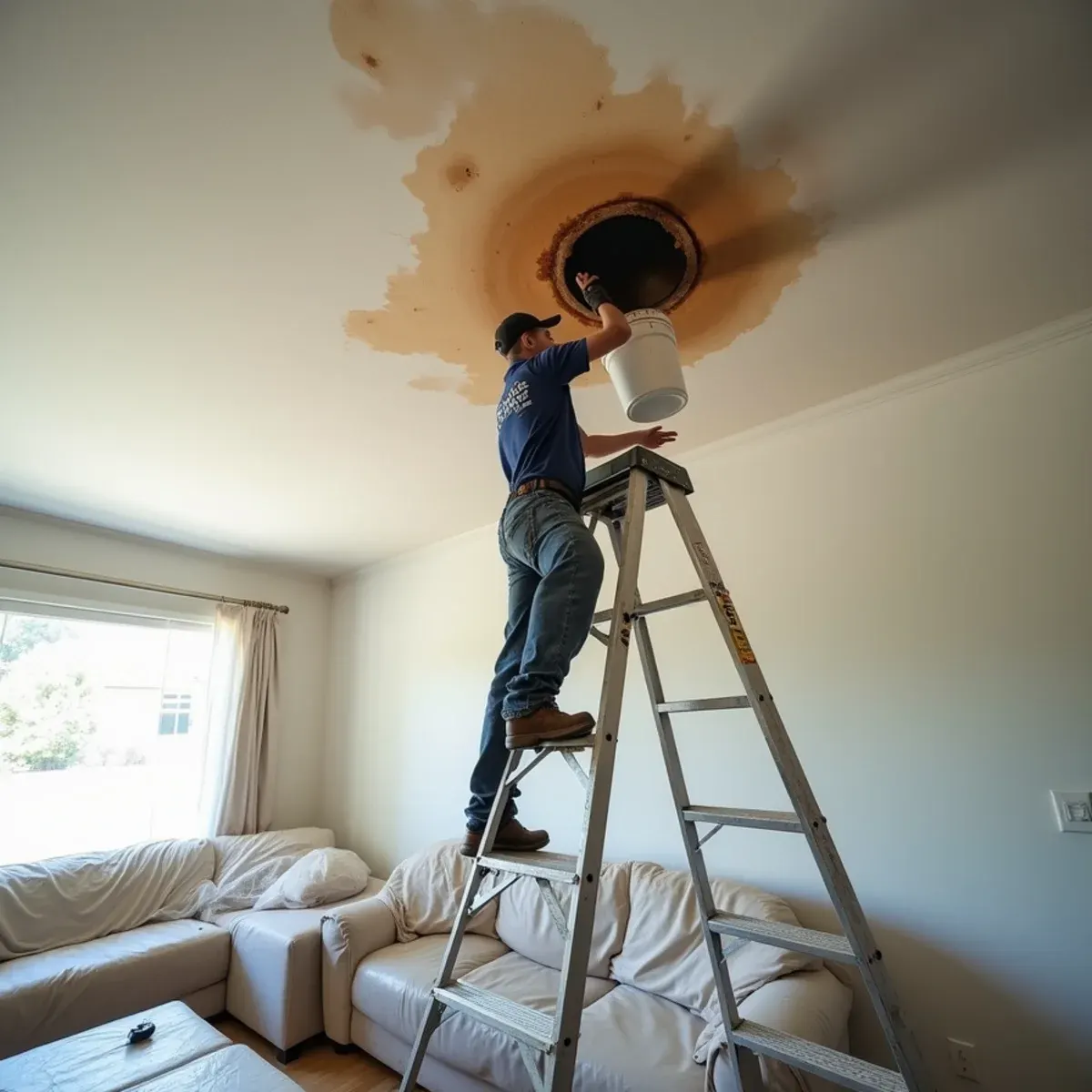
Attic drying in Costa Mesa runs on a slower clock than the identical job in Orange or Placentia, and it is worth saying that before we start rather than after. The marine layer sits over the city most mornings, and the outdoor air we would normally use to ventilate an attic frequently carries more moisture than the air already inside it. Opening everything up feels productive and can actively set us back. So we close the attic, dry it with dehumidification, take readings every day, and set the finish line by those readings instead of by a number of days.
The building stock does not make it easier. Eastside cottages from the 1920s through the 1940s have low-pitch rafter roofs and attic cavities you cannot get more than a few feet into, sitting under a heavy tree canopy that keeps them shaded and slow to dry. Mesa Verde is 1960s slab tract with conventional truss attics and reasonable access. The Westside mixes housing with industrial buildings and live-work conversions carrying flat and low-slope torch-down roofs, where the failure is ponding at a drain rather than a lifted shingle.
What Costa Mesa Changes About Ceiling & Roof Leaks
1Fog air will not dry your attic
On a typical Costa Mesa morning, outdoor humidity is high enough that ventilating an attic with it adds water rather than removing it. We work as a closed drying system, with dehumidification setting the vapor pressure and air movers doing the surface work. It is more equipment than an inland job of the same size, and under S500:2025 the goal is still the same: readings that match unaffected materials in the same house.
2Eastside cottage attics barely admit a person
The 1920s-to-1940s cottages on the Eastside have shallow rafter framing, sometimes no proper hatch, and a few feet of working room at best. That limits how much we can do from above, so more of the work happens through controlled ceiling openings from below. We tell people up front when a cottage attic cannot be dried the conventional way, because the alternative involves more visible repair.
3Westside low-slope roofs pond
Flat and low-slope torch-down roofs over Westside industrial buildings and live-work conversions fail by ponding, not by shedding. Water sits at a low point or a plugged drain until it finds a seam or a penetration, then arrives inside all at once over a large area. Emergency work there is about clearing the drain and getting weight off the deck, before any drying equipment goes in.
How the Work Runs
The method is the same one we use on every ceiling & roof leaks job, documented to the IICRC S500:2025 standard. Here it is in short — the full ceiling & roof leak water damage process explains each stage in detail.
- Emergency tarping or temporary dry-in
- Controlled relief of trapped water
- Trace the intrusion to its real source
- Remove wet insulation and compromised drywall
- Dry the attic and the ceiling assembly
- Restore the ceiling completely
The Costa Mesa Background Worth Knowing
Under a raised Eastside cottage there is bare soil, and that soil is supposed to stay dry because the foundation vents exchange air with the outside. That system depends on the outside air being drier than the space under the house. For a good part of the year in Costa Mesa it is not. The marine layer holds humidity high through the night and well into the morning, so the crawl space never gets the dry stretch it needs, and moisture that arrives from a plumbing drip, a downspout, or an irrigation line just accumulates.
There is more on the housing stock, drainage and plumbing history of this city on our water damage restoration in Costa Mesa page.
Costa Mesa at a glance
- Dominant construction era
- 1920–1980
- Foundation type
- mixed on grade
- Supply piping found here
- original 1920s–1940s piping on the Eastside, galvanized steel, under-slab copper
- Drain line materials
- cast iron, clay
- Terrain and water table
- coastal-flat, shallow water table
- Most common local failure
- crawl-space moisture under Eastside cottages, held in by a marine layer that slows every natural drying process
- Highest-value local prevention
- confirming crawl-space vents are actually open and that the ground under the house is dry
What It Costs in Costa Mesa
We do not quote a number over the phone before seeing the property — anyone who does is guessing. The variables that actually move the price on a ceiling & roof leaks job are how long the leak has been active, ceiling texture and finish, attic access and insulation type, and they are broken down in full on the ceiling & roof leak water damage page. The assessment and the written estimate are free anywhere in Costa Mesa, day or night, with no obligation.
Ceiling & Roof Leaks Questions from Costa Mesa Homeowners
Longer than the three-day figure people hear, and we will not quote a fixed number. Costa Mesa's marine humidity means the dehumidifier is doing work an inland job gets for free from the outside air. We set a drying goal from readings taken in an unaffected part of your house, as S500:2025 directs, then monitor daily and show you the numbers. Eastside cottages with tight attics and dense canopy typically run longest. When readings plateau, we change the setup rather than waiting it out.
Clear the room and keep everyone out from underneath it, including pets. Move furniture if you can do it from the side. Put a bucket down if you can place it safely without standing under the bulge. Then call us — we relieve it deliberately, which is safer and preserves much more of the ceiling than letting it fail on its own.
We tarp immediately to stop the intrusion and coordinate the roofing repair with a licensed roofer, then handle all the interior restoration ourselves. You get one point of contact and one schedule instead of managing two trades during a storm week.
Almost always the crawl space. On these raised 1920s to 1940s houses the soil under the floor stays damp when the foundation vents are blocked and the marine layer keeps outside air humid overnight. That moisture moves up through the subfloor and into the rooms above it. Before assuming anything, walk your perimeter and see whether a planter, a poured patio or landscaping has covered the vents that are supposed to be breathing.