
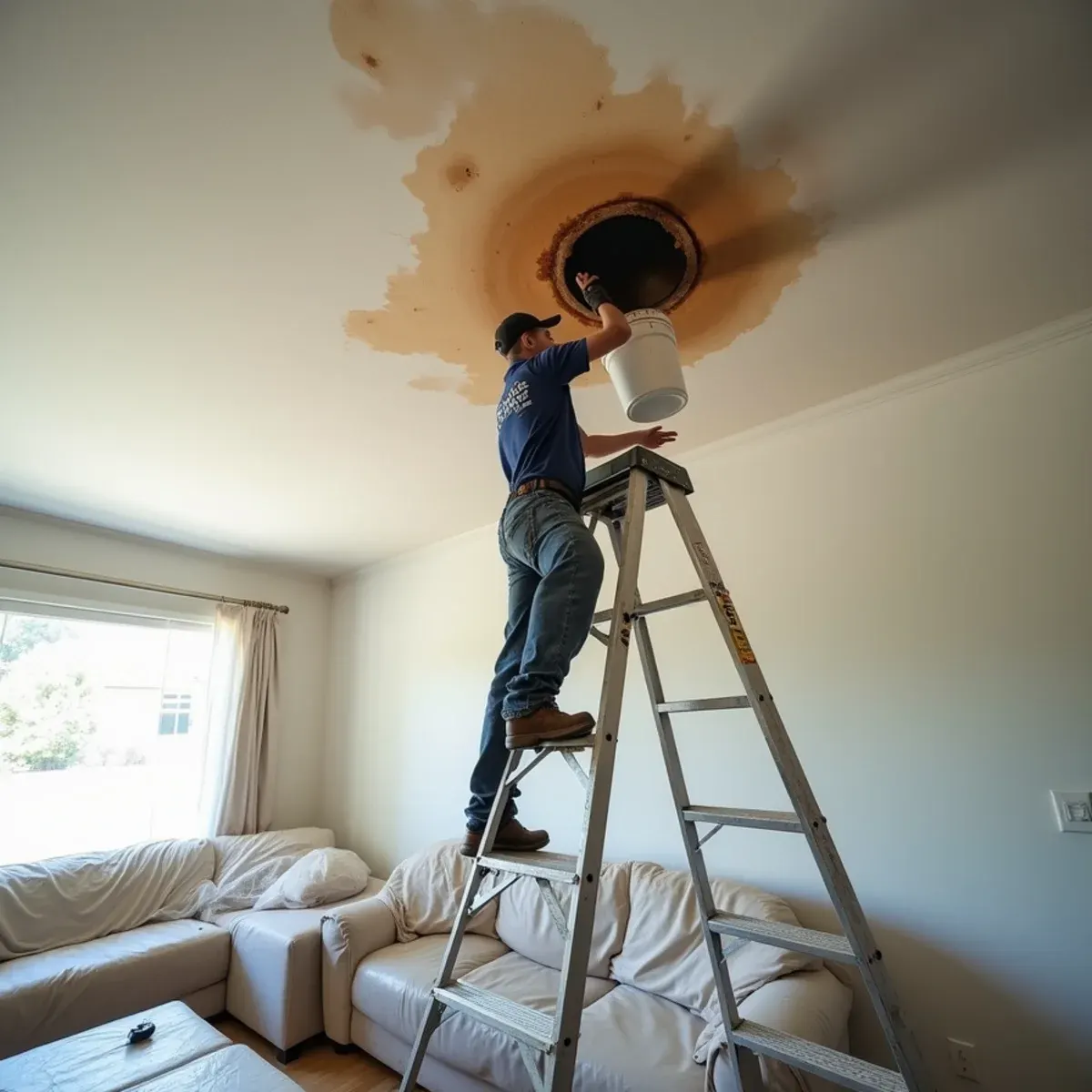
In Floral Park, French Park and Washington Square, the ceiling above your head may be the most original thing left in the house. Coved plaster, picture rails, plaster crown that was run in place by hand on site. None of it is available at a supply house, and none of it survives a crew that treats a wet ceiling as material to be removed. The county's oldest housing stock deserves the slower first hour: shore it, relieve the trapped water in a controlled way at the low point, and start drying the lath and the framing above it before any decision about removal.
The roofs over these homes complicate the emergency. Many were originally wood shingle over skip sheathing, later covered with composition or clay, and the exterior falls under historic review, so an emergency tarp cannot be fastened wherever it is convenient. We use weighted and battened tarp systems that anchor into replaceable material, and we photograph the roof before and after so the record shows the temporary work did not damage anything original. That matters when the permanent repair goes in front of a reviewer months later.
What Santa Ana Changes About Ceiling & Roof Leaks
1Emergency tarping on a reviewed roof
Historic district properties limit what can be fastened through, and a standard batten screwed into original material creates a preservation problem on top of a water problem. We tarp with ballast and with anchoring into sacrificial or already-replaced material wherever possible, then document the method. It closes the roof tonight without creating an argument with the city later.
2Coved and decorative plaster ceilings
A coved ceiling meets the wall in a curve with no seam to cut back to, and ornamental plaster has no modern equivalent. We map moisture through the field, dry the assembly from above where the attic allows, and remove only what has genuinely lost its keys. Anything salvageable stays, because a replacement in drywall is visible from the doorway forever.
3Desiccant drying for heavy assemblies
Plaster and old-growth lath hold multiple times the water drywall does and release it slowly. Refrigerant dehumidifiers alone will stall on that. We bring desiccant capacity to drive the assembly down, and monitor to the drying goals in IICRC S500:2025 rather than pulling equipment when the surface reads acceptable and the core is still wet.
How the Work Runs
The method is the same one we use on every ceiling & roof leaks job, documented to the IICRC S500:2025 standard. Here it is in short — the full ceiling & roof leak water damage process explains each stage in detail.
- Emergency tarping or temporary dry-in
- Controlled relief of trapped water
- Trace the intrusion to its real source
- Remove wet insulation and compromised drywall
- Dry the attic and the ceiling assembly
- Restore the ceiling completely
The Santa Ana Background Worth Knowing
Lath and plaster is wood strips nailed across the studs with several coats of plaster troweled over them. The plaster that squeezes through the gaps between lath forms keys that hook over the wood and hold the whole wall in place. That construction is why plaster walls last a century — and why they behave so differently from drywall when wet.
There is more on the housing stock, drainage and plumbing history of this city on our water damage restoration in Santa Ana page.
Santa Ana at a glance
- Dominant construction era
- 1900–1970
- Foundation type
- mixed on grade
- Supply piping found here
- original early-century piping, galvanized steel, copper
- Drain line materials
- cast iron, clay
- Terrain and water table
- flat, moderate water table
- Most common local failure
- plaster key failure, where wet plaster softens and releases from the wood lath holding it to the wall
- Highest-value local prevention
- starting aggressive drying within hours on any plaster loss — waiting is the one thing that costs you the wall
What It Costs in Santa Ana
We do not quote a number over the phone before seeing the property — anyone who does is guessing. The variables that actually move the price on a ceiling & roof leaks job are how long the leak has been active, ceiling texture and finish, attic access and insulation type, and they are broken down in full on the ceiling & roof leak water damage page. The assessment and the written estimate are free anywhere in Santa Ana, day or night, with no obligation.
Ceiling & Roof Leaks Questions from Santa Ana Homeowners
Yes, and it is the way we prefer to do it on any historic district property. Depending on the roof pitch and the weather window, we use ballasted tarps, sandbagged battens, or anchoring only into modern replacement material such as a previously repaired section. We photograph the roof before and after so there is a clear record for review. If the storm conditions make a fully non-penetrating tarp unsafe, we will tell you plainly and agree the least invasive option with you first.
Clear the room and keep everyone out from underneath it, including pets. Move furniture if you can do it from the side. Put a bucket down if you can place it safely without standing under the bulge. Then call us — we relieve it deliberately, which is safer and preserves much more of the ceiling than letting it fail on its own.
We tarp immediately to stop the intrusion and coordinate the roofing repair with a licensed roofer, then handle all the interior restoration ourselves. You get one point of contact and one schedule instead of managing two trades during a storm week.
Usually, if drying starts quickly. Plaster holds much more water than drywall and dries far more slowly, so it needs more equipment and often desiccant dehumidification. The risk is the plaster keys softening and releasing from the lath, which is why waiting is the one thing that genuinely costs you the wall.