
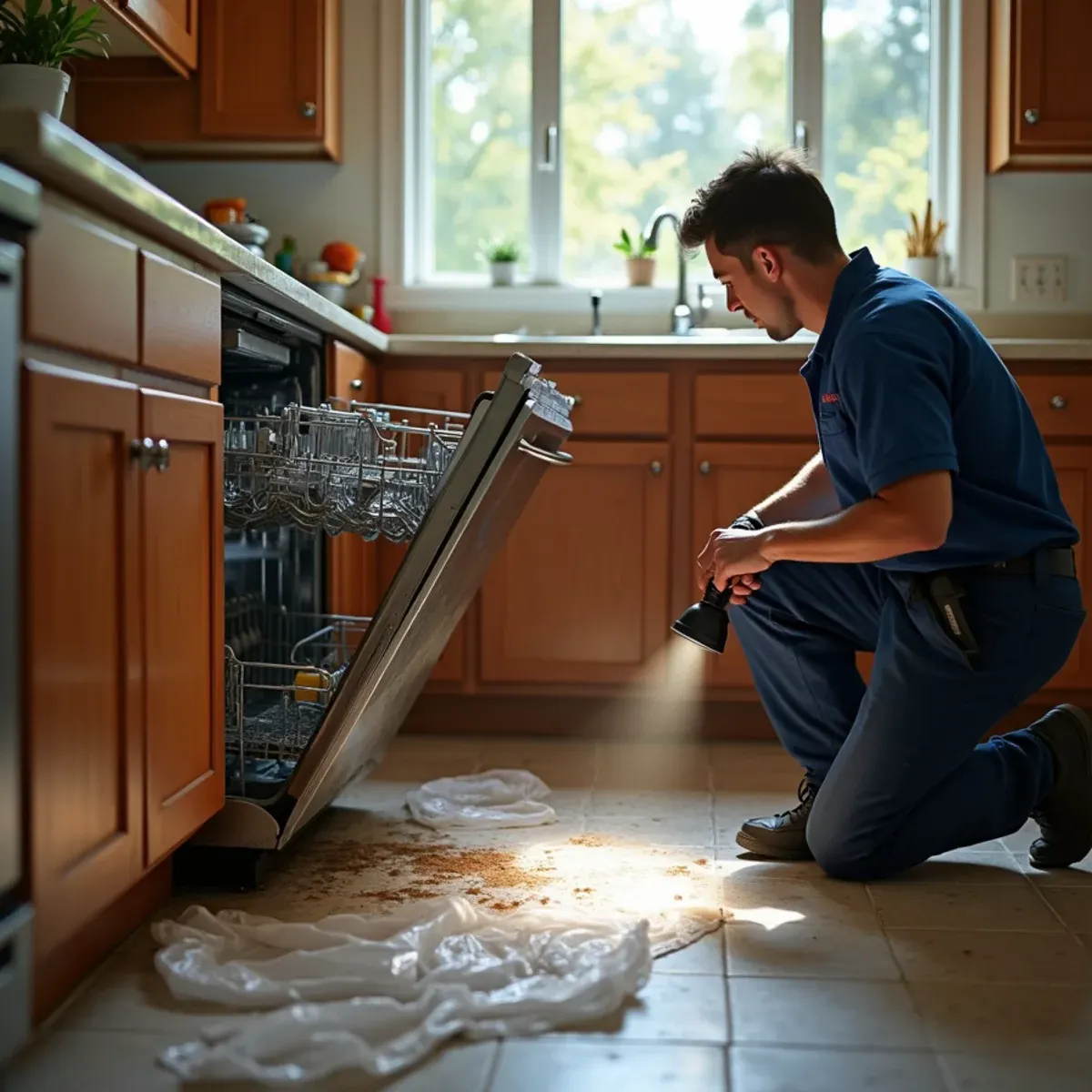
The worst advice you can follow in Costa Mesa is to open the windows and let it air out. We are close enough to the water that outdoor air carries more moisture than the air inside your house for much of the year, and on a June morning the marine layer sits over the Eastside until noon. Opening up does not dry a wet kitchen floor here, it feeds it. An appliance leak in this city needs closed windows, contained air and dehumidifiers doing the work, and it will still take longer than the same loss inland.
Then there is what sits under the floor. The Eastside cottages built between the 1920s and 1940s are on raised foundations over a shallow water table, under a tree canopy that keeps the ground shaded and damp year round. A dishwasher that has been weeping into that crawl space is not only a floor problem, because the soil under the house holds the water too. Mesa Verde's 1960s slab tract behaves conventionally by comparison, and the Westside mixes housing with light industrial. Our Cypress base is about twenty minutes north of you.
What Costa Mesa Changes About Appliance Leaks
1Why drying takes longer near the coast
Dehumidifier sizing here is not the same calculation as an inland job. We seal the affected area, run refrigerant or desiccant equipment depending on the temperature we can hold, and take daily readings of both the material and the air. Expect a day or two longer than the same washer failure in a drier city, and expect equipment to stay until readings meet the drying goal, not until the calendar says so.
2Crawl spaces under Eastside cottages
Half the Eastside jobs we take involve going under the house. We check whether the foundation vents are actually open, whether the ground is damp from the appliance or has simply always been damp, and whether a vapor barrier exists. Water that reached the soil needs airflow moving through the crawl space, not just across the kitchen floor, and wet batt insulation under the joists has to come out to have any chance.
3Mesa Verde slab kitchens and toe-kicks
In the 1960s tract on the west side of the golf course, appliance water runs flat under sheet vinyl and into the base cabinets. The cabinet toe-kick is the piece that gets missed, because the visible floor dries and the enclosed kick space does not. We drill and inject there, and we check the wall cavity behind the dishwasher where the supply line penetrates, which stays wet long after the floor reads clear.
How the Work Runs
The method is the same one we use on every appliance leaks job, documented to the IICRC S500:2025 standard. Here it is in short — the full appliance leak water damage cleanup process explains each stage in detail.
- Isolate the supply
- Pull the appliance and read behind it
- Open cabinet bases where needed
- Extract and remove unsalvageable material
- Targeted drying of the enclosed spaces
- Rebuild and reinstall
The Costa Mesa Background Worth Knowing
Under a raised Eastside cottage there is bare soil, and that soil is supposed to stay dry because the foundation vents exchange air with the outside. That system depends on the outside air being drier than the space under the house. For a good part of the year in Costa Mesa it is not. The marine layer holds humidity high through the night and well into the morning, so the crawl space never gets the dry stretch it needs, and moisture that arrives from a plumbing drip, a downspout, or an irrigation line just accumulates.
There is more on the housing stock, drainage and plumbing history of this city on our water damage restoration in Costa Mesa page.
Costa Mesa at a glance
- Dominant construction era
- 1920–1980
- Foundation type
- mixed on grade
- Supply piping found here
- original 1920s–1940s piping on the Eastside, galvanized steel, under-slab copper
- Drain line materials
- cast iron, clay
- Terrain and water table
- coastal-flat, shallow water table
- Most common local failure
- crawl-space moisture under Eastside cottages, held in by a marine layer that slows every natural drying process
- Highest-value local prevention
- confirming crawl-space vents are actually open and that the ground under the house is dry
What It Costs in Costa Mesa
We do not quote a number over the phone before seeing the property — anyone who does is guessing. The variables that actually move the price on a appliance leaks job are slow leak versus sudden failure, how much cabinetry is affected, subfloor condition, and they are broken down in full on the appliance leak water damage cleanup page. The assessment and the written estimate are free anywhere in Costa Mesa, day or night, with no obligation.
Appliance Leaks Questions from Costa Mesa Homeowners
Usually one to two extra days on a typical appliance loss, sometimes more in late spring when the marine layer holds all morning. The reason is simple: dehumidifiers pull water out of the air, and our outdoor air is already loaded, so keeping the space closed and controlled matters more here than anywhere else we work. We measure daily rather than guess, and we would rather leave equipment an extra day than pull it at a number that only looks acceptable.
Yes. Dishwasher leaks run backward and sideways under the unit into the cabinet bases and subfloor, which is why the visible floor often looks untouched. A free moisture reading takes twenty minutes and will tell you definitively whether anything behind or beneath is wet.
Often only the affected base or toe-kick, not the whole box. Particleboard bottoms that have swollen and delaminated have to be replaced, but the cabinet frame, doors, and countertop can usually stay. We repair at the smallest reasonable scope.
Almost always the crawl space. On these raised 1920s to 1940s houses the soil under the floor stays damp when the foundation vents are blocked and the marine layer keeps outside air humid overnight. That moisture moves up through the subfloor and into the rooms above it. Before assuming anything, walk your perimeter and see whether a planter, a poured patio or landscaping has covered the vents that are supposed to be breathing.