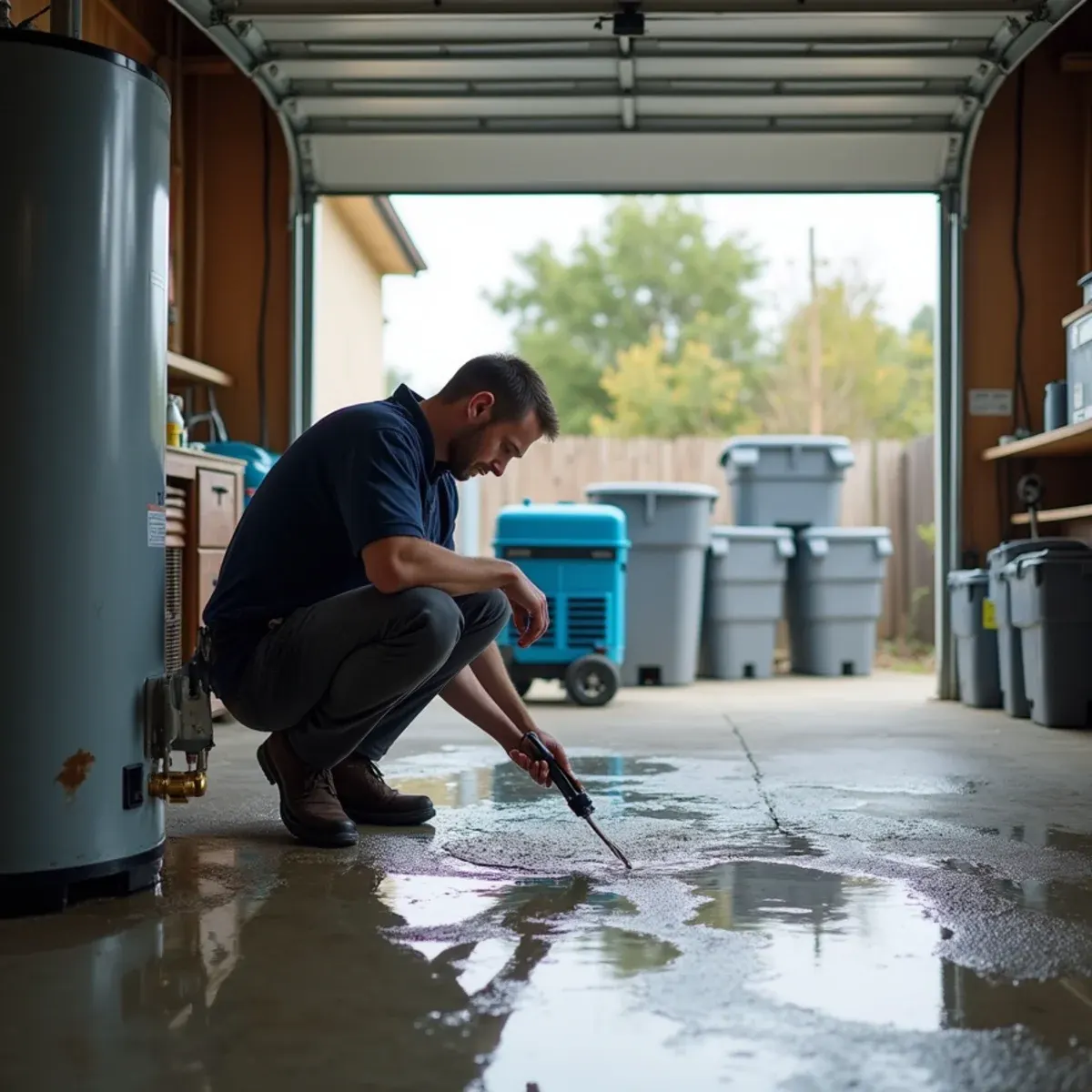
A water heater holds forty to eighty gallons and, when the tank fails, releases essentially all of it — plus whatever continues flowing in through the supply line until someone shuts it off. In most Cypress homes that happens in the garage, which is genuinely the best place for it, but the water still finds the wall shared with the living space.
If yours is actively leaking right now, do these things in this order.
Step 1: Shut Off the Water Supply
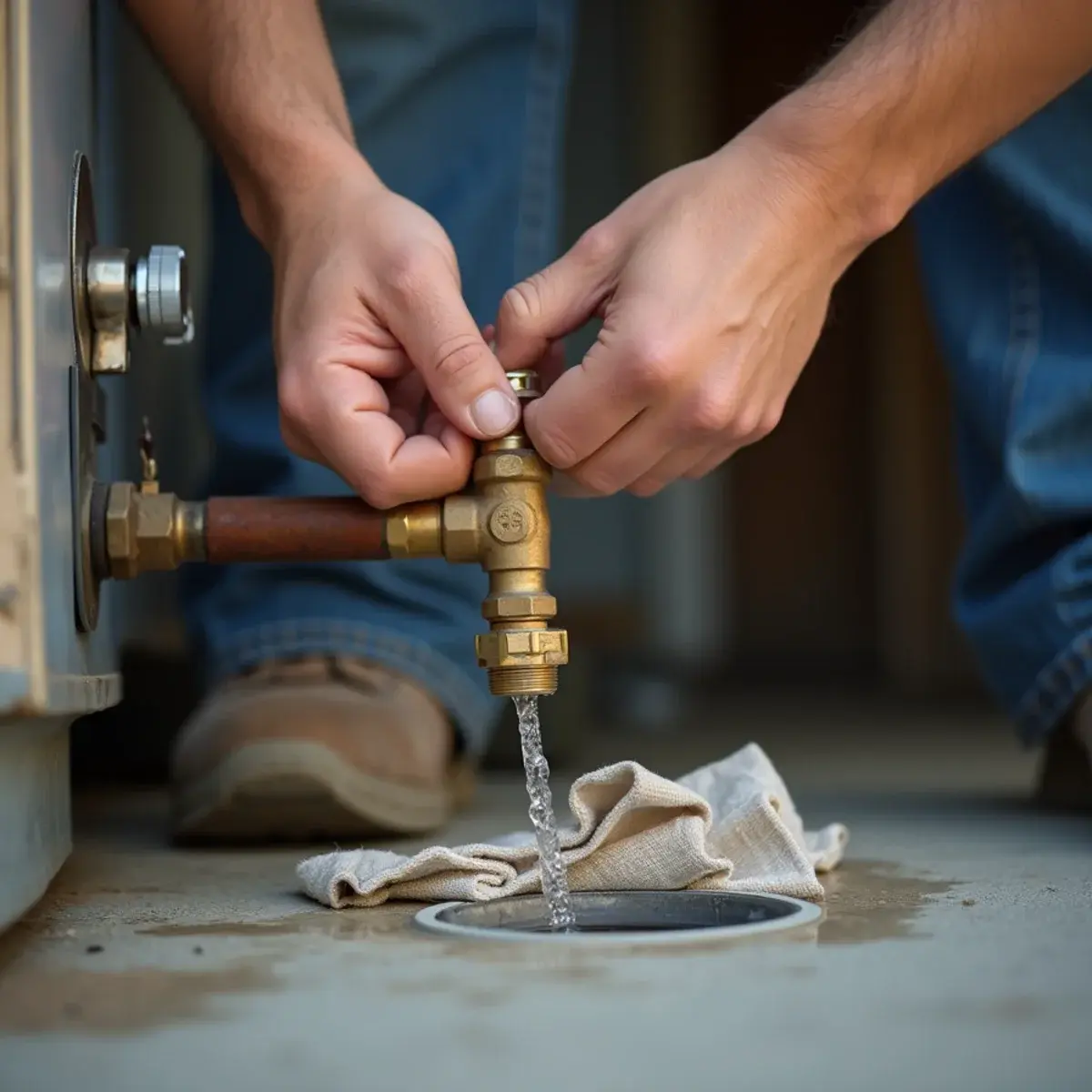
There is a cold water shutoff valve on the pipe entering the top of the heater. Turn it clockwise until it stops. That isolates the heater and stops the refill.
If that valve will not turn — and on an older unit it frequently will not, because it has been sitting untouched for fifteen years — go to your main shutoff. In most Cypress homes that is at the front of the house near the hose bib or in a box at the sidewalk.
Do this first. Everything else is secondary while water is still flowing in.
Step 2: Shut Off the Power or Gas
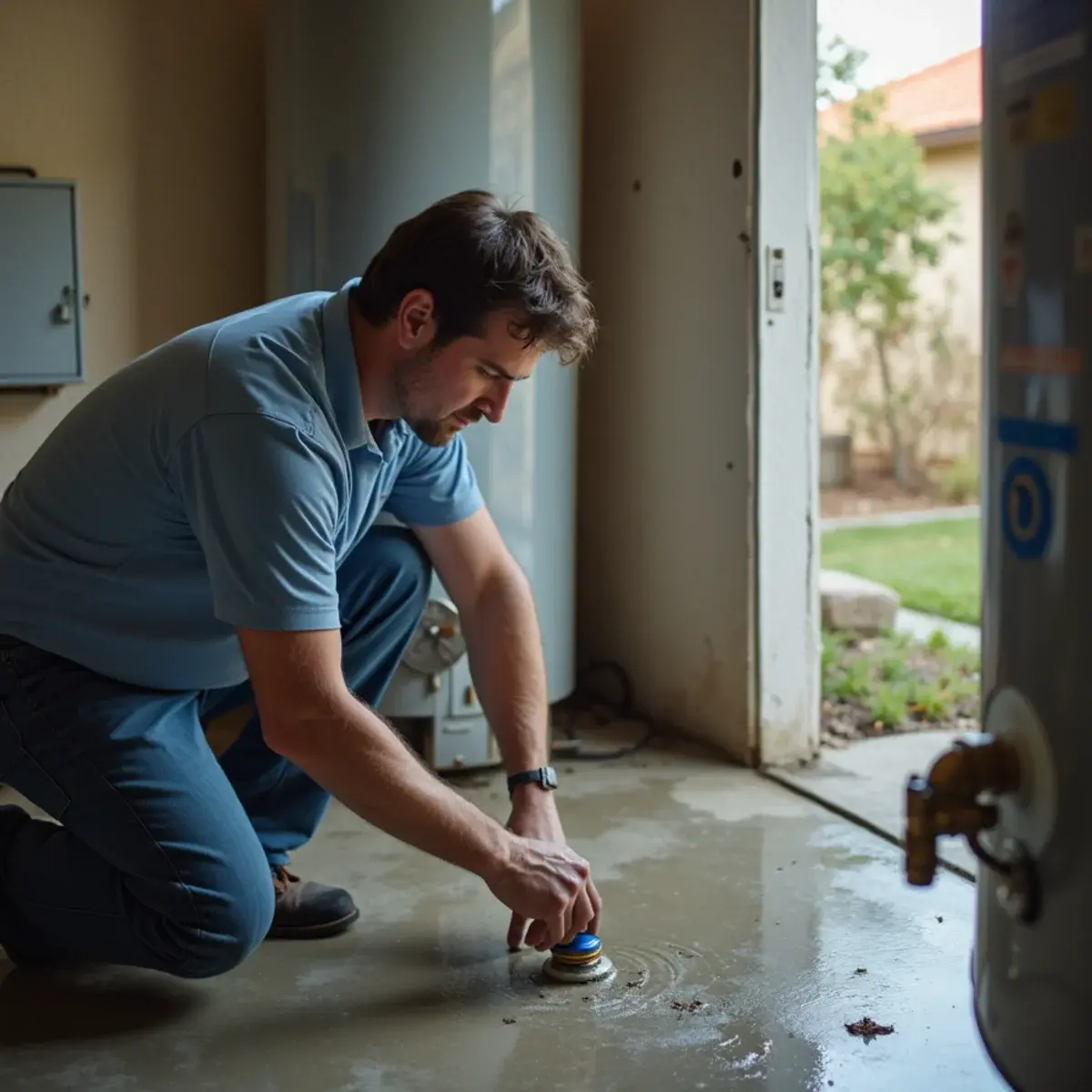
For an electric water heater, switch off the dedicated breaker in your panel. Do not touch the unit before you do — a leaking electric heater with the elements still energized is a genuine hazard.
For a gas water heater, turn the gas control valve on the front of the unit to OFF. If you smell gas at any point, do not touch anything electrical, leave the building, and call the gas company from outside.
The reason this matters: a tank that has drained while still firing can overheat and cause a fire, and elements running dry in an electric unit will burn out and can create an electrical hazard.
Step 3: Stay Away From the Water and Assess
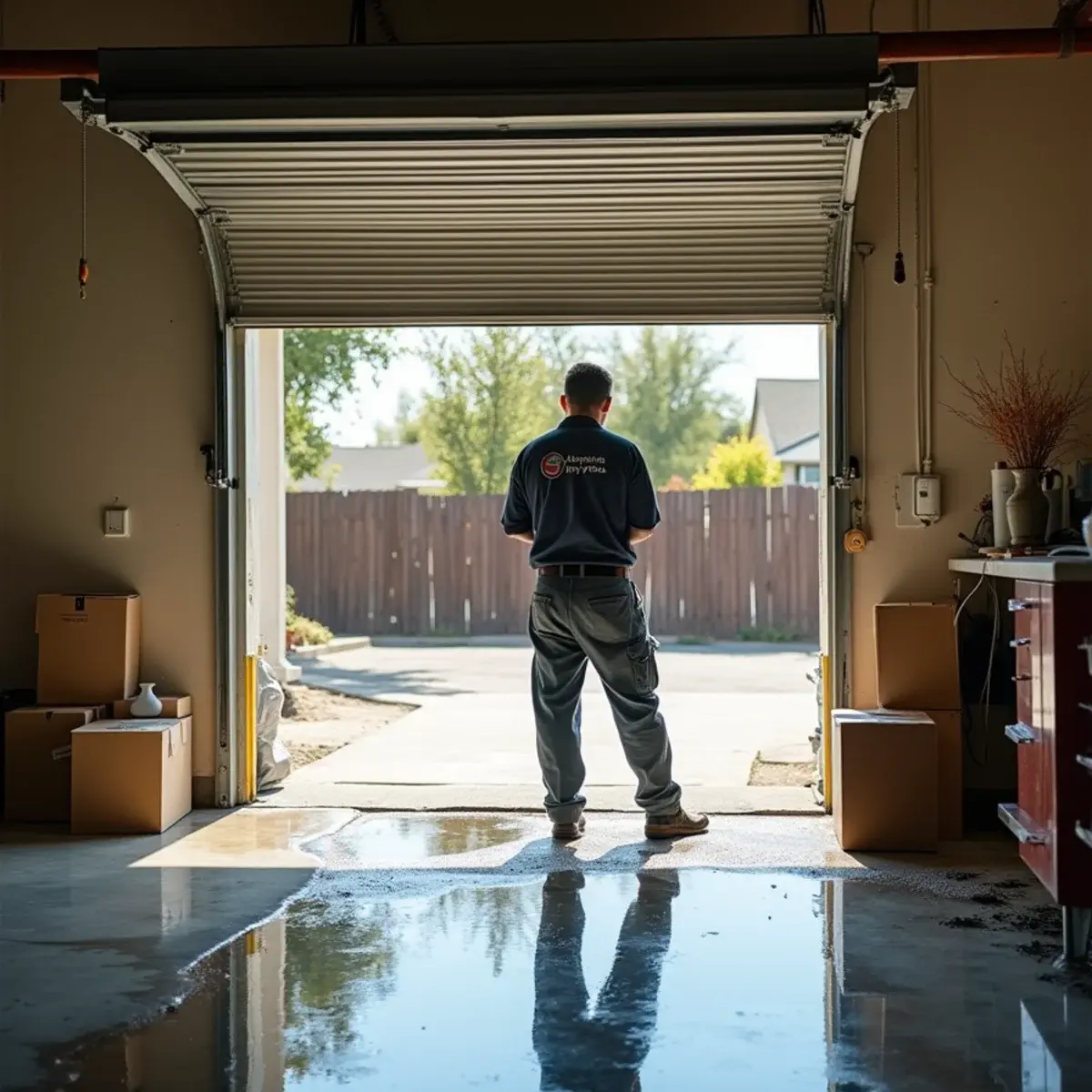
Water from a heater is hot — potentially scalding if the failure just happened. Give it time and keep children and pets out of the area.
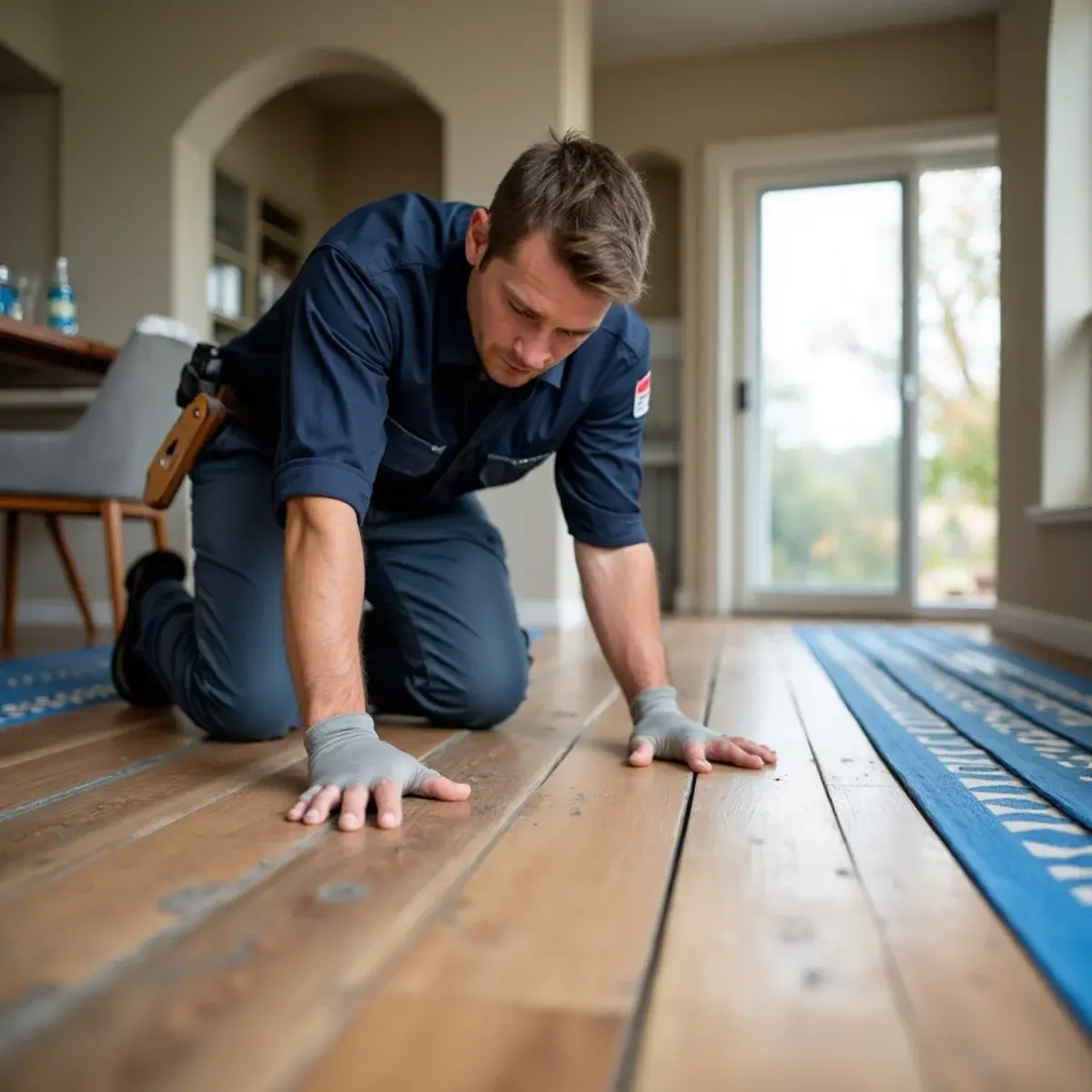
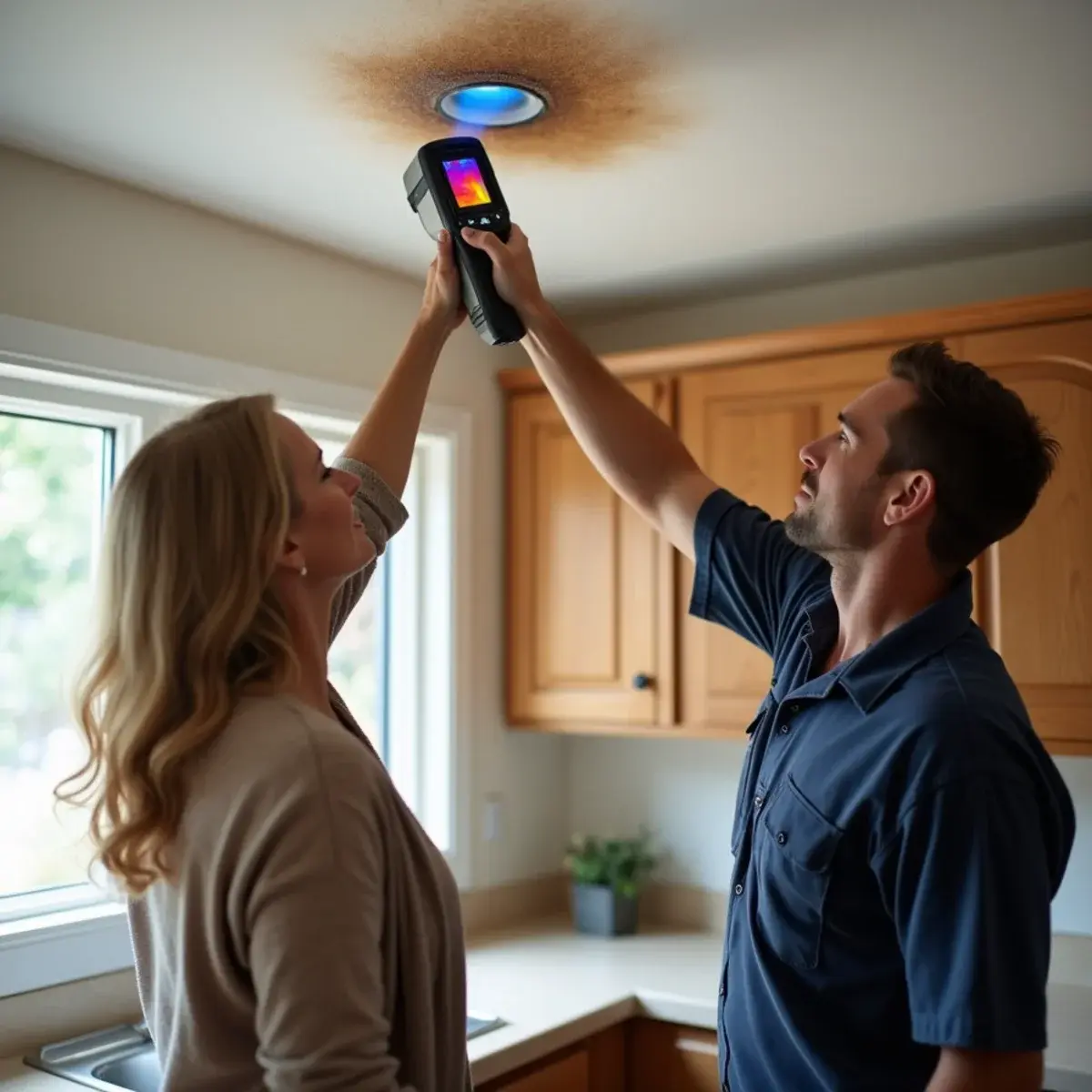
Then look at where the water went. In a garage, check whether it reached the wall shared with the house, whether it got under stored belongings, and whether it reached the interior door threshold. In an interior closet, assume it got into the wall and the flooring in adjacent rooms.
Photograph everything before you move anything. This is a claim, and the documentation you capture now is what supports it.
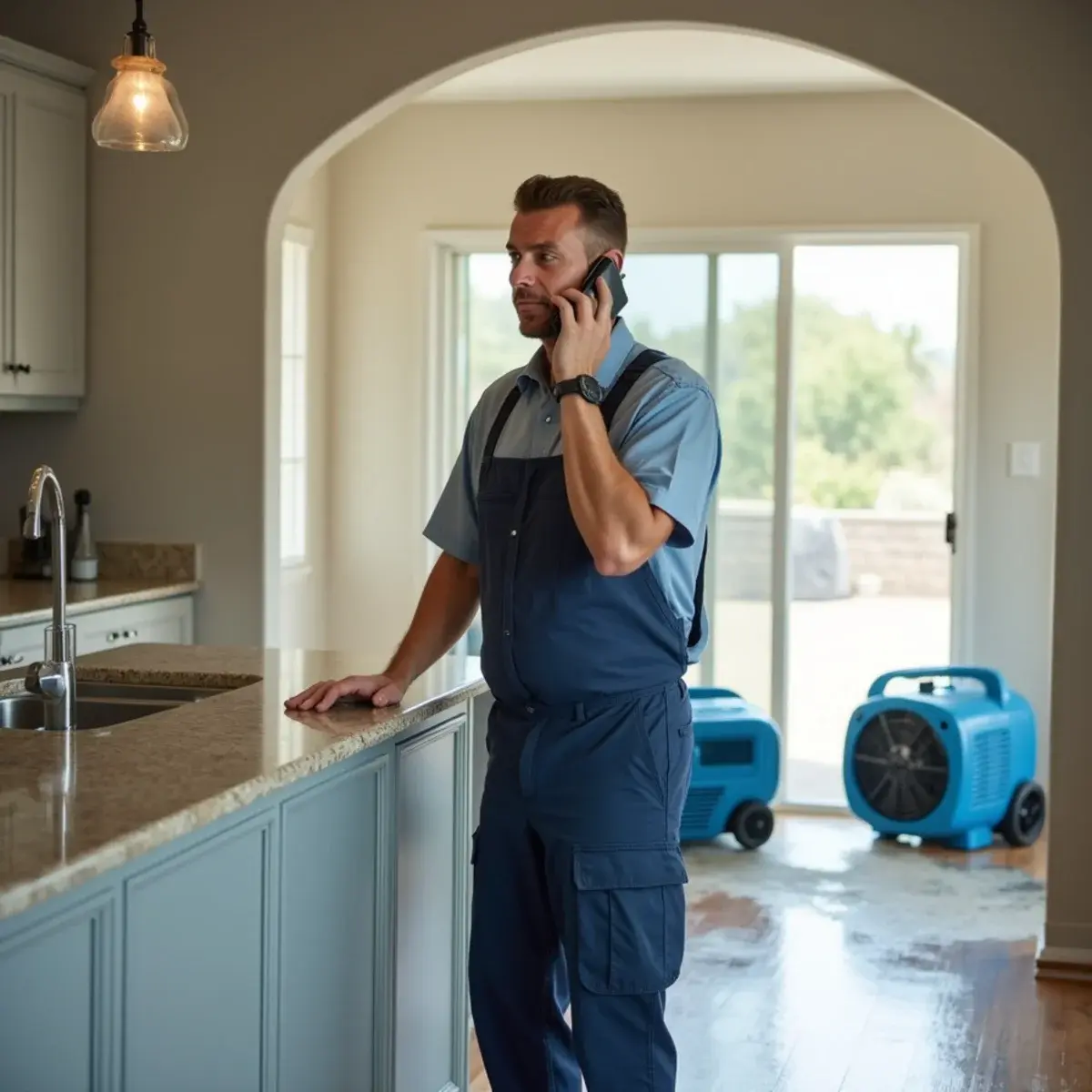
Step 4: Call for Extraction
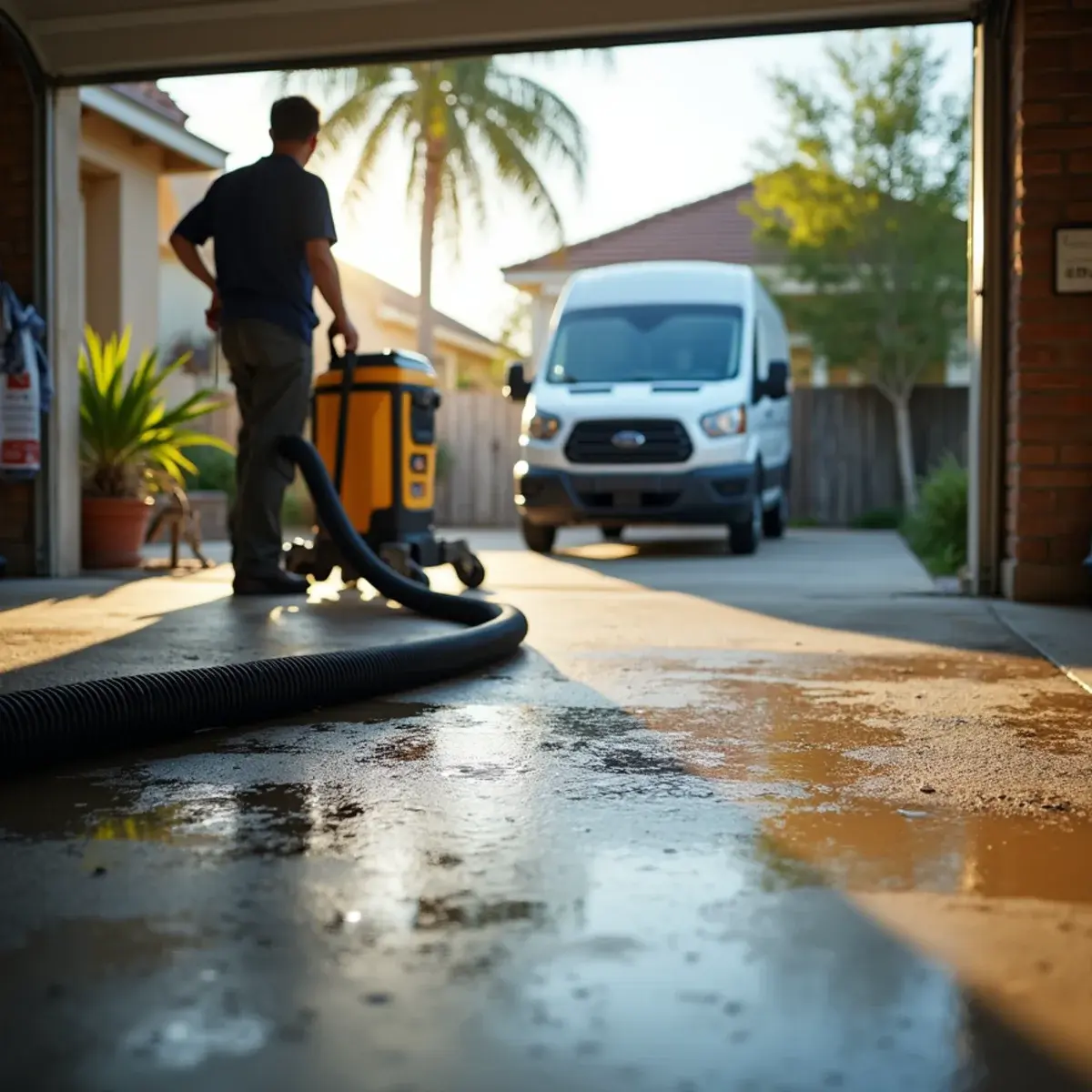
Forty to eighty gallons across a garage slab is not a towel job, and the important part is not the water you can see.
Water pooling against a shared garage wall wicks into the bottom plate and up into the drywall on the living-space side. Stored cardboard boxes sitting directly on the slab absorb water within minutes. And if the heater is in an interior closet, the water has gone into the flooring of every adjacent room.
Extraction plus drying of the wall assembly is what prevents this from becoming a mold problem in the living room six weeks from now.
What This Usually Costs and What Insurance Covers
The water heater itself is typically not covered — carriers treat the appliance as a maintenance item that wore out. The resulting water damage usually is covered, as a sudden and accidental loss.
One caveat worth knowing: if the tank had visibly been rusting and weeping for a long time before it failed, a carrier may argue the failure was foreseeable and the damage resulted from deferred maintenance. Which is a strong argument for replacing a heater that is showing signs rather than waiting to see how long it lasts.
The restoration side depends on how far the water traveled, whether it reached the shared wall or interior flooring, and how much stored property was affected. A contained garage slab event with a drain pan is modest. An interior closet failure that reached three rooms of flooring is not.
Preventing the Next One
Water heaters are wear items with a fairly predictable service life, and in this area the honest expectation is eight to twelve years. Beyond that you are on borrowed time, and the failures that cause real damage are almost always on units well past that mark.
Four things worth doing:
- Replace on your schedule, not its own. If yours is past ten years, budget for it now rather than reacting at 6 a.m. on a Sunday.
- Install a drain pan plumbed to the exterior. It turns a catastrophic failure into a puddle in the driveway. It is inexpensive and almost nobody has one.
- Get stored belongings off the garage slab and onto shelving or pallets. Boxes of photographs and paperwork sitting on concrete are the most commonly destroyed items in a garage water loss.
- Put a smart leak detector at the base of the unit. They cost less than one hour of a running failure and they will wake you up.
The Signs a Heater Is About to Go
Tanks usually warn you before they rupture. The signals worth acting on immediately:
- Rust-colored water from the hot tap, which means the tank lining has failed
- Rust streaking on the tank exterior or a mineral ring in the pan
- Popping or rumbling sounds during heating — sediment buildup, which accelerates tank corrosion
- Water pooling at the base, even intermittently
- Noticeably less hot water than it used to deliver
- Any unit past ten years with no maintenance history
The Failure Mode Nobody Watches For
From our crews in the field
Most water heater calls we take are not dramatic tank ruptures. They are slow seeps from the tank seam or a corroded fitting that ran quietly into the garage slab or the closet floor for weeks. The dramatic failure is easier to deal with, because you know about it immediately.
The anode rod is the maintenance item that decides a tank's life, and almost nobody replaces it. It is a sacrificial component that corrodes so the tank does not, and once it is consumed the tank starts giving up. A rod replacement partway through the tank's life is a fraction of the cost of the flooring it protects.
One honest warning about the standard advice: if a tank is actively leaking and you cannot reach the shutoff safely, do not go wading in to find it — particularly in a garage where the electrical panel is often on the same wall. Close the main outside instead.
- Know where the cold-inlet shutoff is before you need it, and check it turns
- A drip pan with a routed drain line turns a flood into a stain
- Replace the anode rod partway through the tank's life — almost nobody does
- Past 10–15 years, replacement is cheaper than the flooring it will take out
Services Mentioned in This Guide
- Appliance Leak Water Damage Cleanup in Cypress, CA — The cabinet toe-kick, the subfloor, and the wall behind the appliance — the places appliance leaks actually hide.
- Emergency Water Damage Restoration in Cypress, CA — A live person answers in three rings and a truck rolls in 30 minutes — any hour, any day, anywhere in Cypress.
- Water Extraction & Removal in Cypress, CA — Truck-mounted units and submersible pumps that move hundreds of gallons an hour — not a rented shop vac.
- Water Damage Restoration in Cypress, CA — Predominantly single-story slab-on-grade tract homes built between 1960 and 1980, with a newer band of construction from the 1990s onward on the west side.
- Water Damage Restoration in Los Alamitos, CA — A compact city of roughly 11,500 with housing concentrated in the 1950s and 1960s, plus a meaningful stock of small commercial and medical buildings along Katella.
Frequently Asked Questions
Only if it is a genuinely minor drip from a fitting rather than the tank. A weeping tank is failing, and tank failures do not stay slow — they progress to full rupture, usually with no additional warning. Shut off the supply and get it replaced.
It can be hot enough to scald when the failure is fresh, and water reaching electrical components in a garage is a hazard. The water itself is Category 1 clean water, so the contamination risk is low — but it escalates to Category 2 within about 48 hours of sitting.
Usually not the heater itself, which carriers treat as a maintenance item. The resulting water damage is generally covered as a sudden and accidental loss, including mitigation and reconstruction.
The full tank capacity — forty to eighty gallons for most residential units — plus whatever keeps flowing through the supply line until it is shut off. If nobody is home to close the valve, that second part can be considerably larger than the first.
Shut Off Water, Then Power, Then Call
That is the sequence and it is worth remembering, because a water heater failure is one of the few household emergencies where doing the right three things in the right order genuinely limits the damage.
If yours has already failed and there is water across the garage or into the house, call us — we are 24/7 across Cypress and the surrounding cities, and the assessment is free.
Open 24 hours a day, 7 days a week — including holidays
On-site within 60 minutes of your confirmed emergency call anywhere in Cypress — or we credit $100 off your final invoice.