
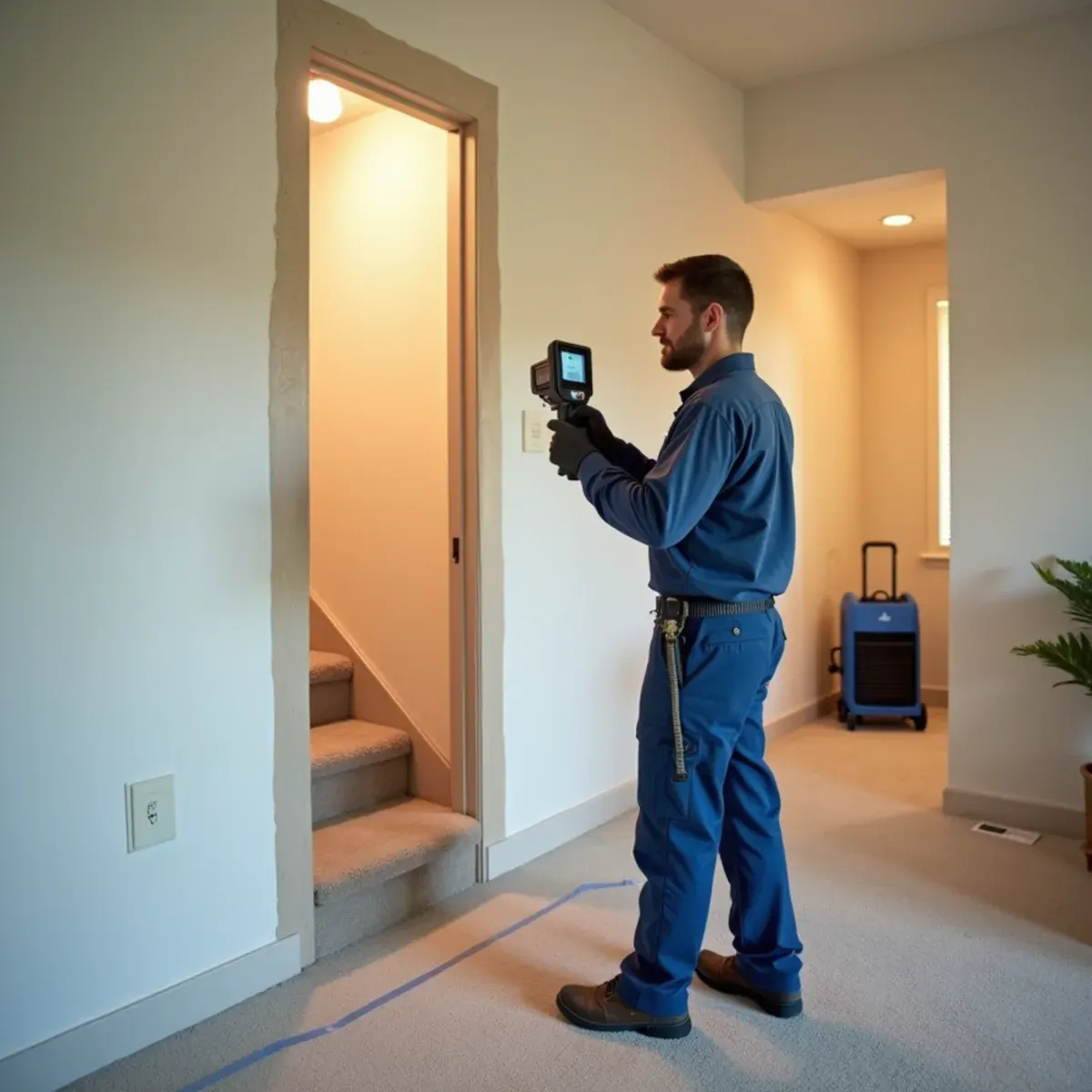
In a lot of Garden Grove houses, nine or ten people live in a home plumbed for a 1955 family of four. That is the context every repair here happens inside. We cannot take the only bathroom out of service for four days, and we cannot fill the one hallway with equipment and bagged debris. So cuts get staged. We open, dry and close one area at a time, keep the kitchen and at least one bathroom working, and keep dust out of the rooms people are actually sleeping in that night.
The failures themselves come from cycle count more than from calendar age. Angle stops, risers and washer hoses in these homes have been worked several times harder than the ones in a two-person household, so the wet area is usually low on a wall behind a toilet, a vanity or a laundry standpipe rather than at a ceiling. We also open a lot of walls in converted garages and back additions in the tracts off Garden Grove Boulevard, where stud spacing was never a reliable sixteen inches on center and the cut line has to be found rather than assumed.
What Garden Grove Changes About Drywall Repair
1Staged cuts keep the house livable
A household of nine cannot decamp to a hotel while a wall dries. We break the work into stages, finish and close one zone before opening the next, and time the loud and dusty steps around when people are out. It takes longer on paper than opening everything at once. In a full house it is the only version that actually gets finished.
2Damage sits low behind heavy-use fixtures
Fixtures in these homes run many times more cycles than the plumbing was designed around, so the failures are angle stops, supply risers and washer hoses rather than pipes in a ceiling. That puts the wet zone in the bottom two feet of the wall. We meter up from the baseboard, cut above the highest reading to a clean seam height, and replace the insulation that has been sitting saturated behind it.
3Additions where the studs move around
Converted garages and rear additions are common here and a fair number were framed without a permit. Stud spacing wanders, blocking shows up where you do not expect it, and sometimes there is no insulation in a wall that should have it. We locate the framing before marking a cut line rather than measuring off a standard that was never followed in the first place.
How the Work Runs
The method is the same one we use on every drywall repair job, documented to the IICRC S500:2025 standard. Here it is in short — the full drywall water damage repair process explains each stage in detail.
- Meter the wall first
- Decide dry-in-place or remove
- Open the cavity, not the wall
- Cut to a stud and a seam line
- Clear the cavity and dry the framing
- Tape, texture, prime, paint
The Garden Grove Background Worth Knowing
A 1958 tract home was plumbed for a family of four with one bathroom in regular use, one washing machine, and a single water heater sized to match. Many Garden Grove homes today support considerably more than that, and the plumbing feels it.
There is more on the housing stock, drainage and plumbing history of this city on our water damage restoration in Garden Grove page.
Garden Grove at a glance
- Dominant construction era
- 1950–1970
- Foundation type
- slab on grade
- Supply piping found here
- galvanized steel, under-slab copper
- Drain line materials
- cast iron, clay
- Terrain and water table
- flat, moderate water table
- Most common local failure
- accelerated wear on angle stops, supply risers and washing machine hoses from far higher fixture cycle counts
- Highest-value local prevention
- shorter replacement intervals on every wear item — hoses at five years without exception
What It Costs in Garden Grove
We do not quote a number over the phone before seeing the property — anyone who does is guessing. The variables that actually move the price on a drywall repair job are how much board comes out, cut height and seam count, texture type and match difficulty, and they are broken down in full on the drywall water damage repair page. The assessment and the written estimate are free anywhere in Garden Grove, day or night, with no obligation.
Drywall Repair Questions from Garden Grove Homeowners
Yes, and in this city that is how we usually do it. We work zone by zone, so one bathroom and the kitchen stay in service throughout. Each zone gets opened, dried, closed and painted before the next one starts, and equipment stays in the area being worked rather than filling the hallway. It stretches the calendar by a few days. It also means nobody sleeps in a room with an open wall or moves out at their own expense.
No, and that assumption is why a lot of walls come out that did not need to. Gypsum board that got clean water, still reads firm under thumb pressure, and is coming down in moisture content day over day can usually be dried in place through the cavity. What forces removal is contaminated water, a core that has softened or swelled, visible growth on the paper, or insulation behind it that holds moisture against the board. We take readings before we answer that question.
Usually two feet or four feet above the floor, measured level across the whole run rather than following the stain. Board comes in four-foot widths, so a cut at either height lands the new seam where a factory edge would sit, which is far easier to hide than a seam floating mid-wall. The cut also has to end at the center of a stud on each side, so the patch has something to fasten to. Cutting to the shape of the damage looks thrifty and finishes badly.
Yes, all five ZIP codes — 92840, 92841, 92843, 92844, and 92845 — for both residential and commercial properties. Response time runs about twenty-five to thirty-five minutes depending on where in the city.