
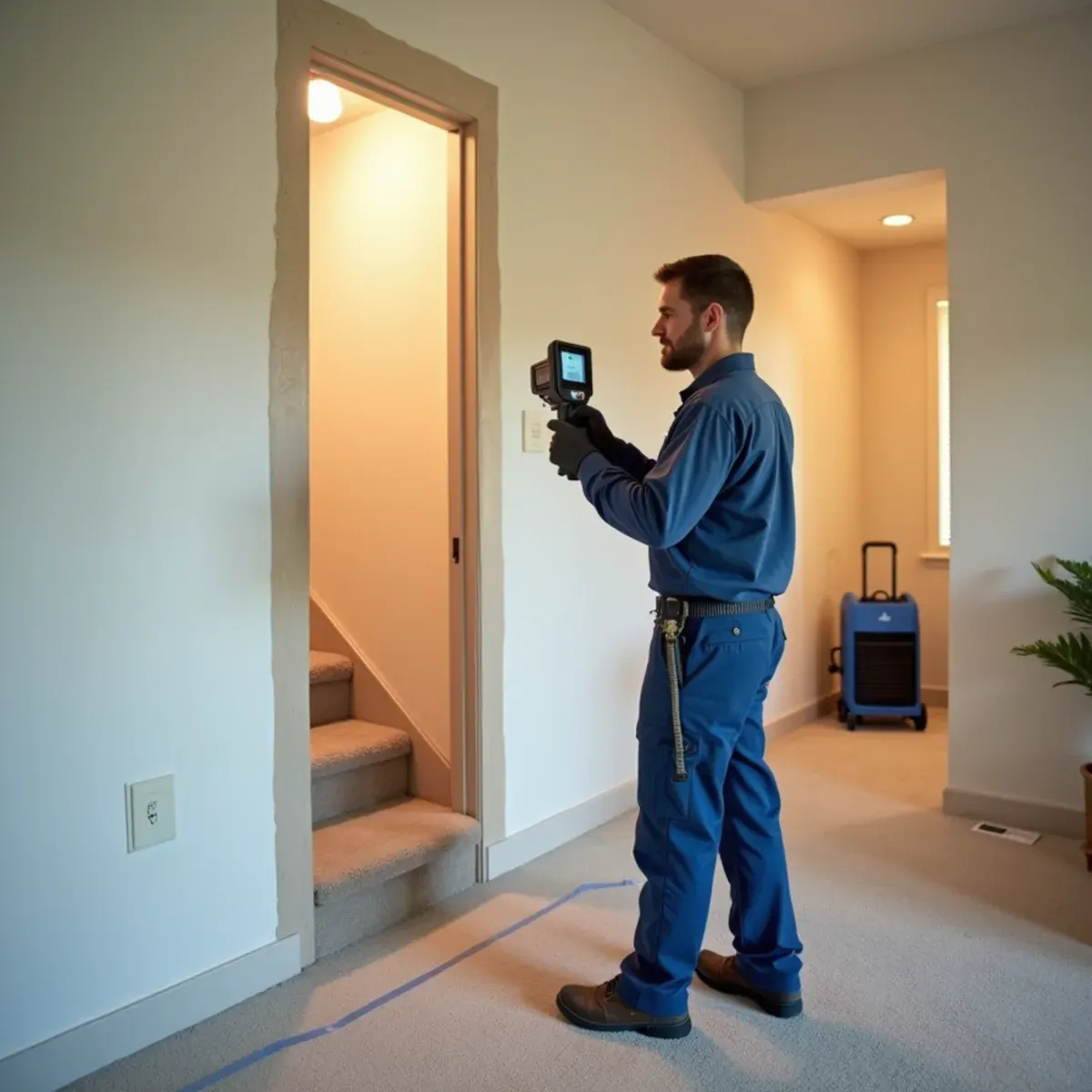
Meters read differently in Westminster, and it catches people out. Near the Bolsa Chica channel the water table sits close to the surface, so slabs here carry a high baseline moisture load year round. Put a pin meter into the bottom six inches of a wall in a house with no leak at all and it will read elevated. The practical effect on drywall work is that we establish what normal looks like in an unaffected room first, then set the cut. Skip that step and the flood cut keeps creeping upward chasing a number that was never going to drop.
The second Westminster factor is commercial. Bolsa Avenue through Little Saigon is dense with independent restaurants, markets and small retail in buildings from the fifties and sixties, and those walls are rarely plain painted board. There is fiberglass-reinforced panel, tile, shelf standards and equipment fastened straight through the gypsum. Opening one means unbuilding in the right order and rebuilding to a finish that a health inspector will sign off on, on a timeline that lets the business reopen. More of that work happens overnight than during trading hours.
What Westminster Changes About Drywall Repair
1Baseline slab moisture skews the readings
A shallow water table means Westminster slabs release vapor as a permanent background condition, and the bottom of every wall reads damp because of it. We take control readings in a dry room and in an unaffected wall of the same house first, then compare. Without that reference, an honest meter tells you to cut half the wall out for no reason at all.
2Cut height set by readings, not habit
Two feet is a convention, not a rule. We meter up the wall until readings settle back to the house baseline, then take the cut to the nearest clean seam height above that. Sometimes that is twelve inches and sometimes it is four feet. When the board goes back we hold the bottom edge slightly off the slab behind the baseboard so it is not standing in the damp.
3Bolsa Avenue walls hide several layers
Restaurant and market walls along Bolsa are built up over decades: panel over tile over the original board, with equipment anchored through all of it. We photograph and label as we take it apart, so what goes back matches what a health inspection expects rather than a generic patch. That order of operations is most of why these jobs run at night and finish before opening.
How the Work Runs
The method is the same one we use on every drywall repair job, documented to the IICRC S500:2025 standard. Here it is in short — the full drywall water damage repair process explains each stage in detail.
- Meter the wall first
- Decide dry-in-place or remove
- Open the cavity, not the wall
- Cut to a stud and a seam line
- Clear the cavity and dry the framing
- Tape, texture, prime, paint
The Westminster Background Worth Knowing
Westminster's shallow groundwater means many slabs here carry a higher baseline moisture load than slabs a few miles inland. In an undamaged home with breathable flooring that is usually a non-issue. It becomes an issue in two situations.
There is more on the housing stock, drainage and plumbing history of this city on our water damage restoration in Westminster page.
Westminster at a glance
- Dominant construction era
- 1950–1970
- Foundation type
- slab on grade
- Supply piping found here
- under-slab copper, galvanized steel
- Drain line materials
- cast iron
- Terrain and water table
- coastal-flat, shallow water table
- Most common local failure
- flooring installed over a slab that was never tested and is still releasing vapor
- Highest-value local prevention
- in-situ slab relative humidity testing before any new floor goes down
What It Costs in Westminster
We do not quote a number over the phone before seeing the property — anyone who does is guessing. The variables that actually move the price on a drywall repair job are how much board comes out, cut height and seam count, texture type and match difficulty, and they are broken down in full on the drywall water damage repair page. The assessment and the written estimate are free anywhere in Westminster, day or night, with no obligation.
Drywall Repair Questions from Westminster Homeowners
Near the channel it often is. The water table sits high here, slabs stay damp, and that moisture migrates into the bottom few inches of the wall and behind the baseboard permanently. The way to tell the difference is comparison: we read an unaffected wall on the same slab and see whether your problem area is genuinely higher or simply typical for the house. If it is typical, the answer is ventilation and a better base detail, not a saw.
No, and that assumption is why a lot of walls come out that did not need to. Gypsum board that got clean water, still reads firm under thumb pressure, and is coming down in moisture content day over day can usually be dried in place through the cavity. What forces removal is contaminated water, a core that has softened or swelled, visible growth on the paper, or insulation behind it that holds moisture against the board. We take readings before we answer that question.
Usually two feet or four feet above the floor, measured level across the whole run rather than following the stain. Board comes in four-foot widths, so a cut at either height lands the new seam where a factory edge would sit, which is far easier to hide than a seam floating mid-wall. The cut also has to end at the center of a stud on each side, so the patch has something to fasten to. Cutting to the shape of the damage looks thrifty and finishes badly.
Westminster has a shallow water table, so slabs here carry more baseline moisture than slabs further inland. Normally that is harmless, but it matters when installing flooring over the slab and it means drying after a loss takes longer. We test with in-situ relative humidity probes before any new floor goes down.