
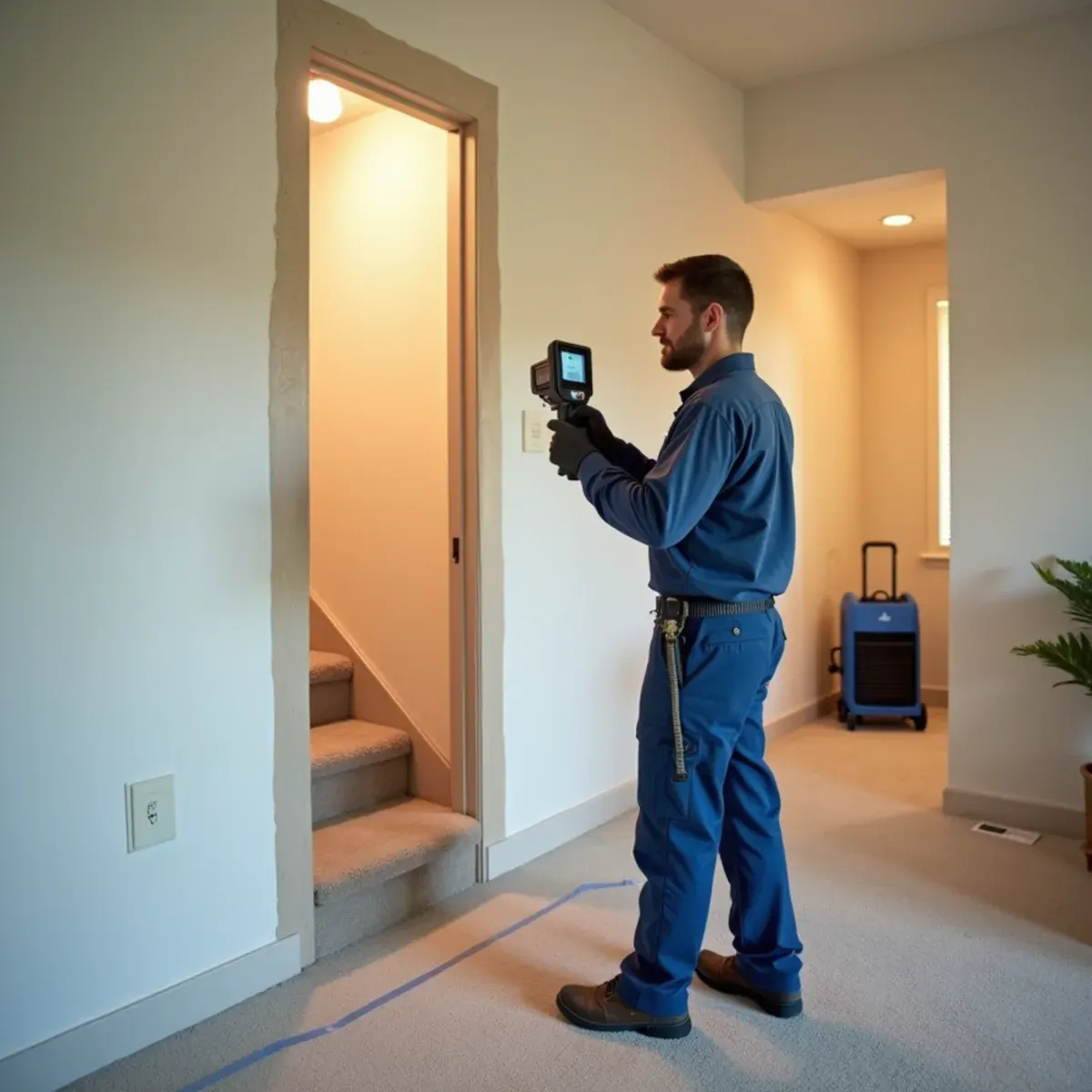
It comes in sideways during a storm. Salt air eats flashing and sealant around windows here far faster than anywhere inland, and driven rain finds the gap at a window head, runs down inside the wall cavity, and surfaces as a stain below the sill, sometimes several feet from where it actually entered. Cutting out the stained board and hanging new gypsum is the easy half of that job. If the flashing stays open, the same patch is wet again the next time the wind comes from the right direction, and the second repair is nobody's favorite conversation.
The rest of the city adds its own conditions. Huntington Harbour sits on tidal groundwater behind seawalls, so ground-level walls in those homes handle damp from below alongside weather from outside, and the cut height gets set accordingly. Downtown, on the narrow lots off Main Street with no driveway, everything moves by hand. Long hose runs, wet gypsum carried out to the street, equipment staged where it does not block a neighbor who has nowhere else to park. None of that changes how a wall gets rebuilt. It changes how long the day takes, and we say so before we start.
What Huntington Beach Changes About Drywall Repair
1The flashing gets named in the scope
A wall opened below a window tells you where the water exited, not where it got in. We trace it to the head or the jamb, photograph the corroded flashing or failed sealant, and put it in the scope in writing. Insurers pay for the resulting damage far more readily than for the failed component, and a homeowner who knows which detail failed can get it fixed before the next storm.
2Harbour walls damp from two directions
Waterfront and canal-front homes in Huntington Harbour sit on tidal groundwater behind seawalls. Ground-level walls there can be taking moisture up from the slab while weather works on them from outside, and readings behave accordingly. We check both before setting a cut height, because a flood cut sized only to the visible stain often stops below where the wall is actually wet.
3Narrow downtown lots slow the day
On the numbered streets off Main there is no driveway, no side yard and nowhere to stage. Board comes in on shoulders past parked cars, wet gypsum goes out the same way, and hose runs stretch to whatever curb we can reach. It does not change the repair. It does change the labor hours, so we say that at the estimate instead of at the invoice.
How the Work Runs
The method is the same one we use on every drywall repair job, documented to the IICRC S500:2025 standard. Here it is in short — the full drywall water damage repair process explains each stage in detail.
- Meter the wall first
- Decide dry-in-place or remove
- Open the cavity, not the wall
- Cut to a stud and a seam line
- Clear the cavity and dry the framing
- Tape, texture, prime, paint
The Huntington Beach Background Worth Knowing
Salt does not damage buildings directly. It damages the details that keep water out, and then water does the rest.
There is more on the housing stock, drainage and plumbing history of this city on our water damage restoration in Huntington Beach page.
Huntington Beach at a glance
- Dominant construction era
- 1960–1990
- Foundation type
- slab on grade
- Supply piping found here
- under-slab copper
- Drain line materials
- cast iron, ABS
- Terrain and water table
- coastal-flat, shallow water table
- Most common local failure
- wind-driven rain entering through salt-corroded window flashing and failed exterior sealant
- Highest-value local prevention
- renewing exterior caulking and flashing on a far shorter cycle than inland guidance suggests
What It Costs in Huntington Beach
We do not quote a number over the phone before seeing the property — anyone who does is guessing. The variables that actually move the price on a drywall repair job are how much board comes out, cut height and seam count, texture type and match difficulty, and they are broken down in full on the drywall water damage repair page. The assessment and the written estimate are free anywhere in Huntington Beach, day or night, with no obligation.
Drywall Repair Questions from Huntington Beach Homeowners
Around here it is usually the flashing or sealant at the window head. Salt air corrodes those metal details quickly, a westerly storm drives rain into the opening, and the water runs down inside the wall and shows below the sill. Plumbing gets blamed because the stain is indoors. When we open the wall we look up the cavity to the entry point, photograph what failed, and note it in the report so the wall repair is not the only thing that gets done.
No, and that assumption is why a lot of walls come out that did not need to. Gypsum board that got clean water, still reads firm under thumb pressure, and is coming down in moisture content day over day can usually be dried in place through the cavity. What forces removal is contaminated water, a core that has softened or swelled, visible growth on the paper, or insulation behind it that holds moisture against the board. We take readings before we answer that question.
Usually two feet or four feet above the floor, measured level across the whole run rather than following the stain. Board comes in four-foot widths, so a cut at either height lands the new seam where a factory edge would sit, which is far easier to hide than a seam floating mid-wall. The cut also has to end at the center of a stud on each side, so the patch has something to fasten to. Cutting to the shape of the damage looks thrifty and finishes badly.
Ambient humidity near the coast stays high enough for long enough that materials dry slowly on their own, which widens the window in which growth can establish after any moisture event. Combined with salt-accelerated failures of exterior sealants and flashings, coastal homes simply get more moisture intrusion and dry from it more slowly.