
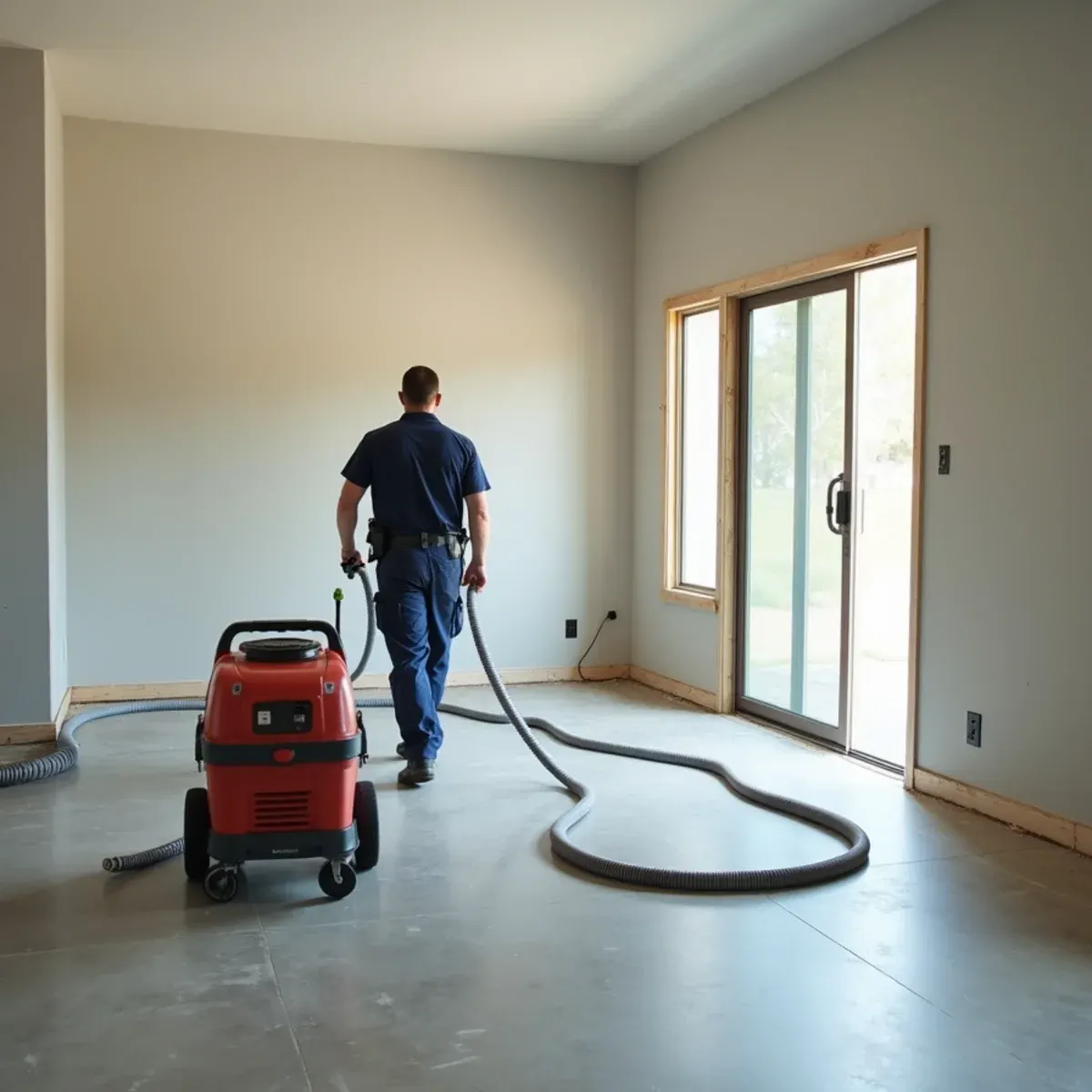
The first question in a Garden Grove house is usually not what is wet. It is where everybody is going to sleep tonight. Plenty of these homes carry three generations under one roof, and moving eight or ten people out for four days so a machine can run is not a realistic plan. Ozone requires an empty, sealed building with no people, no pets and no plants in it, so on most jobs here it is simply off the table. We build around hydroxyl treatment, hard source removal and containment, and we say up front that it takes longer.
The plumbing is the other half of it. These are 1950s and 1960s houses with galvanized lines and under-slab copper sized for one small family, now carrying a household that uses every fixture from five in the morning until midnight. Lines back up, angle stops weep, joints separate under load, and the residue that ends up in a wall base or under a vanity is what you are actually smelling. We work with many Vietnamese and Korean-speaking families here, so we slow the explanation down and put the scope in writing.
What Garden Grove Changes About Odor Removal
1A full house rules out ozone
Ozone is effective and it is also unsafe to breathe, which means it only runs in a completely empty structure with a proper airing period afterward. In a household with elderly parents, young children and nobody able to relocate, we use hydroxyl generators instead. They work in occupied space, they are gentler, and they take longer. We would rather tell you that on day one than promise a weekend.
21955 plumbing under a modern load
A house plumbed for one family in the fifties, now serving three, sees several times the flow and drain cycles it was designed for. That is why backups and slow supply leaks are more common here than in newer tracts nearby, and why sewage residue in a wall cavity shows up more often. We look at how the house is actually used, not just the leak, when deciding how far removal has to go.
3Written scope, photos, nothing assumed
When several family members share decisions about a house, verbal explanations get lost between them. We mark what is being cut and why, show the moisture readings on the meter rather than describing them, photograph every stage, and leave a written scope the whole household and the adjuster can read. Nothing gets opened before somebody in the family understands the reason.
How the Work Runs
The method is the same one we use on every odor removal job, documented to the IICRC S500:2025 standard. Here it is in short — the full odor removal & deodorization process explains each stage in detail.
- Locate the residue
- Remove what holds it
- Clean the surfaces that stay
- Filter the air while we work
- Seal only what cannot be cleaned
- Treat the air, then verify
The Garden Grove Background Worth Knowing
A 1958 tract home was plumbed for a family of four with one bathroom in regular use, one washing machine, and a single water heater sized to match. Many Garden Grove homes today support considerably more than that, and the plumbing feels it.
There is more on the housing stock, drainage and plumbing history of this city on our water damage restoration in Garden Grove page.
Garden Grove at a glance
- Dominant construction era
- 1950–1970
- Foundation type
- slab on grade
- Supply piping found here
- galvanized steel, under-slab copper
- Drain line materials
- cast iron, clay
- Terrain and water table
- flat, moderate water table
- Most common local failure
- accelerated wear on angle stops, supply risers and washing machine hoses from far higher fixture cycle counts
- Highest-value local prevention
- shorter replacement intervals on every wear item — hoses at five years without exception
What It Costs in Garden Grove
We do not quote a number over the phone before seeing the property — anyone who does is guessing. The variables that actually move the price on a odor removal job are how much material comes out, where the residue ended up, the type of odor involved, and they are broken down in full on the odor removal & deodorization page. The assessment and the written estimate are free anywhere in Garden Grove, day or night, with no obligation.
Odor Removal Questions from Garden Grove Homeowners
With hydroxyl generators, yes. They are built to run in occupied space, and that is the approach we default to in Garden Grove precisely because most households here cannot empty out. Ozone is different and is never run with anyone inside, pets included. If a specific area truly needs ozone, we isolate and seal just that space, run it while the family stays elsewhere in the home, and air it thoroughly before anyone re-enters.
It may mask it for a few weeks. Rental units are usually undersized for a whole structure, and they treat air rather than the material producing the odor. They also should not run with anyone home, and long heavy cycles can degrade rubber seals, leather, and paint sheen. If the residue sits in a wall cavity or under the flooring, no amount of ozone reaches it.
Because residue was left somewhere. That is the answer nearly every time. The usual spots are attic insulation, the inside of flex duct, the wall cavity behind drywall that was replaced but never cleaned, the subfloor under new flooring, and the back of a cabinet run. Drying a structure to standard does not remove residue, so a job dried correctly can still smell if cleaning stopped at visible surfaces.
Yes, all five ZIP codes — 92840, 92841, 92843, 92844, and 92845 — for both residential and commercial properties. Response time runs about twenty-five to thirty-five minutes depending on where in the city.