
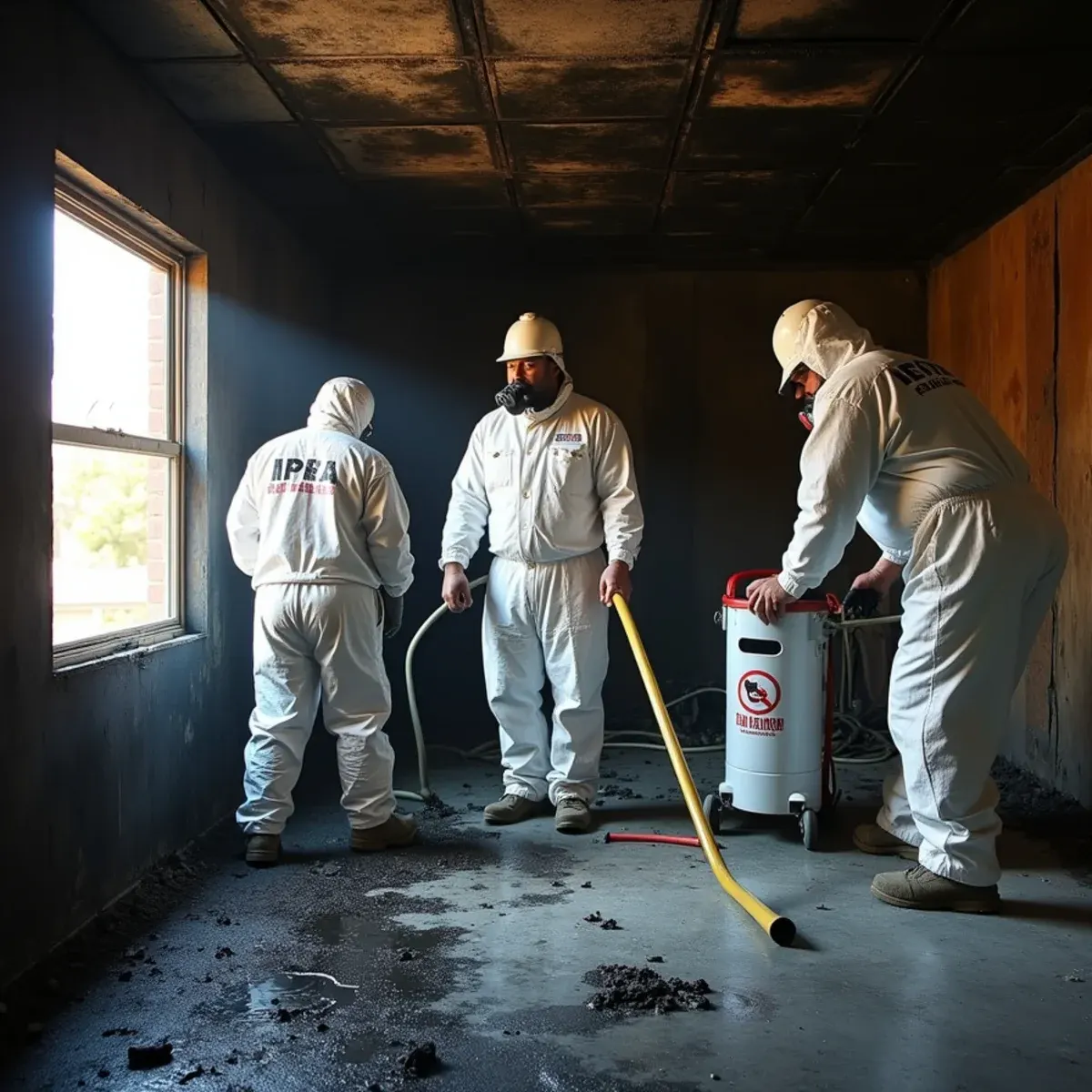
If you live in one of Stanton's manufactured-home parks, you may already have been told no. A lot of restoration companies won't work on manufactured housing after a fire, because the construction is unfamiliar and the insurance is often written differently. We take those calls. A manufactured home burns differently from a stick-built house — thin wall panels, wood-grain vinyl surfaces that melt rather than char, and a fire that reaches the roof cavity quickly. The residue is wet and smeary, not powdery, and it needs a different cleaning method entirely.
Then there's the water. Suppression water runs through the particleboard decking and lands in the belly wrap under the floor, where it has no way out. Left alone it sits for months and takes the floor with it. We open and drain the belly, dry the cavity and meter the decking rather than assuming the visible damage is the whole job. Stanton also has a lot of older apartment buildings packed tight along the Beach Boulevard corridor, where one unit's fire becomes four units' smoke — a different job, often the same night.
What Stanton Changes About Fire & Smoke Damage
1The belly wrap holds water for months
Under a manufactured home's particleboard decking is a belly wrap that catches everything and lets nothing evaporate. Suppression water collects there. Left alone it stays wet through an entire season and takes the decking and insulation with it. We open the belly, drain it, dry the cavity and meter the decking from above before anyone calls the job finished.
2Melted vinyl panels need different cleaning
Manufactured-home interiors use vinyl-clad gypsum panels and wood-grain laminates that soften and melt rather than char. The residue they leave is wet and sticky and just smears under a dry sponge, so it has to be cleaned wet with the right chemistry, and some panels won't come clean at all. We'll tell you which is which instead of scrubbing something that's already lost.
3Dense apartment blocks off Beach Boulevard
Stanton also carries a lot of older, tightly packed apartment stock. One unit's kitchen fire routinely becomes four units' smoke problem, and most residents here are renters whose contents aren't covered by the building's policy. Photograph everything before it's moved, put your notice to management in writing, and ask for your own copy of the damage documentation.
How the Work Runs
The method is the same one we use on every fire & smoke damage job, documented to the IICRC S500:2025 standard. Here it is in short — the full fire & smoke damage restoration process explains each stage in detail.
- Secure the structure
- Water extraction and drying first
- Assess residue type room by room
- Remove non-salvageable material and clean the rest
- Deodorize at the source
- Contents restoration and rebuild
The Stanton Background Worth Knowing
Mobile and manufactured homes need a genuinely different restoration approach, and the reason is what they are built from. The floor system is typically particleboard or OSB over a wood frame with insulation and a vapor barrier belly wrap underneath — and particleboard exposed to water swells, loses structural integrity, and does not recover. It cannot be dried back to serviceable the way plywood often can.
There is more on the housing stock, drainage and plumbing history of this city on our water damage restoration in Stanton page.
Stanton at a glance
- Dominant construction era
- 1950–1975
- Foundation type
- mixed on grade
- Supply piping found here
- galvanized steel, copper, manufactured-home PEX and poly
- Drain line materials
- cast iron
- Terrain and water table
- flat, moderate water table
- Most common local failure
- underfloor leaks in manufactured homes, sealed inside the belly wrap where they cannot evaporate
- Highest-value local prevention
- checking for soft spots underfoot, because a manufactured-home floor gives no other warning
What It Costs in Stanton
We do not quote a number over the phone before seeing the property — anyone who does is guessing. The variables that actually move the price on a fire & smoke damage job are extent of structural burn, how far the smoke traveled, residue type, and they are broken down in full on the fire & smoke damage restoration page. The assessment and the written estimate are free anywhere in Stanton, day or night, with no obligation.
Fire & Smoke Damage Questions from Stanton Homeowners
Yes. Manufactured homes in Stanton's parks are a normal part of our work. They need a different approach — melted vinyl-clad panels rather than charred drywall, wet smeary residue that has to be cleaned with degreasing chemistry, and suppression water sitting in the belly wrap under the floor where nothing evaporates on its own. We open and drain the belly rather than metering the surface and hoping. We'll also be straight with you about which panels won't come clean.
Fire suppression uses enormous volumes of water in a short time — often thousands of gallons. That water saturates ceilings, insulation, walls, and floors well beyond the burned area, and it has to be extracted and dried like any other water loss, on top of the fire work.
Yes, when the residue is removed completely — including inside wall cavities, ductwork, attic insulation, and behind cabinetry. Odor that returns later always means residue was left somewhere. Masking agents and ozone alone do not solve it.
Yes, and we say so explicitly because a lot of companies will not. Manufactured homes need a different approach — opening the belly wrap to dry the floor cavity, removing saturated insulation, and honestly assessing particleboard decking, which usually cannot be dried back to serviceable.