
Here's the thing most people in Old Towne don't expect: the storm damage that costs the most isn't the water you see on the floor. It's the water that runs off a hundred-year-old roof, past a failed gutter, down a wall, and into the crawl space under a raised foundation. It sits in the dirt for weeks. By the time the smell reaches the living room, the sill plates and joists have been wet through several storms. We check crawl spaces first on every Old Towne call.
Outside the historic square mile the picture changes. The postwar tracts toward El Modena and Santiago Hills are slab, so storm water shows up at the door threshold and along the garage slab instead. Orange Park Acres brings half-acre lots, long driveways and horse-property drainage that nobody clears until it fails. Mature canopy across the whole city means limbs on roofs during wind. We're about thirteen minutes east of our Cypress base, and during an atmospheric river we dispatch as fast as conditions allow, in call order.
What Orange Changes About Storm Damage
1Tarping historic roofs without new damage
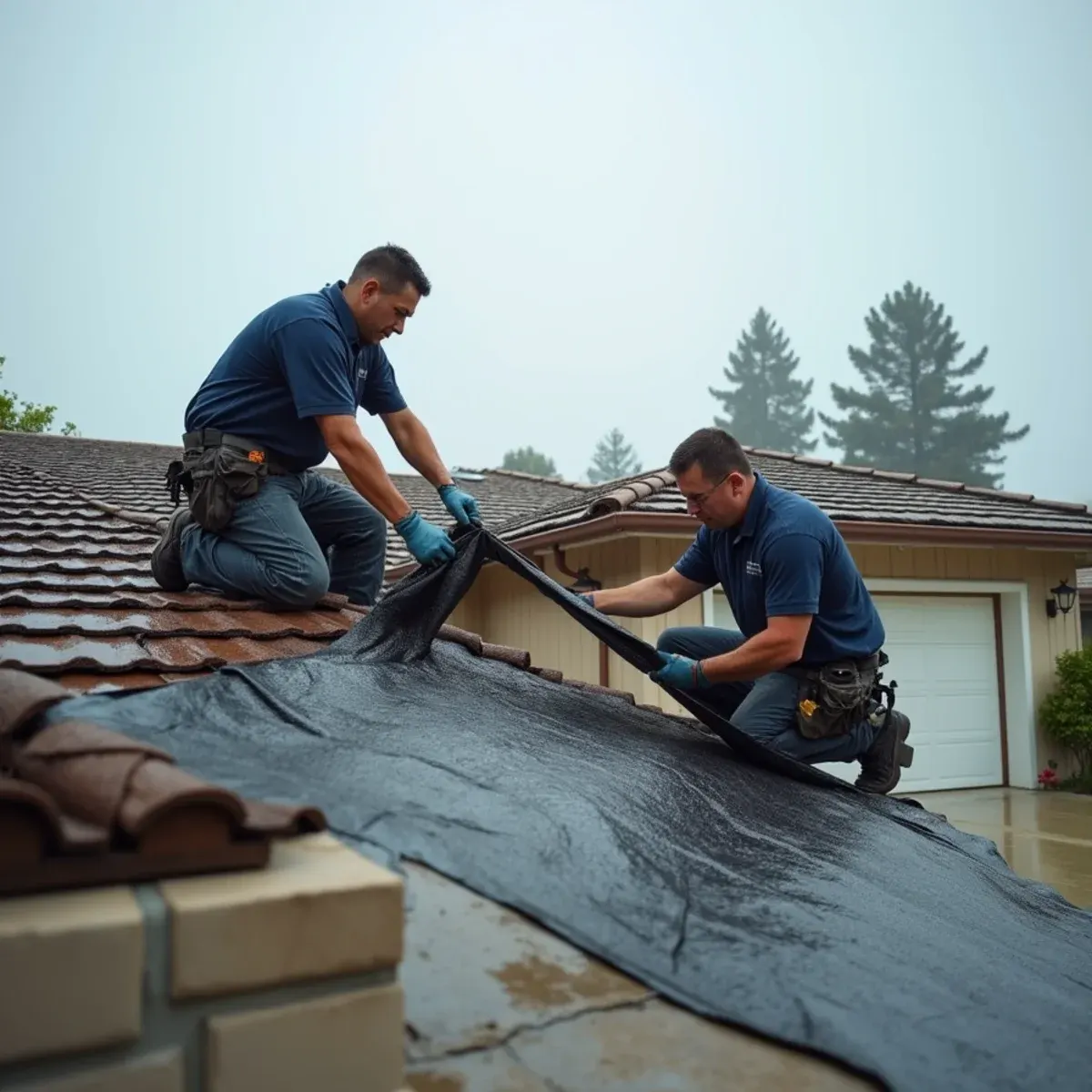
Old Towne roofs carry original sheathing, skip sheathing and sometimes three layers of history. Screwing battens through that the way we would on a 1990s tract roof creates the next leak. We ballast and strap where we can, anchor into structure only where we must, and photograph everything for the adjuster and, when it applies, for historic district review.
2Crawl spaces after the storm passes
A raised foundation gives water somewhere to hide. After a big system moves through, we open access hatches, meter the soil and the underside of the subfloor, and look hard at the sill plates. IICRC S500:2025 treats storm intrusion through soil as Category 3, so the crawl space gets cleaned and dried, not just aired out and forgotten.
3Santiago Creek and street flow
Neighborhoods along Santiago Creek and near Hart Park sit lower than some of the streets feeding them, and a night of hard rain moves a lot of water through a flat grid fast. Sandbags at the door help less than clearing the yard drains and the alley behind you. We'd rather help you find where the water enters than tarp the same wall twice.
How the Work Runs
The method is the same one we use on every storm damage job, documented to the IICRC S500:2025 standard. Here it is in short — the full storm damage restoration process explains each stage in detail.
- Emergency tarping and board-up
- Water diversion and extraction
- Full damage documentation
- Interior mitigation
- Structural drying to standard
- Permanent repairs
The Orange Background Worth Knowing
A slab leak announces itself eventually because concrete has nowhere to put the water. A crawl-space leak has somewhere to put it. Dirt absorbs a slow drip almost indefinitely, so the loss never produces the one thing homeowners watch for, which is water on a floor. Meanwhile the humidity under the house climbs, the fiberglass insulation between the joists soaks up moisture and sags, the subfloor picks up that moisture from below, and mold begins on the joists where it is invisible and undisturbed. Everything about this failure is built to stay quiet.
There is more on the housing stock, drainage and plumbing history of this city on our water damage restoration in Orange page.
Orange at a glance
- Dominant construction era
- 1888–1975
- Foundation type
- mixed on grade
- Supply piping found here
- original turn-of-century piping, galvanized steel, under-slab copper
- Drain line materials
- cast iron, clay
- Terrain and water table
- flat, moderate water table
- Most common local failure
- crawl-space leaks under raised-foundation historic homes, running for weeks because water drips into the dirt instead of pooling on a floor
- Highest-value local prevention
- an annual crawl-space inspection, which almost nobody does and which catches nearly everything early
What It Costs in Orange
We do not quote a number over the phone before seeing the property — anyone who does is guessing. The variables that actually move the price on a storm damage job are size of the opening and duration of intrusion, emergency mitigation scope, how many rooms the water reached, and they are broken down in full on the storm damage restoration page. The assessment and the written estimate are free anywhere in Orange, day or night, with no obligation.
Storm Damage Questions from Orange Homeowners
Yes. Emergency stabilization is allowed — nobody expects you to leave a house open to the sky. We use the least invasive anchoring the wind will let us get away with, keep fasteners out of visible trim and original fascia, and document the condition of the roof before and after. Then we give you photos you can hand to the city and to your insurer when the permanent repair gets designed.
During. Emergency tarping and board-up happen in the rain — that is the entire point of them. We triage by severity, so active intrusion into occupied living space goes to the front of the queue.
Sudden wind and rain damage is generally covered, including the resulting interior water damage. What gets excluded is damage from a roof that had already failed or from deferred maintenance, and flooding from water that came across the ground, which needs separate flood insurance.
Pick a dry day, open the hatch, and use a good flashlight. You are looking at the soil directly under the bathrooms, kitchen, and laundry for dark damp patches, at the insulation for sagging or fallen batts, and at the piers and foundation vents for rust or white staining. Trust your nose as much as your eyes. If the access is too tight or you would rather not go under, we will do the inspection and photograph what is down there.