
It usually starts with a hatch door. A homeowner off Glassell or Chapman lifts the crawl-space cover on a 1910 Craftsman and finds three inches of standing water sitting on bare dirt, floor joists a hand's width above it. Nothing upstairs looks wrong — no stained ceiling, no soft flooring, no smell yet. That is the shape flood damage takes in Old Towne Orange. The raised foundations that make these houses worth preserving also make them a basin for ground water, and the soil underneath keeps whatever the water left behind.
Outside the historic square mile it changes completely. The postwar tract out toward El Modena and the newer slab homes in Santiago Hills and Serrano Heights sit directly on grade, so floodwater comes in at the door line and spreads across finished flooring instead of collecting below it. The equestrian half-acre lots in Orange Park Acres add a different problem. Runoff crossing corrals and paddocks before it reaches a house is loaded with animal waste, which puts it squarely in Category 3 under IICRC S500:2025 no matter how clear it looks.
What Orange Changes About Flood Cleanup
1Crawl-space floodwater sits on soil
Under a raised Old Towne foundation there is no floor to extract from. We pump what we can, then deal with the ground itself: removing saturated debris and any vapor barrier, disinfecting the grade, and drying the joists, subfloor and sill from below with containment in place. Skip that step and the odor comes back in three weeks with the first warm stretch.
2Orange Park Acres runoff carries animal waste
Half-acre equestrian lots change the water. Runoff that crosses corrals, paddocks and manure storage before reaching a house arrives with a bacterial load well past what a typical residential flood carries. On those properties we scope disposal wider, work in full PPE from the first entry, and disinfect hard surfaces twice rather than once. The horses are the reason, and owners out there generally already know it.
3Historic material versus Category 3 rules
Original Douglas fir subfloor, lath and plaster, and hundred-year-old baseboard are worth fighting for, and Category 3 rules push hard toward removing porous material. We make that call item by item with a meter, not by habit. Dimensional lumber that dries fully and disinfects can usually stay. Insulation, particleboard and anything laminated goes, and we say so before demolition starts.
How the Work Runs
The method is the same one we use on every flood cleanup job, documented to the IICRC S500:2025 standard. Here it is in short — the full flood damage cleanup process explains each stage in detail.
- Safety assessment and utility check
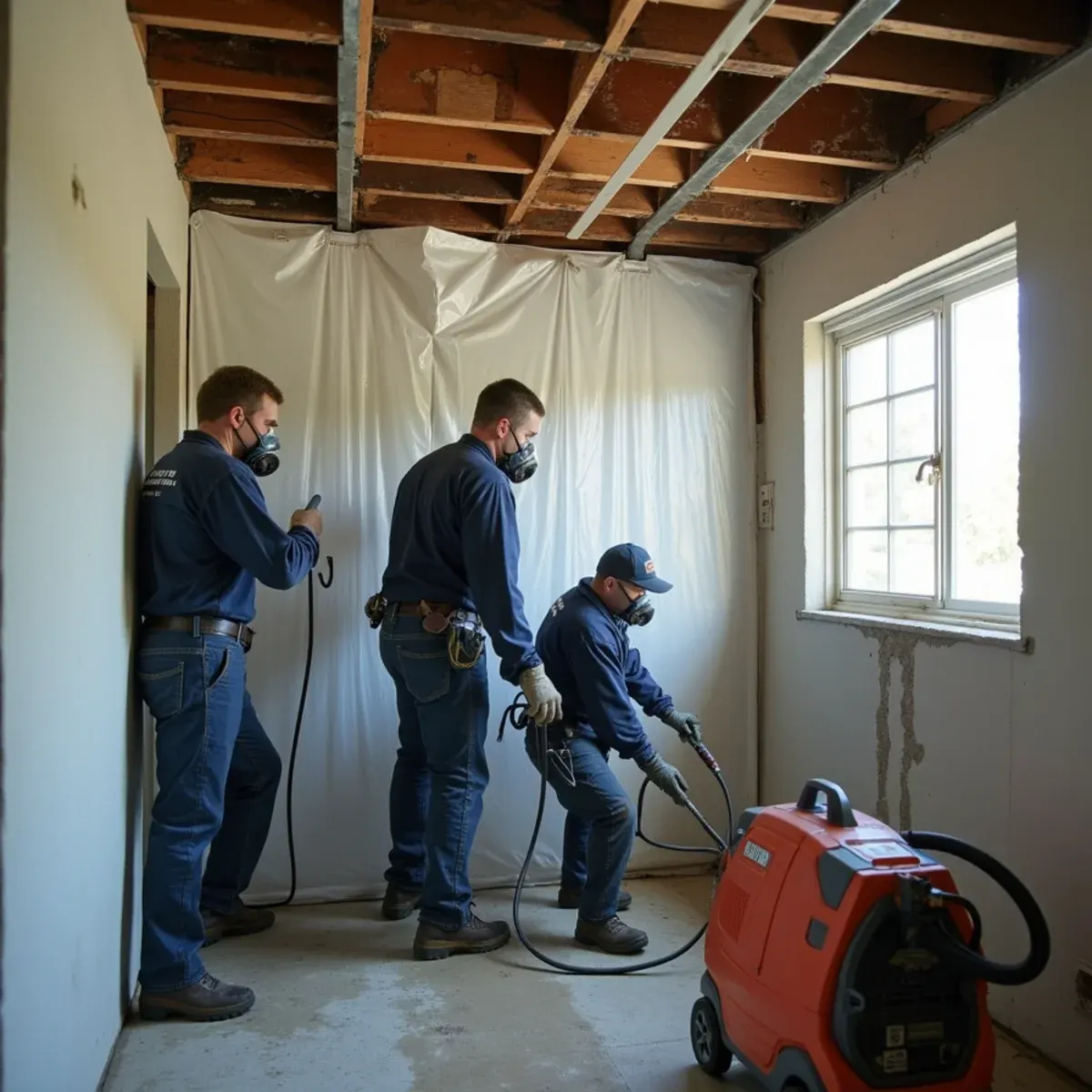
- Containment and negative air
- Documentation and contents triage
- Extraction and controlled demolition
- Cleaning and disinfection
- Structural drying and clearance
The Orange Background Worth Knowing
A slab leak announces itself eventually because concrete has nowhere to put the water. A crawl-space leak has somewhere to put it. Dirt absorbs a slow drip almost indefinitely, so the loss never produces the one thing homeowners watch for, which is water on a floor. Meanwhile the humidity under the house climbs, the fiberglass insulation between the joists soaks up moisture and sags, the subfloor picks up that moisture from below, and mold begins on the joists where it is invisible and undisturbed. Everything about this failure is built to stay quiet.
There is more on the housing stock, drainage and plumbing history of this city on our water damage restoration in Orange page.
Orange at a glance
- Dominant construction era
- 1888–1975
- Foundation type
- mixed on grade
- Supply piping found here
- original turn-of-century piping, galvanized steel, under-slab copper
- Drain line materials
- cast iron, clay
- Terrain and water table
- flat, moderate water table
- Most common local failure
- crawl-space leaks under raised-foundation historic homes, running for weeks because water drips into the dirt instead of pooling on a floor
- Highest-value local prevention
- an annual crawl-space inspection, which almost nobody does and which catches nearly everything early
What It Costs in Orange
We do not quote a number over the phone before seeing the property — anyone who does is guessing. The variables that actually move the price on a flood cleanup job are how high the water reached, how long it sat before extraction, contents volume in the flooded area, and they are broken down in full on the flood damage cleanup page. The assessment and the written estimate are free anywhere in Orange, day or night, with no obligation.
Flood Cleanup Questions from Orange Homeowners
Yes, and sooner than it feels necessary. The crawl space is inside your building envelope — air moves from there up through the floor into the rooms above, so contaminated soil and wet joists become an indoor air problem within days. Because nothing pooled on a finished floor, these losses go unnoticed for weeks under Old Towne homes, and by then we are usually looking at growth on hundred-year-old subfloor rather than just wet dirt.
Yes. Water that crossed soil, pavement, or a storm drain is Category 3 by IICRC classification regardless of appearance — it carries bacteria, fuel and oil residue, lawn chemicals, and whatever else was on the ground. Do not walk through it in open shoes, and keep children and pets out of the area entirely.
If the water came from outside across the ground, almost certainly not — that requires separate flood insurance. If it came from a failed water heater, a burst pipe, or a supply line inside the garage, it is usually covered. We document the source carefully because that distinction determines everything.
Pick a dry day, open the hatch, and use a good flashlight. You are looking at the soil directly under the bathrooms, kitchen, and laundry for dark damp patches, at the insulation for sagging or fallen batts, and at the piers and foundation vents for rust or white staining. Trust your nose as much as your eyes. If the access is too tight or you would rather not go under, we will do the inspection and photograph what is down there.