
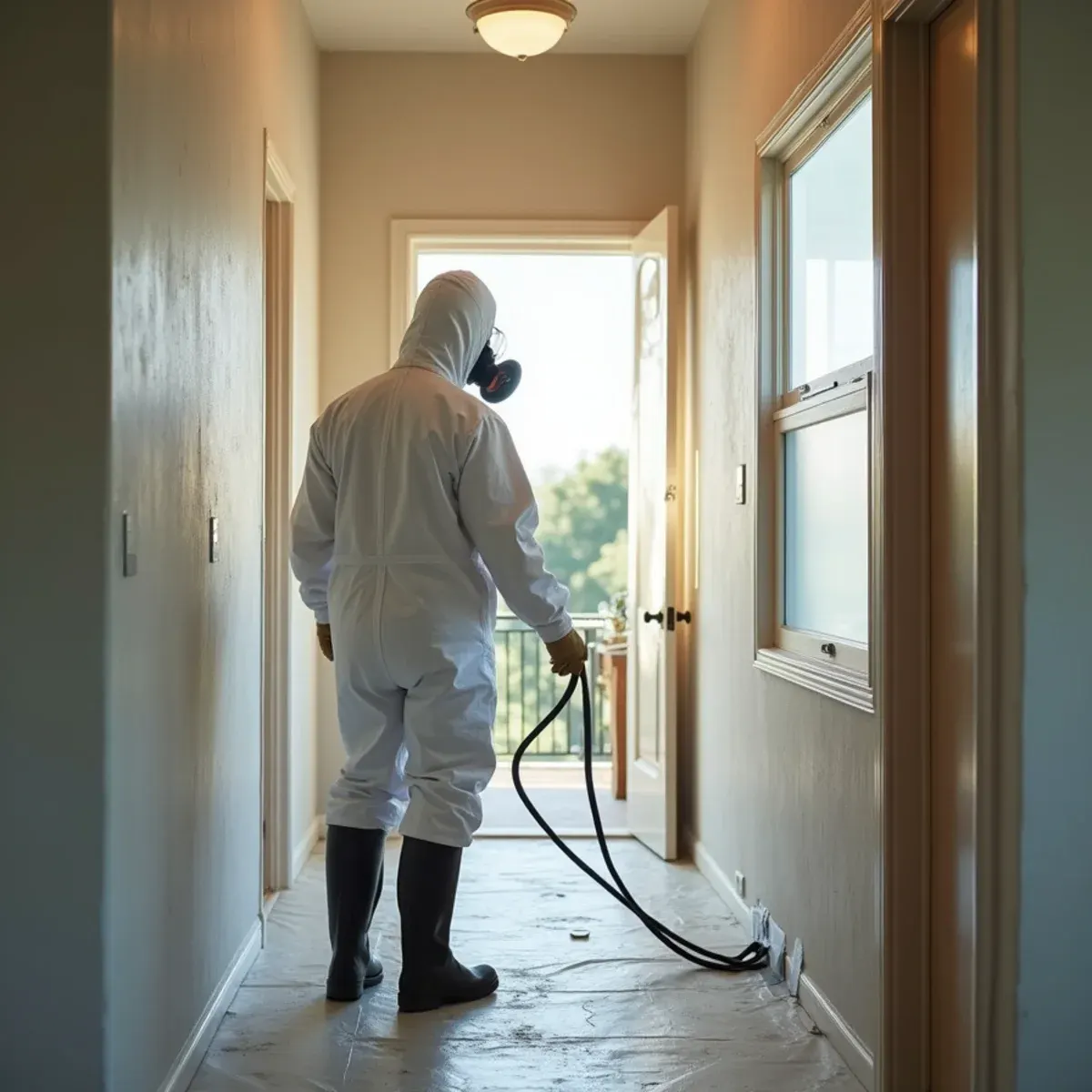
Old Towne Orange covers close to a square mile of homes built between the 1880s and the 1920s, nearly all of them on raised foundations radiating out from the Plaza. That framing changes what a sewage backup does. On a slab, waste spreads across the floor and you find it in minutes. Here it goes through the floor assembly, past the joists and into the dirt under the house, where nothing is watching. The first sign is often smell rather than water, and by then it has had days.
The lines carrying that waste out are clay or early cast iron, laid under streets that now hold some of the oldest tree canopy in the county. Roots find clay joints. That is most of what we see between Chapman Avenue and Santiago Creek. The rest of Orange is a different job — postwar slab tract through El Modena and Santiago Hills, half-acre equestrian lots in Orange Park Acres with long private runs to the main. Same city, same crew, completely different first hour on site.
What Orange Changes About Sewage Cleanup
1Contaminated soil under historic homes
When sewage goes through a raised floor it lands on bare dirt, the vapor barrier and any insulation in the joist bays. Cleaning the room above does nothing while that sits there. We strip the barrier and insulation, remove the affected soil layer, clean and treat the framing, then dry and verify from underneath.
2Material that can't be reordered
Category 3 rules are blunt about porous material, and in Old Towne that can mean original fir flooring, lath and plaster, or a hundred-year-old baseboard profile. We separate what genuinely has to go from what testing says can be cleaned, and we photograph and template every profile before removal. Nothing leaves without a record a millworker can match.
3Student rentals and absentee owners
Chapman rentals in and around Old Towne complicate a Category 3 loss because the person standing in the water is rarely the person who can authorize work or file the claim. We start containment on the tenant's say-so to stop the spread, then get the owner or manager on the phone the same hour with photos and a scope they can act on.
How the Work Runs
The method is the same one we use on every sewage cleanup job, documented to the IICRC S500:2025 standard. Here it is in short — the full sewage backup cleanup process explains each stage in detail.
- Secure the area and set containment
- Full PPE and safe extraction
- Remove contaminated porous materials
- Clean and disinfect all remaining surfaces
- Deodorize at the source
- Dry, verify, and clear
The Orange Background Worth Knowing
A slab leak announces itself eventually because concrete has nowhere to put the water. A crawl-space leak has somewhere to put it. Dirt absorbs a slow drip almost indefinitely, so the loss never produces the one thing homeowners watch for, which is water on a floor. Meanwhile the humidity under the house climbs, the fiberglass insulation between the joists soaks up moisture and sags, the subfloor picks up that moisture from below, and mold begins on the joists where it is invisible and undisturbed. Everything about this failure is built to stay quiet.
There is more on the housing stock, drainage and plumbing history of this city on our water damage restoration in Orange page.
Orange at a glance
- Dominant construction era
- 1888–1975
- Foundation type
- mixed on grade
- Supply piping found here
- original turn-of-century piping, galvanized steel, under-slab copper
- Drain line materials
- cast iron, clay
- Terrain and water table
- flat, moderate water table
- Most common local failure
- crawl-space leaks under raised-foundation historic homes, running for weeks because water drips into the dirt instead of pooling on a floor
- Highest-value local prevention
- an annual crawl-space inspection, which almost nobody does and which catches nearly everything early
What It Costs in Orange
We do not quote a number over the phone before seeing the property — anyone who does is guessing. The variables that actually move the price on a sewage cleanup job are affected square footage, volume of porous material removed, contents in the affected area, and they are broken down in full on the sewage backup cleanup page. The assessment and the written estimate are free anywhere in Orange, day or night, with no obligation.
Sewage Cleanup Questions from Orange Homeowners
Some of it, usually. Sewage carries Category 3 contamination, and porous material that soaked it up can't be reliably disinfected — that's the standard, and we won't pretend otherwise. What we can control is how much. We cut to the contamination line rather than to a convenient stud bay, we test rather than assume on dense old-growth fir, and we document profiles, widths and finishes so the replacement matches. Historic review timing is worth a call early.
It depends on the source. A toilet that overflows with clean bowl water because of a stuck fill valve is Category 1 or 2 and is far less serious. A toilet that backs up from the main line is carrying waste from the whole system, and that is Category 3 — it needs the full protocol.
No. Standard practice for Category 3 water is removal and disposal of carpet and pad that were contacted. Porous materials cannot be reliably disinfected all the way through, and the health risk of leaving them is not worth the savings.
Pick a dry day, open the hatch, and use a good flashlight. You are looking at the soil directly under the bathrooms, kitchen, and laundry for dark damp patches, at the insulation for sagging or fallen batts, and at the piers and foundation vents for rust or white staining. Trust your nose as much as your eyes. If the access is too tight or you would rather not go under, we will do the inspection and photograph what is down there.