
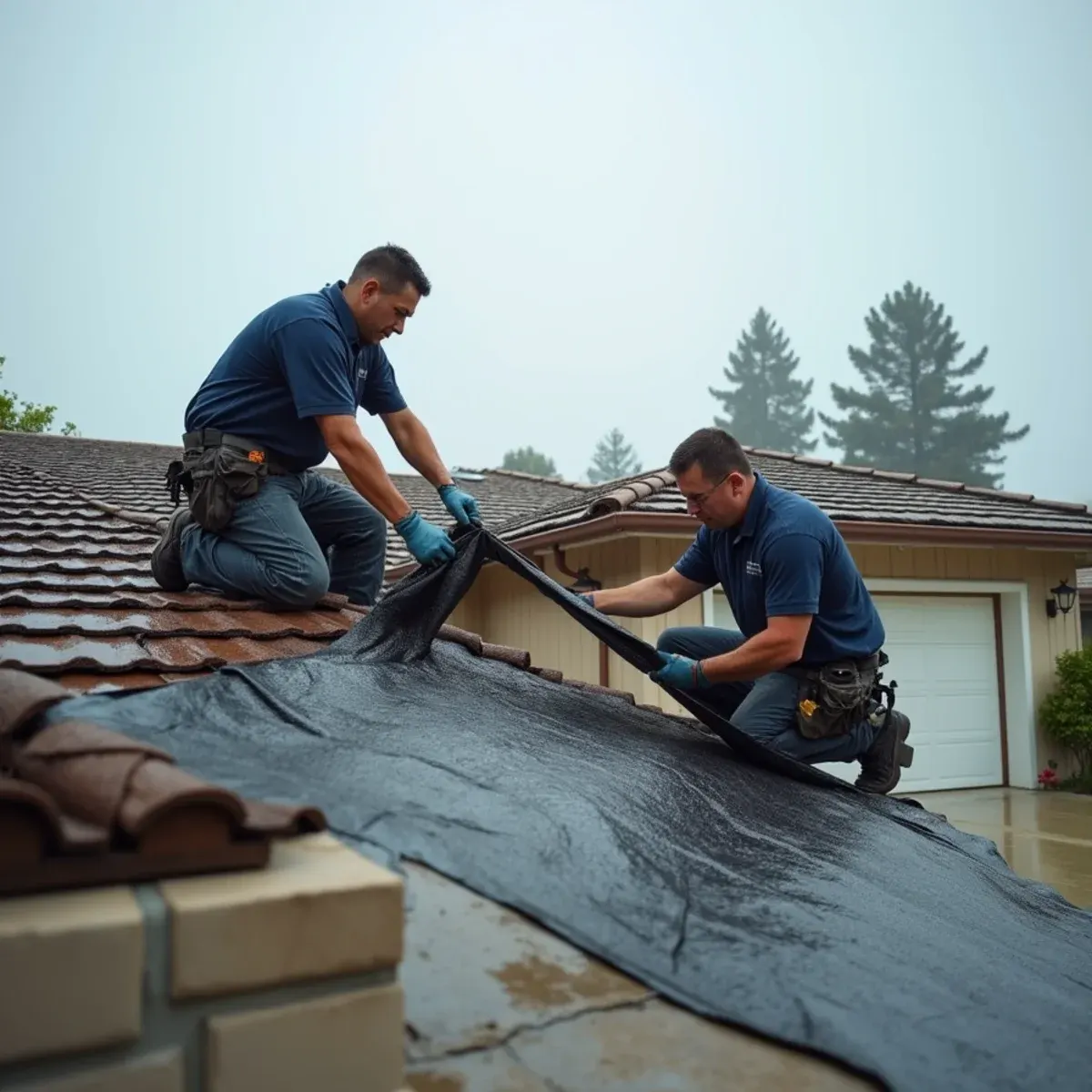
The rain stops Tuesday morning. By Tuesday afternoon the marine layer is back, the outside air is sitting near saturation, and the open windows you were counting on are doing nothing at all. That's the Costa Mesa storm job. We're close enough to the coast that natural drying potential stays poor for days after a system passes, which is why we run controlled dehumidification here rather than relying on airflow and hoping. Inland cities dry themselves partway on their own. This one does not.
The building stock splits three ways. Eastside cottages from the twenties through the forties sit on raised foundations under heavy canopy, and storm runoff that gets past a gutter ends up in a crawl space that will not dry on its own. The Westside mixes industrial buildings with housing. Mesa Verde is 1960s slab tract. The Santa Ana River runs the western edge and the water table is shallow across much of the city. We're about twenty minutes south of Cypress and dispatch as conditions allow.
What Costa Mesa Changes About Storm Damage
1Dehumidification, not open windows
After a storm here, outdoor air often carries more moisture than the air inside your wet house, so ventilating with it adds water to the structure. We set closed drying systems with refrigerant or desiccant dehumidifiers and monitor daily against IICRC S500:2025 drying goals, because on this side of the county the readings decide when equipment comes out, not the calendar.
2Eastside crawl spaces hold the water
The 1920s-to-1940s cottages east of Newport Boulevard have vented crawl spaces designed for dry inland summers, not standing water under a marine layer. Storm intrusion into the soil under the house is Category 3 work — it gets extracted, cleaned and dried under controlled conditions, and the vents get checked for whether they are actually open. Skipping that step is how joist rot starts.
3Shallow water table near the river
Along the Westside and toward Fairview Park the groundwater sits close to the surface, so soil saturates fast during sustained rain and stays saturated afterward. Sub-slab and crawl-space moisture keeps moving into the structure well after the sky clears. We meter the slab and the subfloor rather than assuming the source stopped the moment the rain did.
How the Work Runs
The method is the same one we use on every storm damage job, documented to the IICRC S500:2025 standard. Here it is in short — the full storm damage restoration process explains each stage in detail.
- Emergency tarping and board-up
- Water diversion and extraction
- Full damage documentation
- Interior mitigation
- Structural drying to standard
- Permanent repairs
The Costa Mesa Background Worth Knowing
Under a raised Eastside cottage there is bare soil, and that soil is supposed to stay dry because the foundation vents exchange air with the outside. That system depends on the outside air being drier than the space under the house. For a good part of the year in Costa Mesa it is not. The marine layer holds humidity high through the night and well into the morning, so the crawl space never gets the dry stretch it needs, and moisture that arrives from a plumbing drip, a downspout, or an irrigation line just accumulates.
There is more on the housing stock, drainage and plumbing history of this city on our water damage restoration in Costa Mesa page.
Costa Mesa at a glance
- Dominant construction era
- 1920–1980
- Foundation type
- mixed on grade
- Supply piping found here
- original 1920s–1940s piping on the Eastside, galvanized steel, under-slab copper
- Drain line materials
- cast iron, clay
- Terrain and water table
- coastal-flat, shallow water table
- Most common local failure
- crawl-space moisture under Eastside cottages, held in by a marine layer that slows every natural drying process
- Highest-value local prevention
- confirming crawl-space vents are actually open and that the ground under the house is dry
What It Costs in Costa Mesa
We do not quote a number over the phone before seeing the property — anyone who does is guessing. The variables that actually move the price on a storm damage job are size of the opening and duration of intrusion, emergency mitigation scope, how many rooms the water reached, and they are broken down in full on the storm damage restoration page. The assessment and the written estimate are free anywhere in Costa Mesa, day or night, with no obligation.
Storm Damage Questions from Costa Mesa Homeowners
Because coastal air isn't helping you. Costa Mesa often runs high relative humidity for days after a system, so materials that would give up moisture to dry inland air just hold onto it. If the structure was wet through and drying was passive, a week is entirely normal — and it's how mold gets started. Controlled dehumidification with daily readings usually moves the same structure to dry in three to five days.
During. Emergency tarping and board-up happen in the rain — that is the entire point of them. We triage by severity, so active intrusion into occupied living space goes to the front of the queue.
Sudden wind and rain damage is generally covered, including the resulting interior water damage. What gets excluded is damage from a roof that had already failed or from deferred maintenance, and flooding from water that came across the ground, which needs separate flood insurance.
Almost always the crawl space. On these raised 1920s to 1940s houses the soil under the floor stays damp when the foundation vents are blocked and the marine layer keeps outside air humid overnight. That moisture moves up through the subfloor and into the rooms above it. Before assuming anything, walk your perimeter and see whether a planter, a poured patio or landscaping has covered the vents that are supposed to be breathing.