
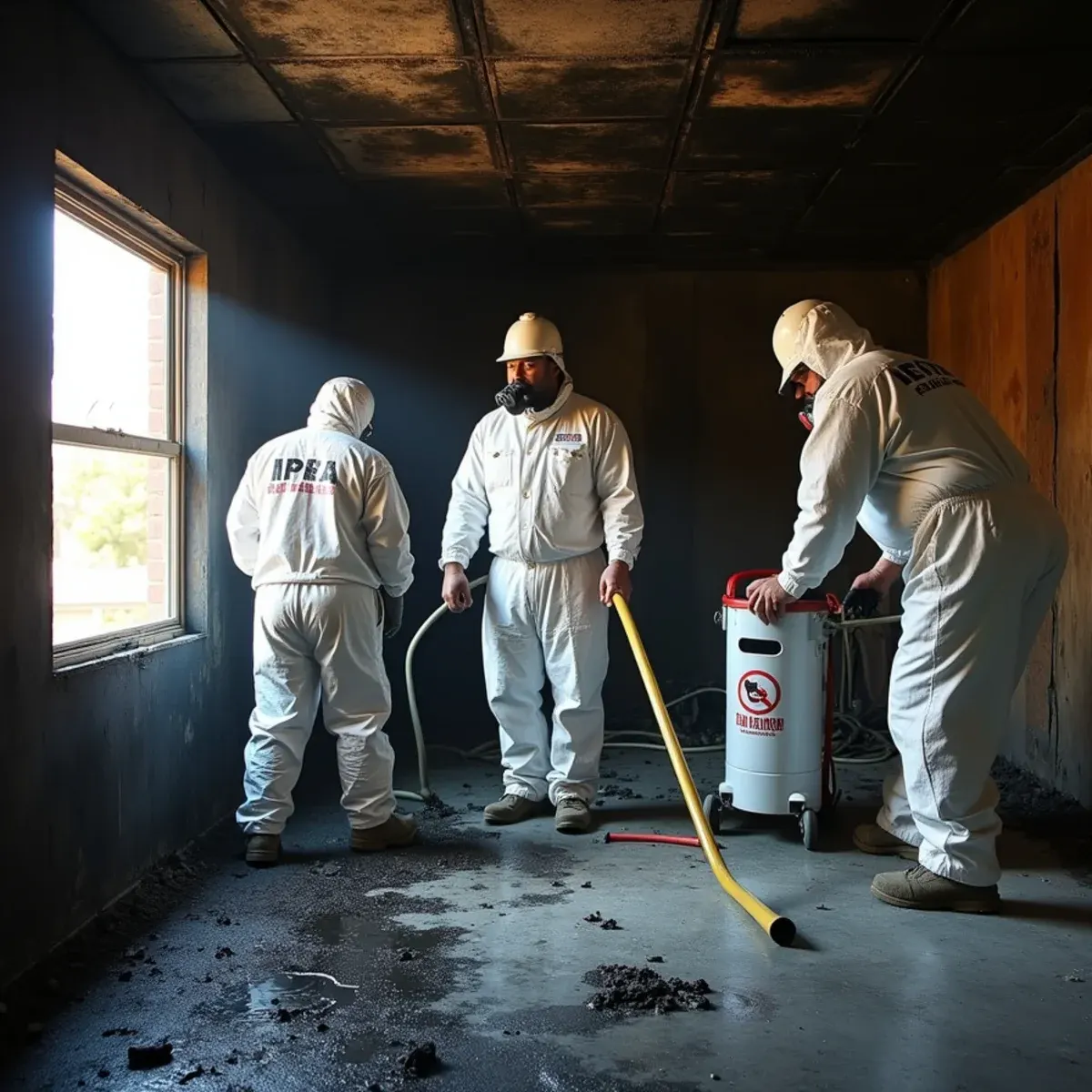
Old Towne Orange is roughly a square mile of raised-foundation houses radiating out from the Plaza traffic circle: Craftsman bungalows, a good number of Victorians, and early cottages built before anyone framed with fire blocking. Fire moves differently in these houses. Open stud bays run from the mudsill to the attic, so a fire that starts low can push smoke into every wall cavity in the building before the first engine turns off Chapman Avenue. Nothing about that resembles a slab tract in Santiago Hills.
Then there's the water. Suppression puts thousands of gallons into a structure, and in Old Towne most of it ends up in the dirt crawl space where nobody sees it. We have walked houses where the fire damage was confined to one room and the real problem was weeks of wet subfloor and joists nobody checked. Elsewhere in Orange, through the postwar slab tracts of El Modena and the half-acre properties in Orange Park Acres, that water stays on the floor where you can find it. We inspect for both.
What Orange Changes About Fire & Smoke Damage
1Smoke travels inside pre-1920 wall cavities
Balloon-framed houses around the Plaza have stud bays open from the crawl space to the attic. Odor settles in that cavity and returns every warm afternoon until the residue itself is removed. We use thermal fogging and sealers only after cleaning, never instead of it. On a house this old that usually means selective plaster removal in the affected bays, opened from the least visible side.
2Original plaster and old-growth trim
The Douglas fir casings, wainscot and doors in an Old Towne house came out of trees that no longer exist commercially. Replacement means a millwork order and a color match that never quite lands. Where residue and readings allow, we clean and refinish in place. We will tell you plainly when a piece is too far gone, because charred wood with lost section does not come back.
3Suppression water under the floor
Crawl spaces under raised foundations collect whatever the hose lines put into the house. Soot-loaded water soaks the dirt and the underside of the subfloor, and the mature canopy over Old Towne streets keeps that ground from drying on its own. We set containment and dehumidification under the house, not only in it, and document drying to IICRC S500:2025 so the file holds up with your adjuster.
How the Work Runs
The method is the same one we use on every fire & smoke damage job, documented to the IICRC S500:2025 standard. Here it is in short — the full fire & smoke damage restoration process explains each stage in detail.
- Secure the structure
- Water extraction and drying first
- Assess residue type room by room
- Remove non-salvageable material and clean the rest
- Deodorize at the source
- Contents restoration and rebuild
The Orange Background Worth Knowing
A slab leak announces itself eventually because concrete has nowhere to put the water. A crawl-space leak has somewhere to put it. Dirt absorbs a slow drip almost indefinitely, so the loss never produces the one thing homeowners watch for, which is water on a floor. Meanwhile the humidity under the house climbs, the fiberglass insulation between the joists soaks up moisture and sags, the subfloor picks up that moisture from below, and mold begins on the joists where it is invisible and undisturbed. Everything about this failure is built to stay quiet.
There is more on the housing stock, drainage and plumbing history of this city on our water damage restoration in Orange page.
Orange at a glance
- Dominant construction era
- 1888–1975
- Foundation type
- mixed on grade
- Supply piping found here
- original turn-of-century piping, galvanized steel, under-slab copper
- Drain line materials
- cast iron, clay
- Terrain and water table
- flat, moderate water table
- Most common local failure
- crawl-space leaks under raised-foundation historic homes, running for weeks because water drips into the dirt instead of pooling on a floor
- Highest-value local prevention
- an annual crawl-space inspection, which almost nobody does and which catches nearly everything early
What It Costs in Orange
We do not quote a number over the phone before seeing the property — anyone who does is guessing. The variables that actually move the price on a fire & smoke damage job are extent of structural burn, how far the smoke traveled, residue type, and they are broken down in full on the fire & smoke damage restoration page. The assessment and the written estimate are free anywhere in Orange, day or night, with no obligation.
Fire & Smoke Damage Questions from Orange Homeowners
Not all of it, and not by default. Lath and plaster is dense, and light smoke films often clean off the surface. What forces removal is residue inside the wall cavity, because once soot is in the bay no surface treatment fixes the odor. We map affected areas with meters and small inspection openings before we open anything wide. In the National Register district we work to keep original material and match whatever has to be replaced.
Fire suppression uses enormous volumes of water in a short time — often thousands of gallons. That water saturates ceilings, insulation, walls, and floors well beyond the burned area, and it has to be extracted and dried like any other water loss, on top of the fire work.
Yes, when the residue is removed completely — including inside wall cavities, ductwork, attic insulation, and behind cabinetry. Odor that returns later always means residue was left somewhere. Masking agents and ozone alone do not solve it.
Pick a dry day, open the hatch, and use a good flashlight. You are looking at the soil directly under the bathrooms, kitchen, and laundry for dark damp patches, at the insulation for sagging or fallen batts, and at the piers and foundation vents for rust or white staining. Trust your nose as much as your eyes. If the access is too tight or you would rather not go under, we will do the inspection and photograph what is down there.