
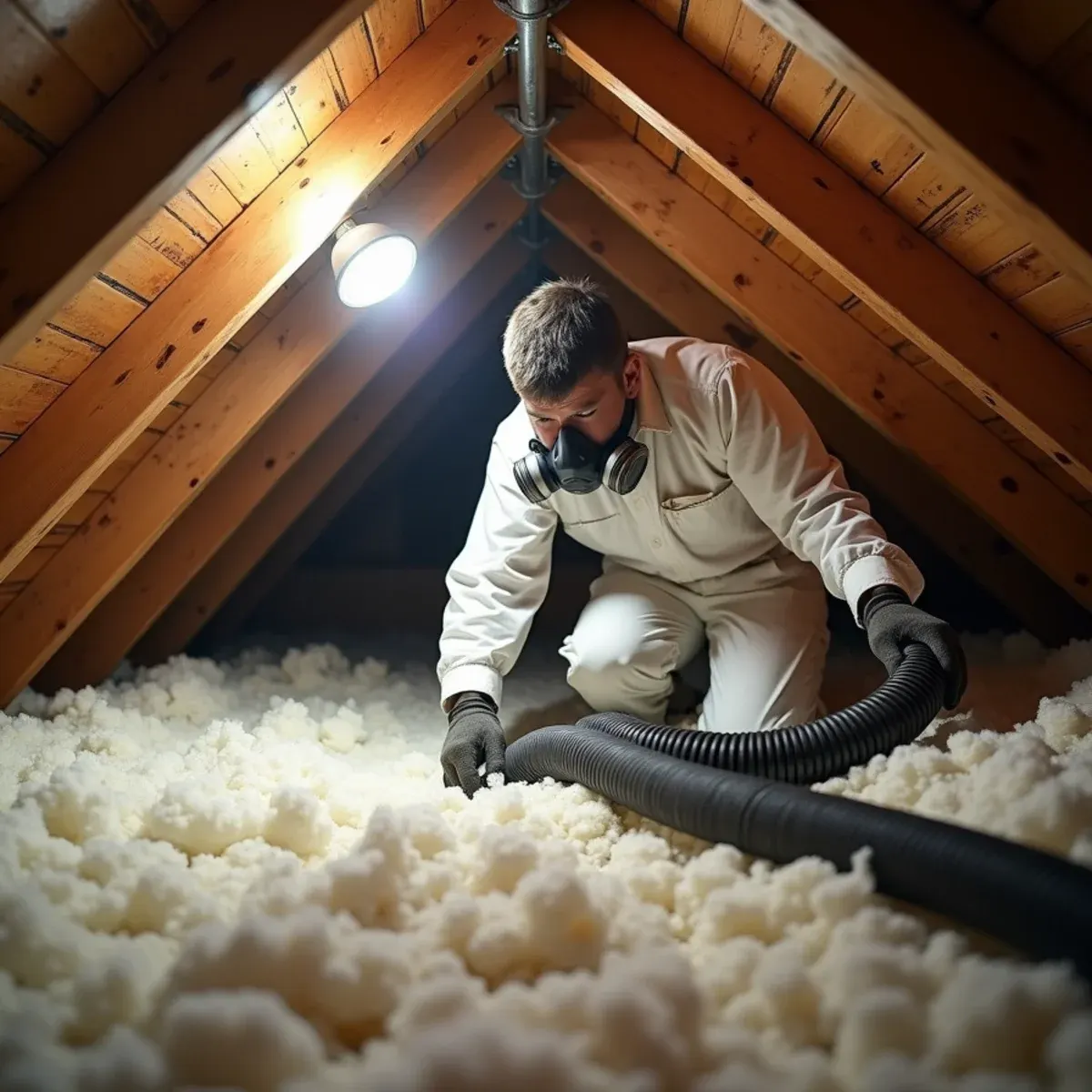
Orange's signature water loss is a crawl-space drip that never makes a puddle, and plenty of our calls here start below the floor rather than above the ceiling. Attics are the other half of the job. Around the Plaza, inside one of the largest National Register historic districts in California, the houses date from the 1880s through the 1920s, and their attics were never designed to hold insulation at all. Steep rafters, board sheathing, small hatches, and lath-and-plaster ceilings underneath. Wet blown-in gets heavy fast, and plaster keys are what gives.
Drive east and the city changes generation entirely. El Modena and Santiago Hills are postwar slab tract with the air handler sitting in the attic and a condensate line that has to travel to daylight. Orange Park Acres is half-acre equestrian ground where barns and detached structures have insulated ceilings of their own and a roof leak goes unnoticed until the feed smells wrong. Chapman rentals inside the district sit empty and unchecked between terms. Different buildings, different rules, often the same afternoon.
What Orange Changes About Attic & Insulation
1Plaster ceilings won't carry wet insulation
Saturated blown-in over a hundred-year-old lath-and-plaster ceiling is dead weight the keys were never asked to hold. In Old Towne we get the wet material off that ceiling early, support from below where a section is already sagging, and dry the cavity from the attic side rather than adding water or vibration to a ceiling that is barely hanging on.
2Old wiring and unknown attic fill
Attics in the district still turn up knob-and-tube, sometimes live, which you do not bury under new insulation and do not want to be dragging a hose across. Older attics can also hold loose fill that should be tested before it gets disturbed rather than vacuumed on faith. When we find either one, we stop, document it and get the right trade involved before removal continues.
3Equestrian outbuildings in Orange Park Acres
On the half-acre lots, the loss is often not the house. Barns, tack rooms and detached shops have insulated ceilings, long private water lines feeding them, and no HVAC to help pull moisture out after a roof leak. Drying those is a different setup than a conditioned attic, and the R-value target for reinstall depends on what the space is actually used for.
How the Work Runs
The method is the same one we use on every attic & insulation job, documented to the IICRC S500:2025 standard. Here it is in short — the full attic water damage & insulation replacement process explains each stage in detail.
- Map the wet area before touching it
- Contain the hatch and protect the path
- Vacuum out the saturated insulation
- HEPA vacuum and treat the plane
- Dry the deck, joists, and top plates
- Reinstall insulation and check the details
The Orange Background Worth Knowing
A slab leak announces itself eventually because concrete has nowhere to put the water. A crawl-space leak has somewhere to put it. Dirt absorbs a slow drip almost indefinitely, so the loss never produces the one thing homeowners watch for, which is water on a floor. Meanwhile the humidity under the house climbs, the fiberglass insulation between the joists soaks up moisture and sags, the subfloor picks up that moisture from below, and mold begins on the joists where it is invisible and undisturbed. Everything about this failure is built to stay quiet.
There is more on the housing stock, drainage and plumbing history of this city on our water damage restoration in Orange page.
Orange at a glance
- Dominant construction era
- 1888–1975
- Foundation type
- mixed on grade
- Supply piping found here
- original turn-of-century piping, galvanized steel, under-slab copper
- Drain line materials
- cast iron, clay
- Terrain and water table
- flat, moderate water table
- Most common local failure
- crawl-space leaks under raised-foundation historic homes, running for weeks because water drips into the dirt instead of pooling on a floor
- Highest-value local prevention
- an annual crawl-space inspection, which almost nobody does and which catches nearly everything early
What It Costs in Orange
We do not quote a number over the phone before seeing the property — anyone who does is guessing. The variables that actually move the price on a attic & insulation job are how much of the attic got wet, clearance, access, and layout, the type of insulation up there, and they are broken down in full on the attic water damage & insulation replacement page. The assessment and the written estimate are free anywhere in Orange, day or night, with no obligation.
Attic & Insulation Questions from Orange Homeowners
Attic insulation is interior work, so it generally is not the part of a project the district cares about. What draws review is anything that changes the visible exterior, including roof material, ridge and gable vent style, and trim. If drying reveals that vents need to change or a section of roof needs replacing, check with the city before your roofer orders material. We work from inside and coordinate so nobody creates a problem for you.
Only the affected area plus a margin back to dry, lofted material. If the wet section covers a small part of the attic, that is all that comes out. Once it reaches roughly half the plane, replacing the whole field usually costs less than blending old and new to an even depth, and it leaves you with one consistent R-value instead of a patchwork ceiling that performs unevenly room to room.
Most attics take a few days once the wet insulation is out, but we will not promise a number on day one, and you should be careful with anyone who does. Plywood sheathing dries at a different rate than old plank decking, a sealed attic dries faster than a heavily vented one, and marine-layer mornings slow everything down. The daily readings decide when equipment leaves, not the calendar.
Pick a dry day, open the hatch, and use a good flashlight. You are looking at the soil directly under the bathrooms, kitchen, and laundry for dark damp patches, at the insulation for sagging or fallen batts, and at the piers and foundation vents for rust or white staining. Trust your nose as much as your eyes. If the access is too tight or you would rather not go under, we will do the inspection and photograph what is down there.