
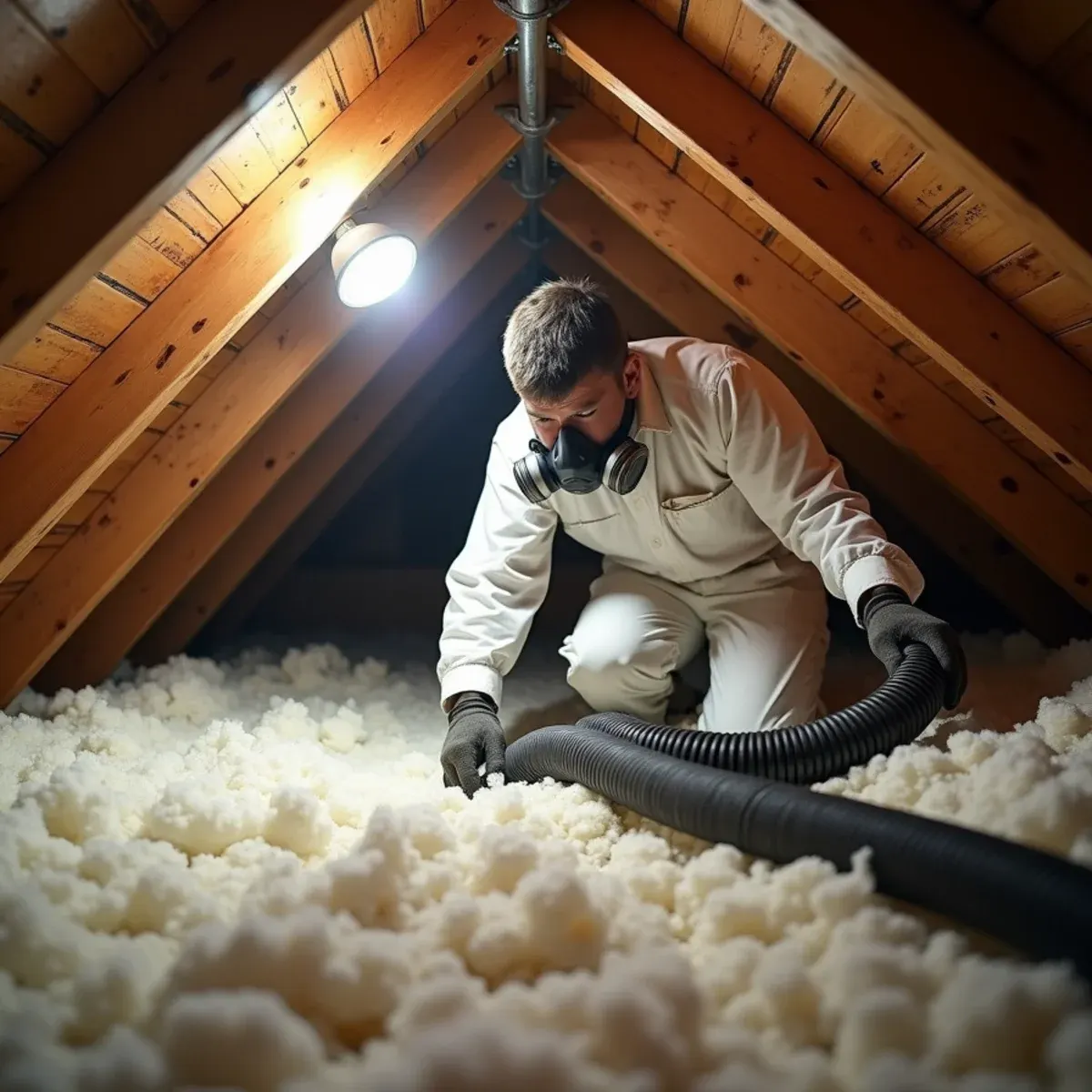
Villa Park is roughly 5,800 people on lots that average half an acre, zoned almost entirely single-family, with one small shopping center and no industry at all. What that means up in the attic is scale. These are large custom homes, many of them single-story, with attic footprints running two and three thousand square feet, several air handlers serving different zones, and duct and condensate runs long enough that a clog at one end takes a while to announce itself at the other. A pan can overflow for weeks in a wing nobody uses.
That scale cuts both ways. A large attic plane means a wet zone can usually be isolated and removed cleanly instead of stripping everything, which is worth arguing for with an adjuster who has only seen the ceiling photo. It also means more roof, more valleys and more penetrations, with mature trees that have had forty years to grow over tile. The heavy irrigation these lots run is a slab-leak complication more than an attic one, but it does mean the ground stays soft while we are staging equipment.
What Villa Park Changes About Attic & Insulation
1Long condensate runs fail quietly
Custom single-story homes on half-acre lots have duct and drain runs measured in tens of feet. A condensate line that travels that far to reach daylight has more slope to lose, more sag to collect biofilm, and more distance between the clog and any sign of trouble. By the time the ceiling shows it, the pan has been overflowing into insulation for a while. We check the whole run, not just the pan.
2Large attic planes allow sectioned removal
With this much attic, blanket removal is rarely justified. We meter the plane, mark the wet boundary well past the visible edge, and take out that section while leaving sound material in place. The seam has to be built back at matching type and depth so there is no thermal gap, and we document the boundary and the readings so the scope holds up when the adjuster reviews it.
3Mature canopy over tile roof valleys
Half-acre lots came with room for trees, and forty years on, a lot of Villa Park roofs sit under canopy. Leaf litter packs valleys and holds damp against tile, cracked tiles go unnoticed under branches, and shaded roof planes never get the afternoon heat that would dry a wetted deck. We look at what is sitting in the valleys before we call an attic ready to reinsulate.
How the Work Runs
The method is the same one we use on every attic & insulation job, documented to the IICRC S500:2025 standard. Here it is in short — the full attic water damage & insulation replacement process explains each stage in detail.
- Map the wet area before touching it
- Contain the hatch and protect the path
- Vacuum out the saturated insulation
- HEPA vacuum and treat the plane
- Dry the deck, joists, and top plates
- Reinstall insulation and check the details
The Villa Park Background Worth Knowing
In a tract, the plumbing sits where it sat in the last four houses we worked on. In Villa Park it is wherever the plan put it in 1974, and there is rarely a drawing left to consult. That is why locating a leak here can take longer than a homeowner expects. Water from a pinhole travels the path of least resistance under the slab and surfaces wherever the soil and the concrete let it, which on a plan this size can be an entire room away from the break. Guessing at the wet spot is how people end up cutting the wrong floor.
There is more on the housing stock, drainage and plumbing history of this city on our water damage restoration in Villa Park page.
Villa Park at a glance
- Dominant construction era
- 1962–1985
- Foundation type
- slab on grade
- Supply piping found here
- under-slab copper
- Drain line materials
- cast iron, ABS
- Terrain and water table
- rolling, moderate water table
- Most common local failure
- long under-slab runs in large custom floor plans, where a leak can sit far from any fixture and take longer to locate
- Highest-value local prevention
- separating irrigation from the domestic meter so a leak test actually means something
What It Costs in Villa Park
We do not quote a number over the phone before seeing the property — anyone who does is guessing. The variables that actually move the price on a attic & insulation job are how much of the attic got wet, clearance, access, and layout, the type of insulation up there, and they are broken down in full on the attic water damage & insulation replacement page. The assessment and the written estimate are free anywhere in Villa Park, day or night, with no obligation.
Attic & Insulation Questions from Villa Park Homeowners
Not if the seam is done right. We match the existing material type and blow the new section to the same measured depth so the R-value is continuous across the boundary, then verify depth with a ruler at several points rather than eyeballing it. On an attic this size, taking out sound insulation you already own makes the invoice bigger and the house no warmer. What we will not do is leave marginal material at the edge of a wet field.
Only the affected area plus a margin back to dry, lofted material. If the wet section covers a small part of the attic, that is all that comes out. Once it reaches roughly half the plane, replacing the whole field usually costs less than blending old and new to an even depth, and it leaves you with one consistent R-value instead of a patchwork ceiling that performs unevenly room to room.
Most attics take a few days once the wet insulation is out, but we will not promise a number on day one, and you should be careful with anyone who does. Plywood sheathing dries at a different rate than old plank decking, a sealed attic dries faster than a heavily vented one, and marine-layer mornings slow everything down. The daily readings decide when equipment leaves, not the calendar.
Start by taking irrigation out of the equation, because on a half-acre lot it is the largest variable you have. Shut the controller off for a full day, then read the meter twice with nothing running in the house. If the leak indicator is still moving, the loss is on the domestic side and worth locating. If it stops, you have a landscape valve or lateral line problem, which is a different and much cheaper trade.