
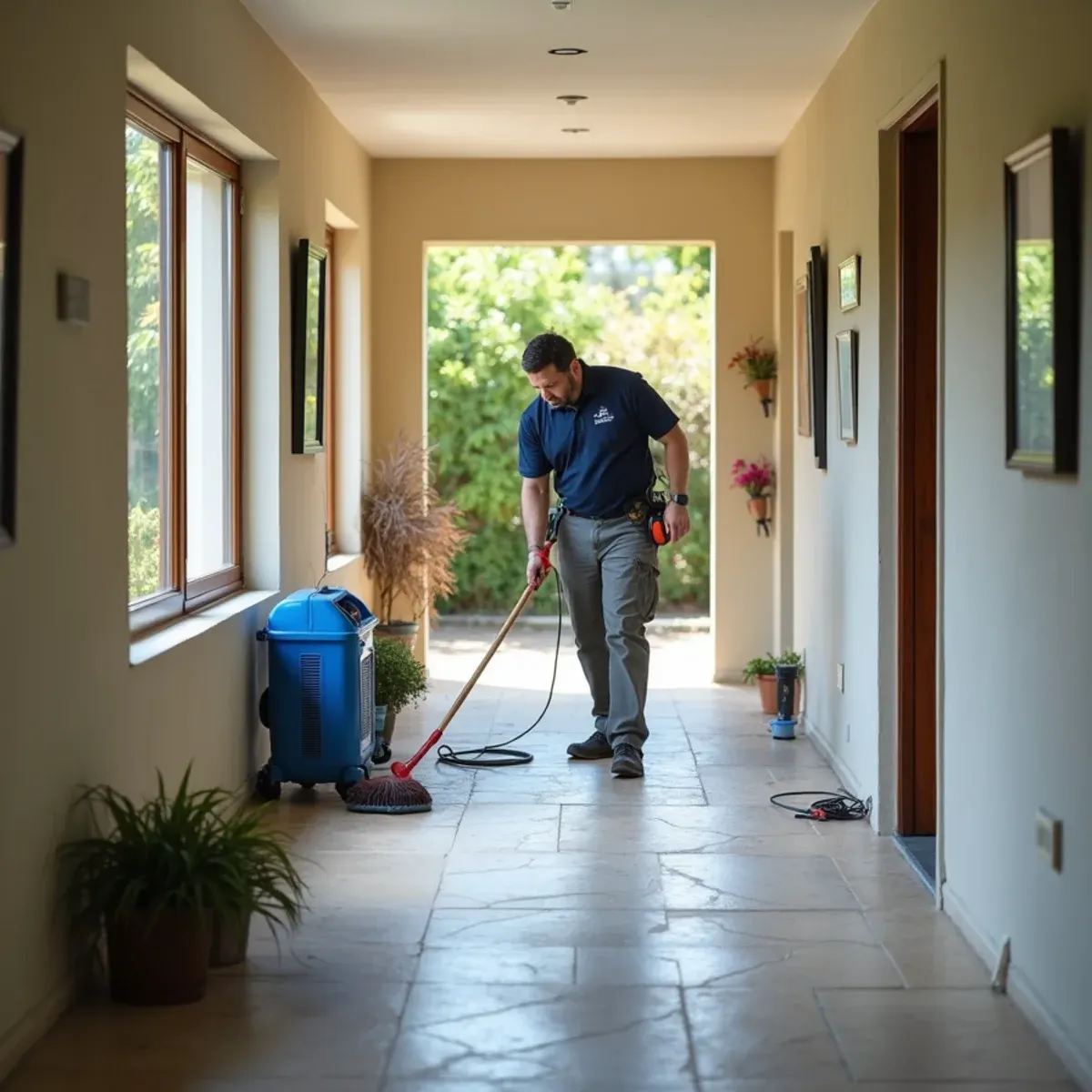
Here is the first thing to do if you suspect a leak in Villa Park, and it will save you money before we ever arrive: shut the irrigation controller off for a full day. On a half-acre lot with mature landscaping, sprinklers can move more water than the household does, and on most properties here that irrigation is fed from the same meter as the domestic supply. A meter test taken with the valves live tells you nothing at all. Turn the controller off, take a reading, take another before bed, and now the number means something.
This is the smallest city in Orange County — around 5,800 people, incorporated in 1962, zoned almost entirely for single-family homes, with one small shopping center beside City Hall and the library and essentially no commercial or industrial buildings. Practically, that means every call we take here is somebody's home rather than a business with a maintenance department. It also means the houses are custom. Two neighbors on the same street may share nothing structurally, so we cannot pattern-match a floor plan the way we can in a tract three miles west.
The scale is the other thing. These are large single-story and split-level plans on generous lots, which puts real distance between the water heater and the far bathroom — a supply line can run sixty or eighty feet under concrete to get there. Many of these houses also have hot-water recirculation loops so the far end of the plan is not waiting on hot water, and a loop that is running most of the day works the hot line far harder than a standard branch ever does.

Finding a Leak Under a Custom Floor Plan
In a tract, the plumbing sits where it sat in the last four houses we worked on. In Villa Park it is wherever the plan put it in 1974, and there is rarely a drawing left to consult. That is why locating a leak here can take longer than a homeowner expects. Water from a pinhole travels the path of least resistance under the slab and surfaces wherever the soil and the concrete let it, which on a plan this size can be an entire room away from the break. Guessing at the wet spot is how people end up cutting the wrong floor.
So we work it in order instead of guessing, and the sequence matters more here than anywhere else in our area, because the irrigation load on a half-acre lot can swamp every measurement we take before we take it. Once the landscape system is out of the picture and we know which line is losing pressure, acoustic listening and thermal imaging usually put us within a couple of feet of the break. That is close enough to open one small, deliberate hole in the right place rather than a trench across a travertine floor while we hunt.
There are limits worth naming out loud. Thick stone, deep mortar beds and slab insulation all make listening harder, and mature planting right against the foundation masks what we can hear from outside. Sometimes confirming a location still means one access cut. Ask us about rerouting as well: in a single-story house with an accessible attic, abandoning a failed under-slab run and rerouting it overhead is often cheaper and far less destructive than breaking concrete. The trade is real — a reroute opens drywall and ceiling, a slab repair opens the floor and everything sitting on it.
- Shut the irrigation controller off a full day before any test, and close the valve to the landscape system if there is one.
- Read the meter with the house isolated, then again after several hours with nothing running.
- Pressure test the hot and cold sides separately to establish which line is losing.
- Narrow the position with acoustic listening and thermal imaging before anyone touches concrete.
- Ask what an overhead reroute would cost before agreeing to cut a stone or hardwood floor.
Long Driveways, Old Laterals and Big Trees
Half-acre zoning does something to sewer laterals that nobody thinks about until one fails. Houses here sit well back from the street, so the lateral running from the house to the main can be two or three times the length of one in a standard tract, and every foot of it is original cast iron or early ABS buried under a long driveway and decades of established landscaping. More length means more joints, more root opportunities, and a far more expensive excavation if it has to be dug rather than lined.
The trees finish the job. Villa Park has one of the better mature canopies in the county, and the root systems under those lots are looking for exactly what a corroding cast-iron lateral offers: water and nutrients seeping from a joint. Once roots are in, the line catches paper, then it partially blocks, then it backs up into the lowest fixture in the house. The warning signs are consistent — several drains slowing at once, a toilet gurgling when the laundry drains, water rising in a shower when a toilet is flushed.
A sewage backup is Category 3 water under IICRC S500:2025, which means porous materials it touched are removed rather than dried, and on an open custom floor plan it spreads a long way before anyone gets to it. A camera inspection of the lateral costs a small fraction of that remediation. For a Villa Park house that has never had one, it is the best plumbing money you can spend, and the results tell you whether you are looking at a spot repair or a lining job before an emergency chooses for you.
Drying a Large Home Without Wrecking the Finishes
A three-thousand-square-foot loss is not one small job repeated several times. It is a drying problem where air movement and dehumidification have to be balanced across zones that behave differently — a sunken living room holds water where a hallway does not, and a wing with the doors closed will lag behind everything else. On older Villa Park panels there is also a genuine question about how much equipment we can run without tripping circuits, so we plan the power before we plan the equipment rather than discovering the ceiling at midnight.
The finishes are what most owners here actually care about, and they should. Solid hardwood, custom cabinetry, built-in millwork and stone are all worth drying in place when the numbers support it. Wood floors can often be saved with mat systems and controlled dehumidification if we get to them early enough, and cabinet toe kicks can be dried from underneath rather than pulled. When material cannot be saved, we say so early, because a partial replacement of custom millwork raises a matching conversation with your carrier that goes better when it starts on day two instead of day ten.
IICRC S500:2025 is the standard we work to, and the part that matters to you is simple. Drying goals get set against a documented dry standard taken from unaffected material in your own house, and readings are taken and logged every day until that goal is actually met. Not until the surface feels dry to a hand, and not until the equipment rental starts looking expensive. On a home this size that daily record is also the thing that gets an adjuster to approve a large scope without a week of back and forth over whether a wing really needed drying.
Neighborhoods and Landmarks We Cover in Villa Park
We work throughout Villa Park — every neighborhood, every street, residential and commercial. If your address is in the city, we cover it.
Neighborhoods & corridors
- Center Drive area
- Wanda Road area
- Santiago Boulevard area
- Villa Park Road corridor
Landmarks nearby
- Villa Park town center
- Villa Park High School
- Santiago Creek
- Hart Park
- Irvine Regional Park
Why Villa Park Residents Call Us First
Any restoration company can put Villa Park on a service-area list. What matters at 2 a.m. is how far the truck has to come and whether the crew has opened a wall in a house like yours before.
About 18 minutes east
We dispatch from 6122-6182 Katella Ave in Cypress — not from a regional depot and not from a call centre that sells your job to whoever bids for it. That is the whole reason the 60-minute commitment is one we can put in writing.
Long under-slab runs in large floor plans
A leak can sit far from any fixture, which makes locating it a longer job and exploratory demolition an expensive mistake.
Irrigation separated from the domestic meter
Without that split a meter test tells you nothing on a property this size.
- 20+ years restoring Orange County homes
- IICRC Certified Firm
- Licensed, Bonded & Insured
- We bill your insurance company directly
- IICRC S500:2025 compliant on every job
- 100% satisfaction guarantee — in writing, on every job
Villa Park Water Damage Questions
Start by taking irrigation out of the equation, because on a half-acre lot it is the largest variable you have. Shut the controller off for a full day, then read the meter twice with nothing running in the house. If the leak indicator is still moving, the loss is on the domestic side and worth locating. If it stops, you have a landscape valve or lateral line problem, which is a different and much cheaper trade.
Distance and originality. Villa Park homes are custom, so there is no repeated floor plan to work from and often no drawings left, and supply runs can travel sixty or eighty feet under the slab. Water surfaces where the soil lets it, which may be a room away from the break. Add heavy irrigation and thick stone floors that muffle acoustic listening, and the work simply takes more steps.
Often it can be dried, and that is the first thing we test rather than assume. Solid wood floors respond well to mat systems and controlled dehumidification if we reach them early, and cabinet bases can frequently be dried from below without demolition. Category and elapsed time decide it. When something is past saving we will say so quickly, because matching custom millwork is a conversation your carrier needs to start early.
About eighteen minutes east from our Katella Avenue base in Cypress when traffic cooperates, and we dispatch as fast as conditions allow at any hour. We will not quote you a guaranteed clock for Villa Park the way we do inside Cypress, because it would not be honest across the 55 and the 22 at rush hour. What we will do is tell you a real window and call you if it changes.