
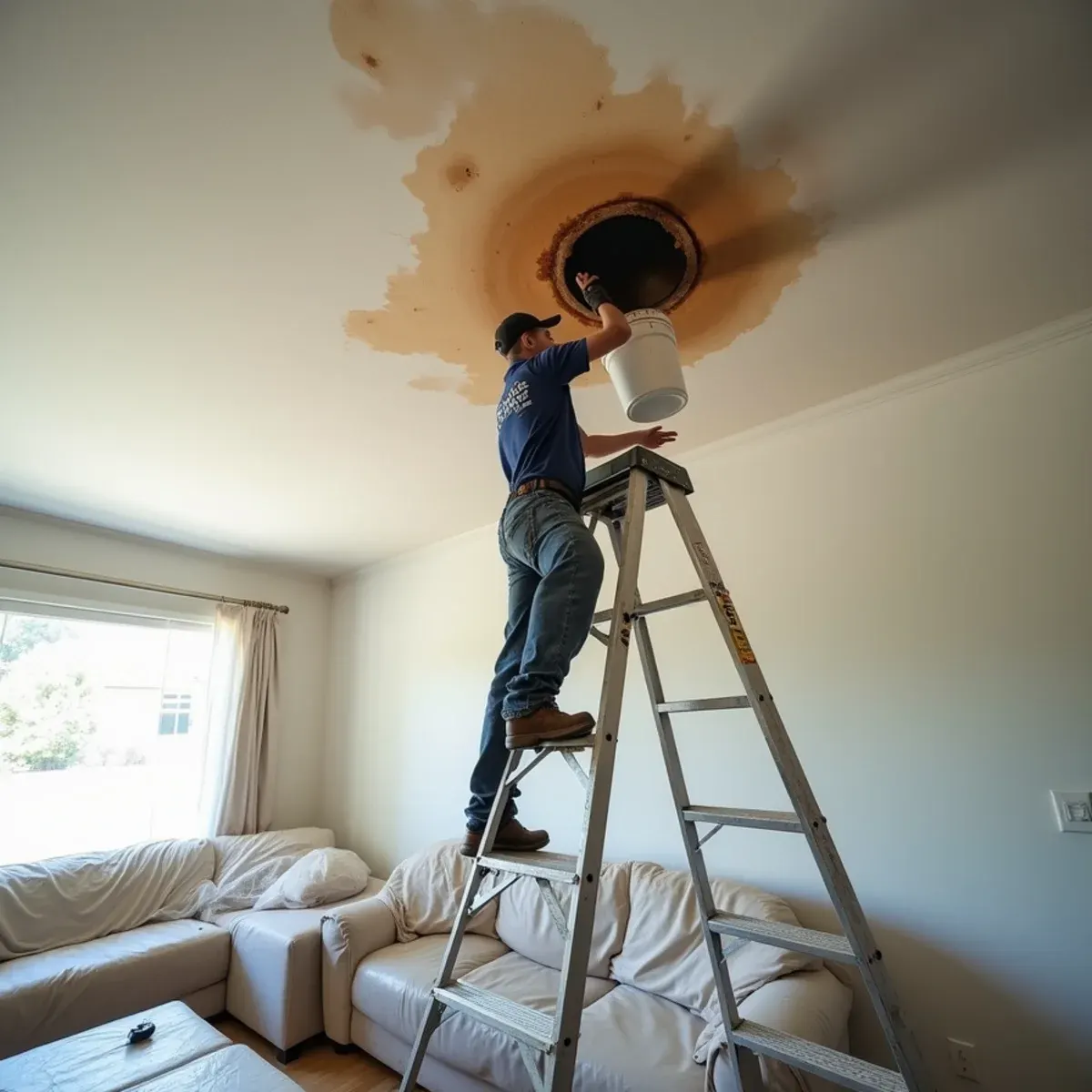
In Old Towne, the ceiling over your head is probably lath and plaster, not drywall, and that changes how we handle a roof leak. Wet plaster holds far more water and far more weight than a sheet of gypsum, and when the keys behind the lath let go it comes down in slabs instead of sagging politely first. We relieve it deliberately, in small controlled openings, catching what comes out, and we find out whether the plaster can be saved before anyone swings a hammer at it.
The attics here are rafter-framed with skip sheathing left over from the original wood shingle roofs, so water runs along a rafter and shows up at a wall line, sometimes a full room from where it entered. Outside the historic district it is a different city: postwar slab tract with truss attics and blown insulation, plus half-acre equestrian lots in Orange Park Acres carrying long, low patio and barn roofs. The camphors and sycamores near Hart Park and Santiago Creek drop enough litter to dam a valley by February.
What Orange Changes About Ceiling & Roof Leaks
1Plaster ceilings ask for a lighter hand
Wet lath and plaster carries far more weight than gypsum board, and it fails all at once when the keys behind the lath break. We relieve it in small, controlled openings from a ladder, catch the water, and take readings before deciding whether the plaster stays. In much of Old Towne the ceiling is original, and replacing it is not a like-for-like job.
2Skip sheathing sends water sideways
Under the composition shingle on most Old Towne roofs is skip sheathing left from the original wood shingles. Water that gets past the covering lands between boards, runs along a rafter, and drops wherever the framing takes it. That is why your stain often sits a room away from the entry, and why we trace from inside the attic rather than from the ceiling below.
3Leaf litter dams the valleys
The camphors and sycamores shading the streets around the Plaza, Chapman and Hart Park drop steadily through winter. Litter packs into valleys and behind chimney crickets, water backs up above the flashing, and it enters under the shingle course. Clearing valleys twice a season prevents more ceiling damage in this part of Orange than any other single habit.
How the Work Runs
The method is the same one we use on every ceiling & roof leaks job, documented to the IICRC S500:2025 standard. Here it is in short — the full ceiling & roof leak water damage process explains each stage in detail.
- Emergency tarping or temporary dry-in
- Controlled relief of trapped water
- Trace the intrusion to its real source
- Remove wet insulation and compromised drywall
- Dry the attic and the ceiling assembly
- Restore the ceiling completely
The Orange Background Worth Knowing
A slab leak announces itself eventually because concrete has nowhere to put the water. A crawl-space leak has somewhere to put it. Dirt absorbs a slow drip almost indefinitely, so the loss never produces the one thing homeowners watch for, which is water on a floor. Meanwhile the humidity under the house climbs, the fiberglass insulation between the joists soaks up moisture and sags, the subfloor picks up that moisture from below, and mold begins on the joists where it is invisible and undisturbed. Everything about this failure is built to stay quiet.
There is more on the housing stock, drainage and plumbing history of this city on our water damage restoration in Orange page.
Orange at a glance
- Dominant construction era
- 1888–1975
- Foundation type
- mixed on grade
- Supply piping found here
- original turn-of-century piping, galvanized steel, under-slab copper
- Drain line materials
- cast iron, clay
- Terrain and water table
- flat, moderate water table
- Most common local failure
- crawl-space leaks under raised-foundation historic homes, running for weeks because water drips into the dirt instead of pooling on a floor
- Highest-value local prevention
- an annual crawl-space inspection, which almost nobody does and which catches nearly everything early
What It Costs in Orange
We do not quote a number over the phone before seeing the property — anyone who does is guessing. The variables that actually move the price on a ceiling & roof leaks job are how long the leak has been active, ceiling texture and finish, attic access and insulation type, and they are broken down in full on the ceiling & roof leak water damage page. The assessment and the written estimate are free anywhere in Orange, day or night, with no obligation.
Ceiling & Roof Leaks Questions from Orange Homeowners
Usually not all of it. We work from the attic side wherever there is access, pull wet insulation off the top of the lath, and dry the cavity from above so the plaster dries from both faces. Where a section is bulging or the keys are broken, that piece has to come down for safety. Everything else gets meter-monitored daily and stays if the readings come back down. Original plaster is worth the extra days.
Clear the room and keep everyone out from underneath it, including pets. Move furniture if you can do it from the side. Put a bucket down if you can place it safely without standing under the bulge. Then call us — we relieve it deliberately, which is safer and preserves much more of the ceiling than letting it fail on its own.
We tarp immediately to stop the intrusion and coordinate the roofing repair with a licensed roofer, then handle all the interior restoration ourselves. You get one point of contact and one schedule instead of managing two trades during a storm week.
Pick a dry day, open the hatch, and use a good flashlight. You are looking at the soil directly under the bathrooms, kitchen, and laundry for dark damp patches, at the insulation for sagging or fallen batts, and at the piers and foundation vents for rust or white staining. Trust your nose as much as your eyes. If the access is too tight or you would rather not go under, we will do the inspection and photograph what is down there.