
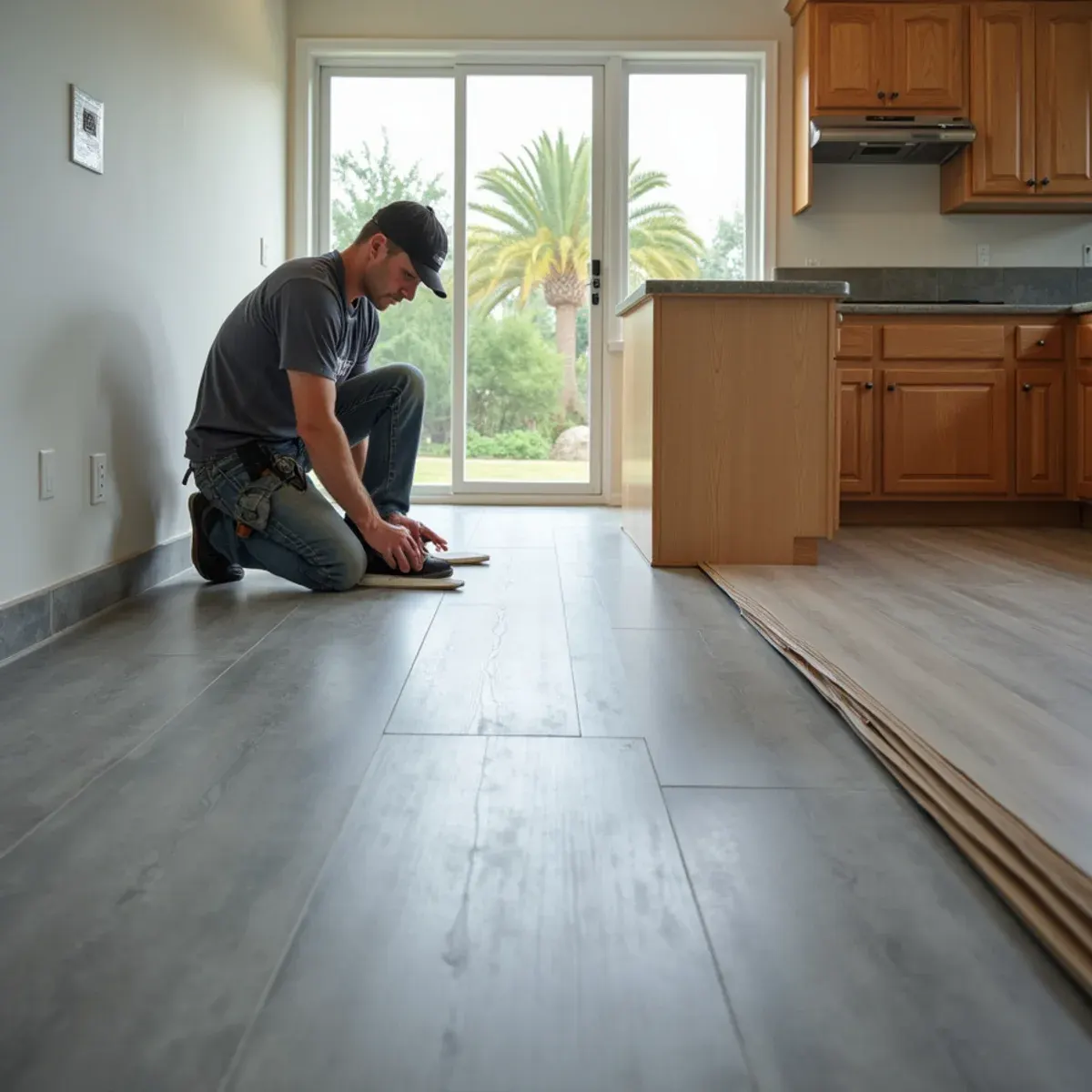
Opening the windows is the standard advice and in this city it is wrong. Costa Mesa sits close enough to the coast that the marine layer holds outdoor humidity high through most mornings for much of the year, and air that damp does not pull moisture out of a wet subfloor, it adds to the load. Fans alone just move saturated air around a room. Drying a floor assembly here is a closed, dehumidified operation, and the difference between doing it that way and doing it with the doors open is measured in weeks and in whether the smell ever leaves.
The building stock splits sharply. The Eastside holds small 1920s to 1940s cottages on raised foundations under heavy tree canopy, where crawl spaces stay shaded, cool and slow to dry, and anything wet under the floor lingers. The Westside mixes industrial buildings with housing. Mesa Verde is 1960s slab tract, and with the Santa Ana River along the western edge and a shallow water table under much of the city, those slabs carry a higher baseline moisture load than slabs a few miles inland. Vinyl plank over either substrate hides all of it.
What Costa Mesa Changes About Vinyl & Laminate Floors
1Shaded Eastside crawl spaces stay wet
Under those cottages, a dirt crawl space plus dense canopy overhead plus marine air means natural drying barely happens. Water that reached the subfloor from a spill above will still be down there weeks later, feeding growth on joist tops where nobody looks. When we work an Eastside floor we set containment and dehumidification in the crawl space itself, not only in the room upstairs.
2The smell arrives before the damage
On raised foundations here the first symptom people report is odor rather than a wet floor. Vinyl plank seals the top, so whatever is growing on the underlayment or the subfloor vents into the room through the perimeter gap behind the baseboard. If a room smells like a wet basement and the floor looks perfect, that is information. We pull base and meter the wall bottom before pulling a whole floor.
3Shallow water table under Mesa Verde slabs
Slabs in the flatter parts of the city sit over ground that holds moisture, and after wet weeks in-situ RH readings can exceed what glue-down vinyl allows with no leak involved at all. That is not a loss, and drying equipment will not beat it. It does change the product recommendation on reinstall, toward a floating floor over a rated vapor retarder rather than plank glued straight to concrete.
How the Work Runs
The method is the same one we use on every vinyl & laminate floors job, documented to the IICRC S500:2025 standard. Here it is in short — the full vinyl & laminate floor water damage process explains each stage in detail.
- Map the wet area before lifting anything
- Lift and number the planks
- Strip what sat under the floor
- Dry the slab to a documented standard
- In-situ RH test before anything goes down
- Reinstall or replace, honestly
The Costa Mesa Background Worth Knowing
Under a raised Eastside cottage there is bare soil, and that soil is supposed to stay dry because the foundation vents exchange air with the outside. That system depends on the outside air being drier than the space under the house. For a good part of the year in Costa Mesa it is not. The marine layer holds humidity high through the night and well into the morning, so the crawl space never gets the dry stretch it needs, and moisture that arrives from a plumbing drip, a downspout, or an irrigation line just accumulates.
There is more on the housing stock, drainage and plumbing history of this city on our water damage restoration in Costa Mesa page.
Costa Mesa at a glance
- Dominant construction era
- 1920–1980
- Foundation type
- mixed on grade
- Supply piping found here
- original 1920s–1940s piping on the Eastside, galvanized steel, under-slab copper
- Drain line materials
- cast iron, clay
- Terrain and water table
- coastal-flat, shallow water table
- Most common local failure
- crawl-space moisture under Eastside cottages, held in by a marine layer that slows every natural drying process
- Highest-value local prevention
- confirming crawl-space vents are actually open and that the ground under the house is dry
What It Costs in Costa Mesa
We do not quote a number over the phone before seeing the property — anyone who does is guessing. The variables that actually move the price on a vinyl & laminate floors job are how much floor has to come up, floating, glue-down, or sheet, whether the planks can be reused, and they are broken down in full on the vinyl & laminate floor water damage page. The assessment and the written estimate are free anywhere in Costa Mesa, day or night, with no obligation.
Vinyl & Laminate Floors Questions from Costa Mesa Homeowners
Underneath it. Vinyl plank is a lid, so odor from the underlayment or the subfloor escapes at the edges of the room rather than through the field. We pull baseboard in the suspect area, meter the wall bottom and the subfloor, and get into the crawl space from below. On the Eastside that crawl is usually the source, and the marine air outside guarantees it has not dried itself.
Because the plank is waterproof and the space under it is not. Water gets in at the seams and the perimeter, spreads across the slab, and then has no way out, because the plank blocks evaporation. The flooring is usually the only part of the assembly that is fine. Lifting it is how we reach the underlayment and the concrete, which are the parts holding the moisture.
No. That is one of the few places in this work where the answer is flat. The core is compressed wood fiber and glue, and once water breaks that compression the fibers stay expanded. Drying stops it getting worse; it does not reverse it. If only a few boards near the leak have swollen and the rest reads dry, a partial replacement is sometimes possible, though matching an older run is rarely clean.
Almost always the crawl space. On these raised 1920s to 1940s houses the soil under the floor stays damp when the foundation vents are blocked and the marine layer keeps outside air humid overnight. That moisture moves up through the subfloor and into the rooms above it. Before assuming anything, walk your perimeter and see whether a planter, a poured patio or landscaping has covered the vents that are supposed to be breathing.