
Here's the part that surprises Costa Mesa homeowners: you can have a real mold problem with no leak at all. The coast is close, the marine layer sits over the city most mornings, and the water table on this flat ground near the Santa Ana River is shallow. On the Eastside, small 1920s-to-1940s cottages sit on raised foundations over bare dirt under a heavy tree canopy that never lets the ground fully dry. Ground vapor rises into the crawl space, the vents don't move enough air to carry it off, and the subfloor stays damp enough to support growth season after season.
That same marine influence lengthens every drying job we do here. Air that's already carrying moisture takes longer to pull anything out of wet material, so dehumidification has to be sized for the conditions rather than the square footage. Mesa Verde is 1960s slab tract with a different failure pattern, and the Westside mixes housing with industrial buildings that need a commercial approach. We're about twenty minutes north in Cypress and dispatch as fast as conditions allow.
What Costa Mesa Changes About Mold Remediation
1Crawl space vapor without a leak
Under an Eastside cottage there's usually dirt, often no ground cover, and vents that have been painted shut, screened over or blocked by landscaping. Soil moisture evaporates upward into a space with nowhere to go. The fix isn't just removal and antimicrobial — it's a ground vapor barrier and genuinely open, functioning vents, or the subfloor goes right back to being a food source.
2Marine air lengthens the dry-down
Ambient humidity here works against us. Equipment that would dry a wall in three days inland takes longer when outside air is sitting near saturation most of the morning. We build the drying plan around the actual conditions we measure on site, and we hold verification until material readings hit target — not until the calendar says the job should be done.
3Westside industrial and mixed-use buildings
West of Placentia Avenue the mix of light industrial, live-work and older housing means some jobs are commercial in scale even when the address looks residential. Larger open floors, different HVAC, sometimes stored product to protect. We plan containment and negative air for the volume of the space, and coordinate around whatever operation has to keep running.
How the Work Runs
The method is the same one we use on every mold remediation job, documented to the IICRC S500:2025 standard. Here it is in short — the full mold remediation & removal process explains each stage in detail.
- Inspection and moisture source identification
- Testing where it is warranted
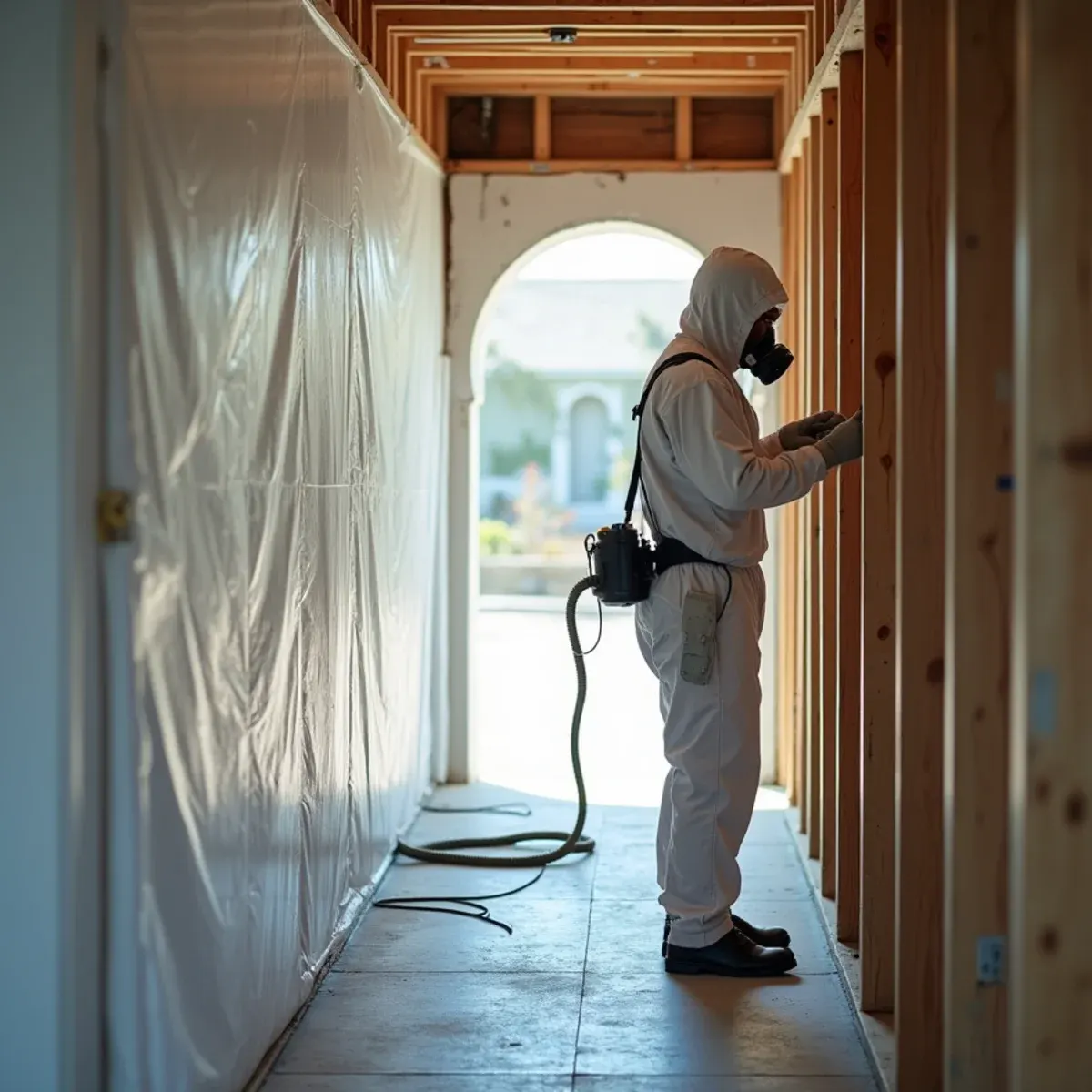
- Containment and negative pressure
- Removal of contaminated material
- HEPA cleaning and antimicrobial application
- Verification before containment comes down
The Costa Mesa Background Worth Knowing
Under a raised Eastside cottage there is bare soil, and that soil is supposed to stay dry because the foundation vents exchange air with the outside. That system depends on the outside air being drier than the space under the house. For a good part of the year in Costa Mesa it is not. The marine layer holds humidity high through the night and well into the morning, so the crawl space never gets the dry stretch it needs, and moisture that arrives from a plumbing drip, a downspout, or an irrigation line just accumulates.
There is more on the housing stock, drainage and plumbing history of this city on our water damage restoration in Costa Mesa page.
Costa Mesa at a glance
- Dominant construction era
- 1920–1980
- Foundation type
- mixed on grade
- Supply piping found here
- original 1920s–1940s piping on the Eastside, galvanized steel, under-slab copper
- Drain line materials
- cast iron, clay
- Terrain and water table
- coastal-flat, shallow water table
- Most common local failure
- crawl-space moisture under Eastside cottages, held in by a marine layer that slows every natural drying process
- Highest-value local prevention
- confirming crawl-space vents are actually open and that the ground under the house is dry
What It Costs in Costa Mesa
We do not quote a number over the phone before seeing the property — anyone who does is guessing. The variables that actually move the price on a mold remediation job are square footage of affected material, where it is, containment complexity, and they are broken down in full on the mold remediation & removal page. The assessment and the written estimate are free anywhere in Costa Mesa, day or night, with no obligation.
Mold Remediation Questions from Costa Mesa Homeowners
Most likely from below. Raised foundations over bare soil on the Eastside push ground vapor into the crawl space year round, and with a heavy tree canopy and morning marine layer that space rarely dries out. Growth develops on the underside of the subfloor and on joists, and the first sign upstairs is odor through floor registers or a closet. We inspect under the house, and if that's what we find, source correction means a ground cover and working vents, not a plumbing repair.
On a hard, non-porous surface like tile or glass, bleach handles surface growth. On drywall, wood, or anything porous it does not — the water content soaks in and can feed further growth while the chlorine stays on the surface. Porous material with real growth needs to be removed, not treated.
Usually not for visible growth with an obvious cause — you can see the problem and the work would be identical regardless of species. Testing is worthwhile when there is odor but nothing visible, when you need documentation for a claim or dispute, or when you want independent verification that the job was done right.
Almost always the crawl space. On these raised 1920s to 1940s houses the soil under the floor stays damp when the foundation vents are blocked and the marine layer keeps outside air humid overnight. That moisture moves up through the subfloor and into the rooms above it. Before assuming anything, walk your perimeter and see whether a planter, a poured patio or landscaping has covered the vents that are supposed to be breathing.