
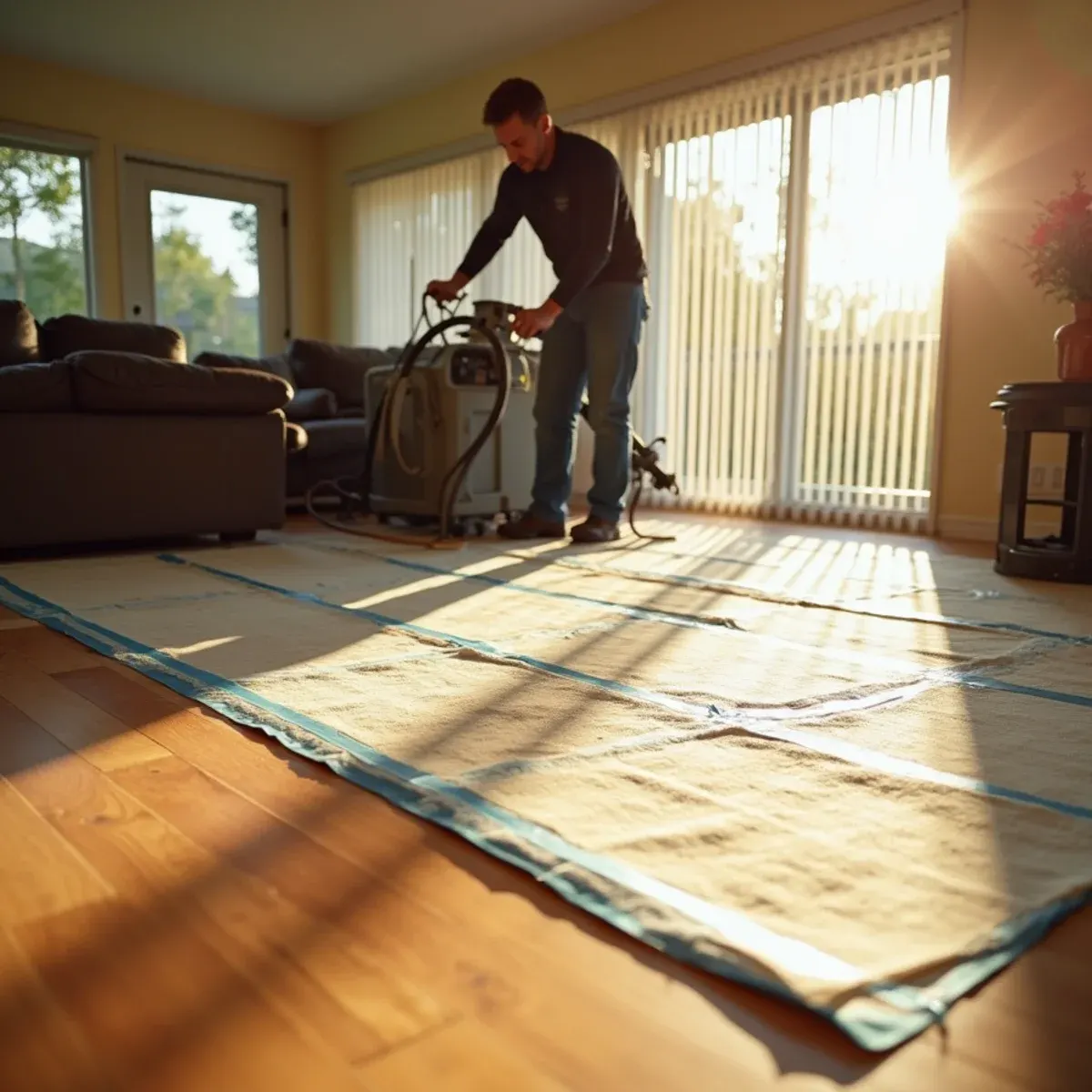
The ground in La Habra is not flat, and that surprises people once a floor gets wet. A slab leak in a kitchen off Idaho Street can show up as cupped boards in a bedroom twenty feet away and two inches lower, because water under a floor follows grade the same way water on a street does. We've had homeowners certain the leak had to be in the room with the damage. It almost never is. So the first thing we do is map moisture across the whole floor plane, not just the obvious room.
Most of the housing here went up between 1950 and 1980 on slab, with under-slab copper now well into its failure window and galvanized still in the older downtown stock. Wood floors in these houses are almost always later additions over that slab. Add decades of patios, room additions and hardscape that quietly moved surface water around, and you get a second path in: storm water entering at a doorway and running under the floor before it ever wets the surface.
What La Habra Changes About Hardwood Floor Drying
1Map the whole floor, not the wet room
Because the ground here rolls, water under a floor migrates to the low end of the plane. We read the entire connected floor area with a meter before setting any equipment, including rooms nobody thought to mention. It's routine in this city to find the highest readings two rooms away from the leak and some of the lowest right where the plumber cut his access.
2Retrofit wood over 1960s slab
These houses were built with carpet, vinyl or tile. The wood on them now was installed later, often directly over the slab with adhesive and no vapor retarder in between. That adhesive layer is where a slab leak shows up first — the bond releases before the boards visibly cup — so we read moisture at the adhesive line, not just at the surface of the board.
3Added hardscape moved the water
Patios, room additions, driveway extensions and raised planters have quietly re-routed surface drainage on most La Habra lots. During the first real storm, water that used to run to the street now runs at the house and enters at a threshold or slab edge. Watch where it actually goes this season, then correct it before it reaches your flooring a second time.
How the Work Runs
The method is the same one we use on every hardwood floor drying job, documented to the IICRC S500:2025 standard. Here it is in short — the full hardwood floor water damage drying process explains each stage in detail.
- Measure before deciding anything
- Extract from below the surface
- Control the drying rate deliberately
- Dry the subfloor and any cavity below
- Let it acclimate before judging it
- Sand and refinish only if needed
The La Habra Background Worth Knowing
Copper is good pipe. What it is not is immortal, and the way it went in during this era shortened its life. Soft copper tubing was laid in the sand under the slab before the pour, sometimes in direct contact with aggregate, often with tight bends that thinned the wall on the outside of the curve. Add fifty to seventy years of water moving through the inside and soil chemistry working on the outside, and it develops pinholes. The hot line almost always goes first, because heat accelerates every part of that process.
There is more on the housing stock, drainage and plumbing history of this city on our water damage restoration in La Habra page.
La Habra at a glance
- Dominant construction era
- 1950–1980
- Foundation type
- slab on grade
- Supply piping found here
- under-slab copper, galvanized steel
- Drain line materials
- cast iron
- Terrain and water table
- rolling, moderate water table
- Most common local failure
- under-slab copper failures in 1960s tract housing, plus drainage that decades of added hardscape has redirected
- Highest-value local prevention
- watching where water actually runs during the first storm, because the ground here is not flat
What It Costs in La Habra
We do not quote a number over the phone before seeing the property — anyone who does is guessing. The variables that actually move the price on a hardwood floor drying job are square footage under the mat system, solid versus engineered wood, what is underneath, and they are broken down in full on the hardwood floor water damage drying page. The assessment and the written estimate are free anywhere in La Habra, day or night, with no obligation.
Hardwood Floor Drying Questions from La Habra Homeowners
It's the normal pattern here. La Habra sits on gently rolling ground, and water under a floor follows grade. It runs from the leak to the lowest point in the connected floor plane and sits there, which is where the boards absorb the most moisture and cup first. That's exactly why we map the whole floor before placing equipment instead of treating the room the plumbing happened to be in.
Frequently, yes. Cupping is caused by uneven moisture between the top and bottom of each board, and when the moisture equalizes during controlled drying, much of the deformation reverses. Full flattening can take two to four weeks of acclimation after the equipment comes out, which is why we do not recommend sanding immediately.
Five to ten days under the mat system is typical, which is longer than drywall because wood gives up moisture slowly and has to be dried at a controlled rate. Rushing it causes splitting and permanent gapping, so the extra days are doing real work.
Do a meter test. Shut off every fixture and the irrigation, note the leak indicator, and check it again a few hours later with nobody using water. If it moved, something is losing water. In 1960s La Habra tract homes that is most often the hot line under the slab, and the giveaway is a warm patch of floor or the sound of water running behind a closed system.