
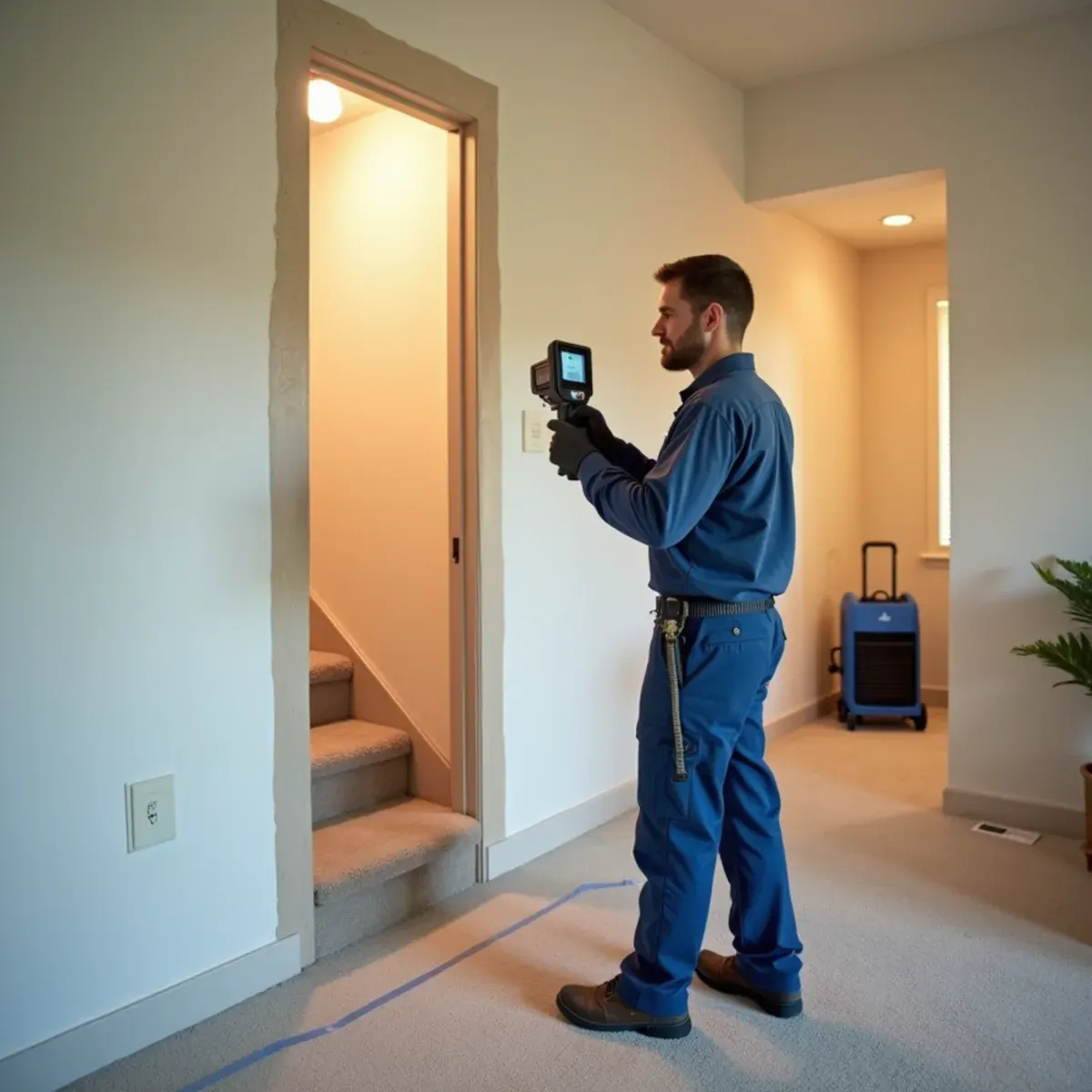
In Floral Park, French Park and Washington Square the wall is not drywall. It is plaster over wood lath, applied in coats, and it fails in a way a sheet of gypsum never does. When plaster gets wet the keys, the beads that squeezed through the lath and hardened behind it, soften and snap, and the plaster separates from its backing while still looking almost perfect from the room. You press it and it moves under your hand. That is the moment to stop and think about what the wall needs, not the moment to reach for a saw.
This is the county's oldest city and the materials in those districts have no modern equivalent. Original wood windows, old-growth trim, plaster with sand and hair worked into it. Historic preservation review applies to a good deal of the exterior work, and the interior is worth doing properly because the alternative is a flat gypsum panel in a room full of hand-worked texture that will never quite settle in. Elsewhere in Santa Ana the dense postwar apartment stock is straightforward board, and there we do ordinary drywall work without ceremony.
What Santa Ana Changes About Drywall Repair
1Plaster keys fail behind an intact face
Wet plaster releases from wood lath before the surface shows anything. The face still looks sound, the paint is unbroken, and the whole section is hanging on nothing. We check by hand across the field, not just where the stain is. Where the keys are gone the plaster comes off; where they hold, we dry it in place and it usually survives.
2Historic districts carry review requirements
Work on designated properties in Floral Park, French Park and Washington Square can trigger preservation review, particularly anything touching original windows or exterior fabric. We plan the scope with that in mind and keep original material wherever it can be saved. Homeowners who discover the requirement after demolition has started lose weeks they did not need to lose.
3Postwar apartments are ordinary board
Away from the historic districts, Santa Ana has a lot of dense postwar apartment stock built with conventional gypsum. Those repairs run the normal course: cut to a stud line at a clean seam height, replace wet insulation, tape, texture, seal and paint. We do not price a 1962 fourplex as though it were a 1912 bungalow, and we say which one you have on the first visit.
How the Work Runs
The method is the same one we use on every drywall repair job, documented to the IICRC S500:2025 standard. Here it is in short — the full drywall water damage repair process explains each stage in detail.
- Meter the wall first
- Decide dry-in-place or remove
- Open the cavity, not the wall
- Cut to a stud and a seam line
- Clear the cavity and dry the framing
- Tape, texture, prime, paint
The Santa Ana Background Worth Knowing
Lath and plaster is wood strips nailed across the studs with several coats of plaster troweled over them. The plaster that squeezes through the gaps between lath forms keys that hook over the wood and hold the whole wall in place. That construction is why plaster walls last a century — and why they behave so differently from drywall when wet.
There is more on the housing stock, drainage and plumbing history of this city on our water damage restoration in Santa Ana page.
Santa Ana at a glance
- Dominant construction era
- 1900–1970
- Foundation type
- mixed on grade
- Supply piping found here
- original early-century piping, galvanized steel, copper
- Drain line materials
- cast iron, clay
- Terrain and water table
- flat, moderate water table
- Most common local failure
- plaster key failure, where wet plaster softens and releases from the wood lath holding it to the wall
- Highest-value local prevention
- starting aggressive drying within hours on any plaster loss — waiting is the one thing that costs you the wall
What It Costs in Santa Ana
We do not quote a number over the phone before seeing the property — anyone who does is guessing. The variables that actually move the price on a drywall repair job are how much board comes out, cut height and seam count, texture type and match difficulty, and they are broken down in full on the drywall water damage repair page. The assessment and the written estimate are free anywhere in Santa Ana, day or night, with no obligation.
Drywall Repair Questions from Santa Ana Homeowners
It can be done, and in a closet or behind furniture it is a reasonable call. In a main room it usually is not. Plaster over lath is thicker than half-inch board, so the patch sits proud or shy of the surrounding wall and the edge line shows in raking light. The surface texture is hand-worked and gypsum board is dead flat. Where the wall is visible we prefer to re-key and patch in plaster so the room stays one wall rather than two.
No, and that assumption is why a lot of walls come out that did not need to. Gypsum board that got clean water, still reads firm under thumb pressure, and is coming down in moisture content day over day can usually be dried in place through the cavity. What forces removal is contaminated water, a core that has softened or swelled, visible growth on the paper, or insulation behind it that holds moisture against the board. We take readings before we answer that question.
Usually two feet or four feet above the floor, measured level across the whole run rather than following the stain. Board comes in four-foot widths, so a cut at either height lands the new seam where a factory edge would sit, which is far easier to hide than a seam floating mid-wall. The cut also has to end at the center of a stud on each side, so the patch has something to fasten to. Cutting to the shape of the damage looks thrifty and finishes badly.
Usually, if drying starts quickly. Plaster holds much more water than drywall and dries far more slowly, so it needs more equipment and often desiccant dehumidification. The risk is the plaster keys softening and releasing from the lath, which is why waiting is the one thing that genuinely costs you the wall.