
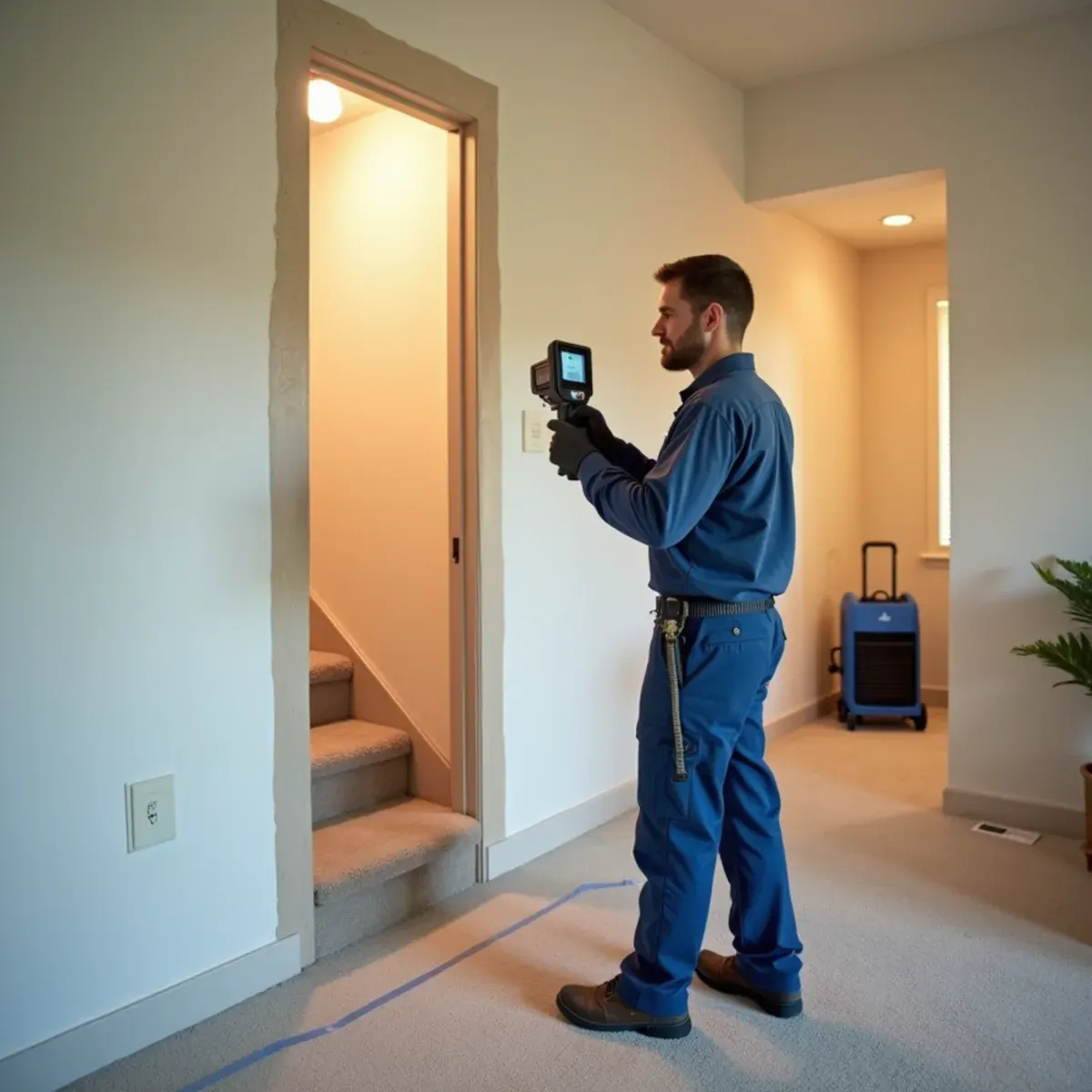
The dry-in-place decision goes differently near the coast. Costa Mesa sits under a strong marine influence with a shallow water table, and outdoor air that would help dry a wall inland just moves damp air around here. A cavity that might release its moisture in three days in Placentia can sit at the same reading on day four in Costa Mesa unless the space is closed up and dehumidified properly. That is not a reason to cut everything out. It is a reason to trust the meter and the trend rather than the calendar.
The building stock splits sharply. Eastside holds small 1920s through 1940s cottages on raised foundations under heavy tree canopy, where a crawl-space leak humidifies the underfloor and the bottom of the walls stay damp with no visible drip anywhere. Mesa Verde is 1960s slab tract with conventional board and predictable textures. The Westside mixes housing with industrial and live-work space, where metal studs and taller partitions turn up. Three different repairs in one city, and the shaded Eastside blocks are the slowest to give up moisture.
What Costa Mesa Changes About Drywall Repair
1Marine air makes open drying unreliable
Opening windows to dry a wall works inland. Here it can feed damp air straight back into the cavity. Costa Mesa's marine influence keeps outdoor humidity high enough that a wall left open can hold its reading for days. Drying is a closed exercise: seal the space, run dehumidification, direct airflow into the cavity, and watch the trend across readings rather than the clock.
2Eastside crawl spaces feed the wall
The 1920s through 1940s cottages on the Eastside sit on raised foundations under heavy tree canopy that keeps the underfloor shaded and slow to dry. A crawl-space leak raises humidity under the whole house, and the bottom of the walls stays damp without a drip anywhere in sight. Repairing the wall without drying the crawl space just resets the clock on the same problem.
3Rust bleeding through fresh paint
Salt-loaded coastal air plus a wet cavity is hard on fasteners. Screw and nail heads corrode, and that rust telegraphs through joint compound and paint as a grid of small brown dots weeks after the repair looked finished. Affected fasteners get replaced or spot-primed with a stain-blocking primer before the finish coat goes on, not after you notice them from the couch.
How the Work Runs
The method is the same one we use on every drywall repair job, documented to the IICRC S500:2025 standard. Here it is in short — the full drywall water damage repair process explains each stage in detail.
- Meter the wall first
- Decide dry-in-place or remove
- Open the cavity, not the wall
- Cut to a stud and a seam line
- Clear the cavity and dry the framing
- Tape, texture, prime, paint
The Costa Mesa Background Worth Knowing
Under a raised Eastside cottage there is bare soil, and that soil is supposed to stay dry because the foundation vents exchange air with the outside. That system depends on the outside air being drier than the space under the house. For a good part of the year in Costa Mesa it is not. The marine layer holds humidity high through the night and well into the morning, so the crawl space never gets the dry stretch it needs, and moisture that arrives from a plumbing drip, a downspout, or an irrigation line just accumulates.
There is more on the housing stock, drainage and plumbing history of this city on our water damage restoration in Costa Mesa page.
Costa Mesa at a glance
- Dominant construction era
- 1920–1980
- Foundation type
- mixed on grade
- Supply piping found here
- original 1920s–1940s piping on the Eastside, galvanized steel, under-slab copper
- Drain line materials
- cast iron, clay
- Terrain and water table
- coastal-flat, shallow water table
- Most common local failure
- crawl-space moisture under Eastside cottages, held in by a marine layer that slows every natural drying process
- Highest-value local prevention
- confirming crawl-space vents are actually open and that the ground under the house is dry
What It Costs in Costa Mesa
We do not quote a number over the phone before seeing the property — anyone who does is guessing. The variables that actually move the price on a drywall repair job are how much board comes out, cut height and seam count, texture type and match difficulty, and they are broken down in full on the drywall water damage repair page. The assessment and the written estimate are free anywhere in Costa Mesa, day or night, with no obligation.
Drywall Repair Questions from Costa Mesa Homeowners
Give it about 48 hours of controlled drying with readings taken at the same points each visit. In Costa Mesa the marine air means outdoor conditions won't help, so the space gets closed and dehumidified before that clock even starts. If the numbers are dropping steadily by the second day, the wall usually makes it. If they flatten while the equipment is running, the cavity isn't releasing and we cut. That's a measurement, not a guess.
No, and that assumption is why a lot of walls come out that did not need to. Gypsum board that got clean water, still reads firm under thumb pressure, and is coming down in moisture content day over day can usually be dried in place through the cavity. What forces removal is contaminated water, a core that has softened or swelled, visible growth on the paper, or insulation behind it that holds moisture against the board. We take readings before we answer that question.
Usually two feet or four feet above the floor, measured level across the whole run rather than following the stain. Board comes in four-foot widths, so a cut at either height lands the new seam where a factory edge would sit, which is far easier to hide than a seam floating mid-wall. The cut also has to end at the center of a stud on each side, so the patch has something to fasten to. Cutting to the shape of the damage looks thrifty and finishes badly.
Almost always the crawl space. On these raised 1920s to 1940s houses the soil under the floor stays damp when the foundation vents are blocked and the marine layer keeps outside air humid overnight. That moisture moves up through the subfloor and into the rooms above it. Before assuming anything, walk your perimeter and see whether a planter, a poured patio or landscaping has covered the vents that are supposed to be breathing.