
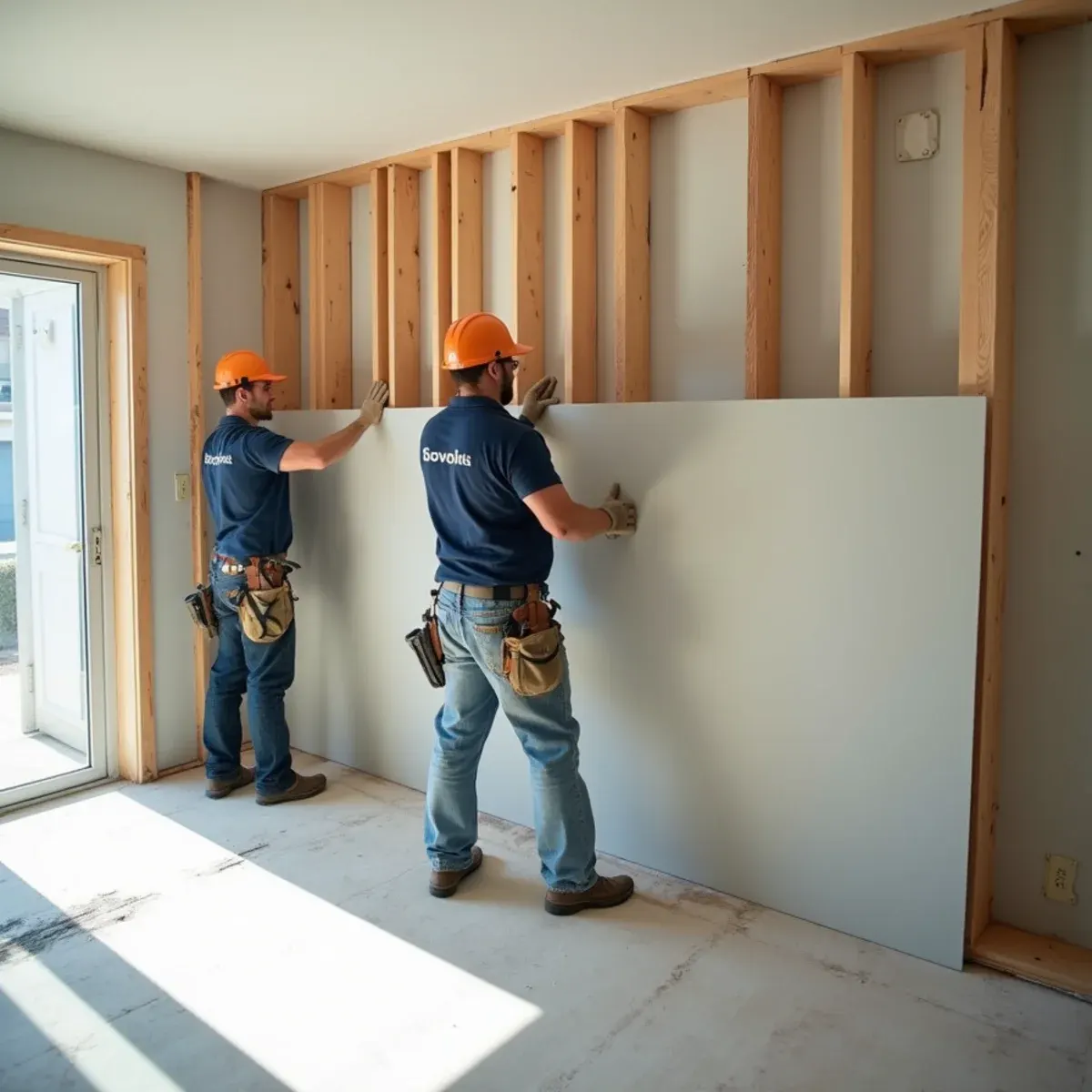
It usually starts under a hall bathroom. A pinhole in under-slab copper in a 1963 house off Idaho Street, and because the ground in La Habra rolls gently rather than sitting flat, the water finds the low side of the pad and shows up in a bedroom two rooms away. By the time we're rebuilding, the scope isn't one bathroom. It's a bathroom, a hallway, the bottom of three walls and whatever the last owner installed on top of the original floor in 1988.
La Habra built out between 1950 and 1980, uniform enough that we recognize floor plans, but almost every house has been added to since. Enclosed patios, converted garages, a second layer of flooring over the first, hardscape that redirected where the yard drains. Those layers are where reconstruction estimates go wrong, and we open them up and measure before committing to a number. The city sits at the head of the Coyote Creek watershed — the same creek that runs past our Cypress yard — and it's a seventeen-minute drive for our crews.
What La Habra Changes About Repair & Reconstruction
1Layered flooring and what's underneath
A lot of La Habra houses have vinyl over the original sheet goods, or laminate over both. When water gets between the layers, the lower one holds moisture against the slab long after the surface feels dry. Removal usually means taking everything down to bare concrete, and on houses this age the bottom layer and its adhesive may need testing before anyone starts scraping.
2Converted garages and enclosed patios
Additions built in the seventies and eighties often sit on a thinner slab, with a lower floor level and framing tied into the original wall in ways nobody drew. When one of those spaces floods, the rebuild has to resolve the height transition and the framing connection, not just replace drywall. We find out what's actually there before writing the estimate, because guessing here is how change orders happen.
3Permits, inspections and the paperwork trail
La Habra runs its own building department, and structural framing, electrical or plumbing work inside a reconstruction gets permitted and inspected. We handle that rather than working around it. It slows the front of a job by a few days and it's worth every hour when you sell the house, because unpermitted repair work is exactly what a buyer's inspector finds.
How the Work Runs
The method is the same one we use on every repair & reconstruction job, documented to the IICRC S500:2025 standard. Here it is in short — the full water damage repair & reconstruction process explains each stage in detail.
- Scope and estimate while mitigation finishes
- Agree the scope with you and the carrier
- Material selection
- Rough work and inspections
- Finishes
- Walkthrough and warranty
The La Habra Background Worth Knowing
Copper is good pipe. What it is not is immortal, and the way it went in during this era shortened its life. Soft copper tubing was laid in the sand under the slab before the pour, sometimes in direct contact with aggregate, often with tight bends that thinned the wall on the outside of the curve. Add fifty to seventy years of water moving through the inside and soil chemistry working on the outside, and it develops pinholes. The hot line almost always goes first, because heat accelerates every part of that process.
There is more on the housing stock, drainage and plumbing history of this city on our water damage restoration in La Habra page.
La Habra at a glance
- Dominant construction era
- 1950–1980
- Foundation type
- slab on grade
- Supply piping found here
- under-slab copper, galvanized steel
- Drain line materials
- cast iron
- Terrain and water table
- rolling, moderate water table
- Most common local failure
- under-slab copper failures in 1960s tract housing, plus drainage that decades of added hardscape has redirected
- Highest-value local prevention
- watching where water actually runs during the first storm, because the ground here is not flat
What It Costs in La Habra
We do not quote a number over the phone before seeing the property — anyone who does is guessing. The variables that actually move the price on a repair & reconstruction job are how much came out during mitigation, finish level and material availability, texture and finish matching difficulty, and they are broken down in full on the water damage repair & reconstruction page. The assessment and the written estimate are free anywhere in La Habra, day or night, with no obligation.
Repair & Reconstruction Questions from La Habra Homeowners
Sometimes the honest answer is no. If the wet material is all removable and the readings come back to dry standard, we close it up, patch and paint, and you're done. But on a 1960s La Habra house we're usually finding a second flooring layer trapping moisture, a bottom plate that's been wet for weeks, and cabinet kicks that wicked it up. Those aren't cosmetic. We'll show you the meter readings and the photos and let you decide with real information.
Both, under one contract. The same team that documented and dried your loss handles the rebuild — drywall, texture, flooring, cabinetry, trim, and paint — so you are not managing multiple contractors or explaining the scope twice.
A single-room repair is typically one to two weeks after drying finishes. Kitchen or multi-room rebuilds run three to six weeks, and jobs requiring permits and inspections take longer because of the inspection windows. You get a written schedule before work starts.
Do a meter test. Shut off every fixture and the irrigation, note the leak indicator, and check it again a few hours later with nobody using water. If it moved, something is losing water. In 1960s La Habra tract homes that is most often the hot line under the slab, and the giveaway is a warm patch of floor or the sound of water running behind a closed system.