
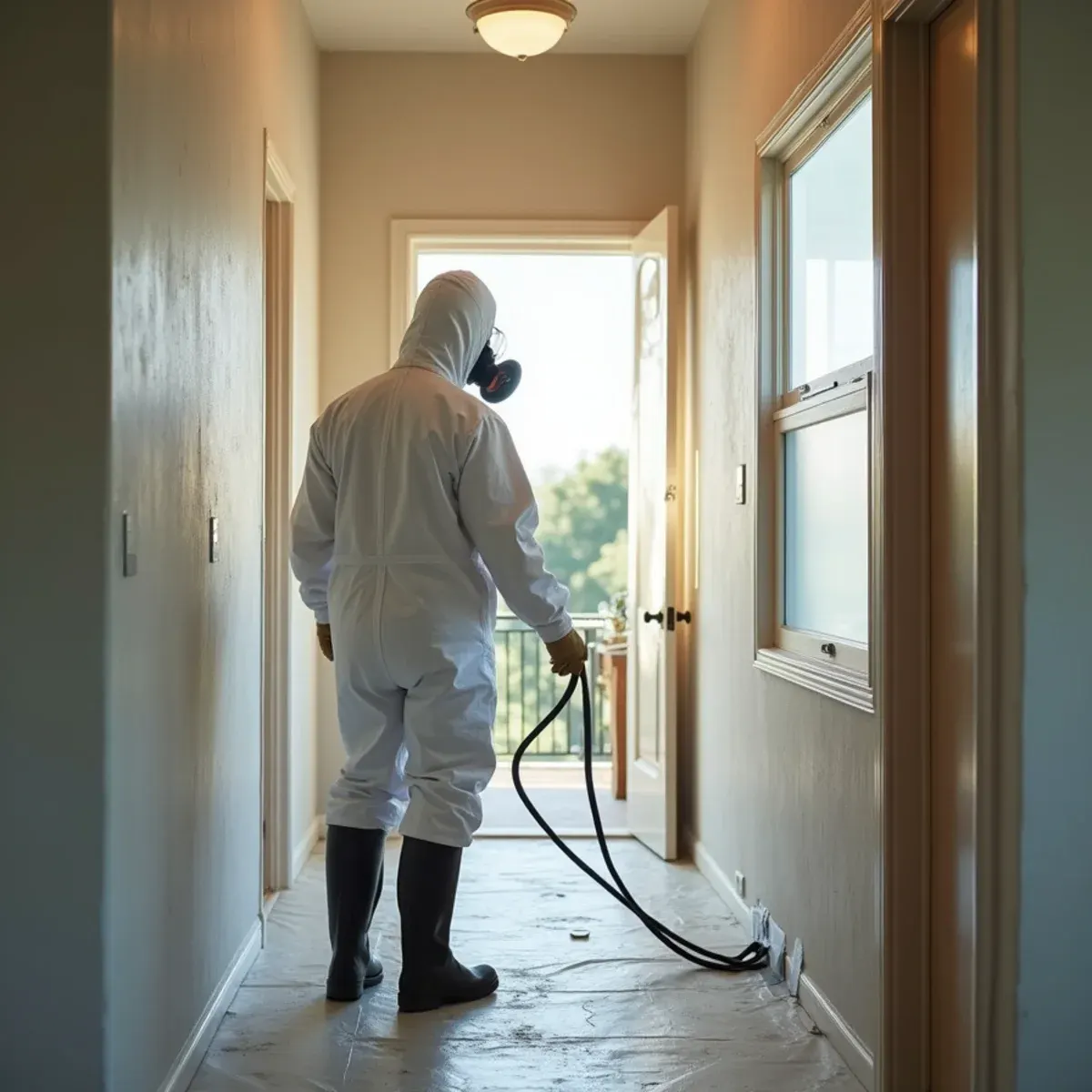
Air matters here in a way it doesn't a few miles inland. Costa Mesa sits close enough to the coast that the marine layer holds humidity high through the morning most of the year, and the water table under the flats near the Santa Ana River is shallow. Neither of those is a problem until sewage ends up under an Eastside cottage. Then the ground under the house is already damp, the air under there is already saturated, and the natural drying that would happen in Placentia or Yorba Linda simply doesn't.
Those Eastside cottages date from the 1920s through the 1940s, sit on raised foundations under a heavy tree canopy, and drain through clay laterals with roots in them. Sewage drops through the floor and stays. Elsewhere in the city the picture changes — Mesa Verde is 1960s slab tract, and the Westside mixes housing with working industrial buildings, which puts a residential Category 3 job and a commercial one on the same street on the same afternoon.
What Costa Mesa Changes About Sewage Cleanup
1Crawl spaces that won't dry themselves
Open vents do nothing when the outside air is at eighty-five percent relative humidity by dawn. After a sewage loss under an Eastside house we strip the contaminated soil layer, barrier and insulation, then dry the space with sealed containment and dehumidification rather than ventilation. Verification readings come from the framing and the soil, not from how it smells.
2A shallow water table complicates excavation
On the flats toward the Santa Ana River and Fairview Park, groundwater sits close enough to the surface that a lateral repair trench can start taking water before the pipe is even exposed. That's a plumbing and excavation issue, not ours, but it changes the schedule, and we'd rather you hear it from us before the cleanup is finished.
3Westside mixed use, two standards
A Category 3 loss in a Westside live-work building or a small manufacturing space carries different obligations than the same water in a bedroom — worker exposure, product contact, and a landlord and tenant who each need their own documentation. We scope those separately from the start rather than writing one report and splitting it later.
How the Work Runs
The method is the same one we use on every sewage cleanup job, documented to the IICRC S500:2025 standard. Here it is in short — the full sewage backup cleanup process explains each stage in detail.
- Secure the area and set containment
- Full PPE and safe extraction
- Remove contaminated porous materials
- Clean and disinfect all remaining surfaces
- Deodorize at the source
- Dry, verify, and clear
The Costa Mesa Background Worth Knowing
Under a raised Eastside cottage there is bare soil, and that soil is supposed to stay dry because the foundation vents exchange air with the outside. That system depends on the outside air being drier than the space under the house. For a good part of the year in Costa Mesa it is not. The marine layer holds humidity high through the night and well into the morning, so the crawl space never gets the dry stretch it needs, and moisture that arrives from a plumbing drip, a downspout, or an irrigation line just accumulates.
There is more on the housing stock, drainage and plumbing history of this city on our water damage restoration in Costa Mesa page.
Costa Mesa at a glance
- Dominant construction era
- 1920–1980
- Foundation type
- mixed on grade
- Supply piping found here
- original 1920s–1940s piping on the Eastside, galvanized steel, under-slab copper
- Drain line materials
- cast iron, clay
- Terrain and water table
- coastal-flat, shallow water table
- Most common local failure
- crawl-space moisture under Eastside cottages, held in by a marine layer that slows every natural drying process
- Highest-value local prevention
- confirming crawl-space vents are actually open and that the ground under the house is dry
What It Costs in Costa Mesa
We do not quote a number over the phone before seeing the property — anyone who does is guessing. The variables that actually move the price on a sewage cleanup job are affected square footage, volume of porous material removed, contents in the affected area, and they are broken down in full on the sewage backup cleanup page. The assessment and the written estimate are free anywhere in Costa Mesa, day or night, with no obligation.
Sewage Cleanup Questions from Costa Mesa Homeowners
It does, and anyone who quotes you a fixed number without seeing the space is guessing. Coastal humidity means we can't rely on ventilation, so the crawl space gets sealed and dried with equipment, and soil takes longer to release moisture than framing does. What we can promise is that we measure rather than estimate, and we don't call it done until readings at the framing and the ground both hold at a dry standard.
It depends on the source. A toilet that overflows with clean bowl water because of a stuck fill valve is Category 1 or 2 and is far less serious. A toilet that backs up from the main line is carrying waste from the whole system, and that is Category 3 — it needs the full protocol.
No. Standard practice for Category 3 water is removal and disposal of carpet and pad that were contacted. Porous materials cannot be reliably disinfected all the way through, and the health risk of leaving them is not worth the savings.
Almost always the crawl space. On these raised 1920s to 1940s houses the soil under the floor stays damp when the foundation vents are blocked and the marine layer keeps outside air humid overnight. That moisture moves up through the subfloor and into the rooms above it. Before assuming anything, walk your perimeter and see whether a planter, a poured patio or landscaping has covered the vents that are supposed to be breathing.