
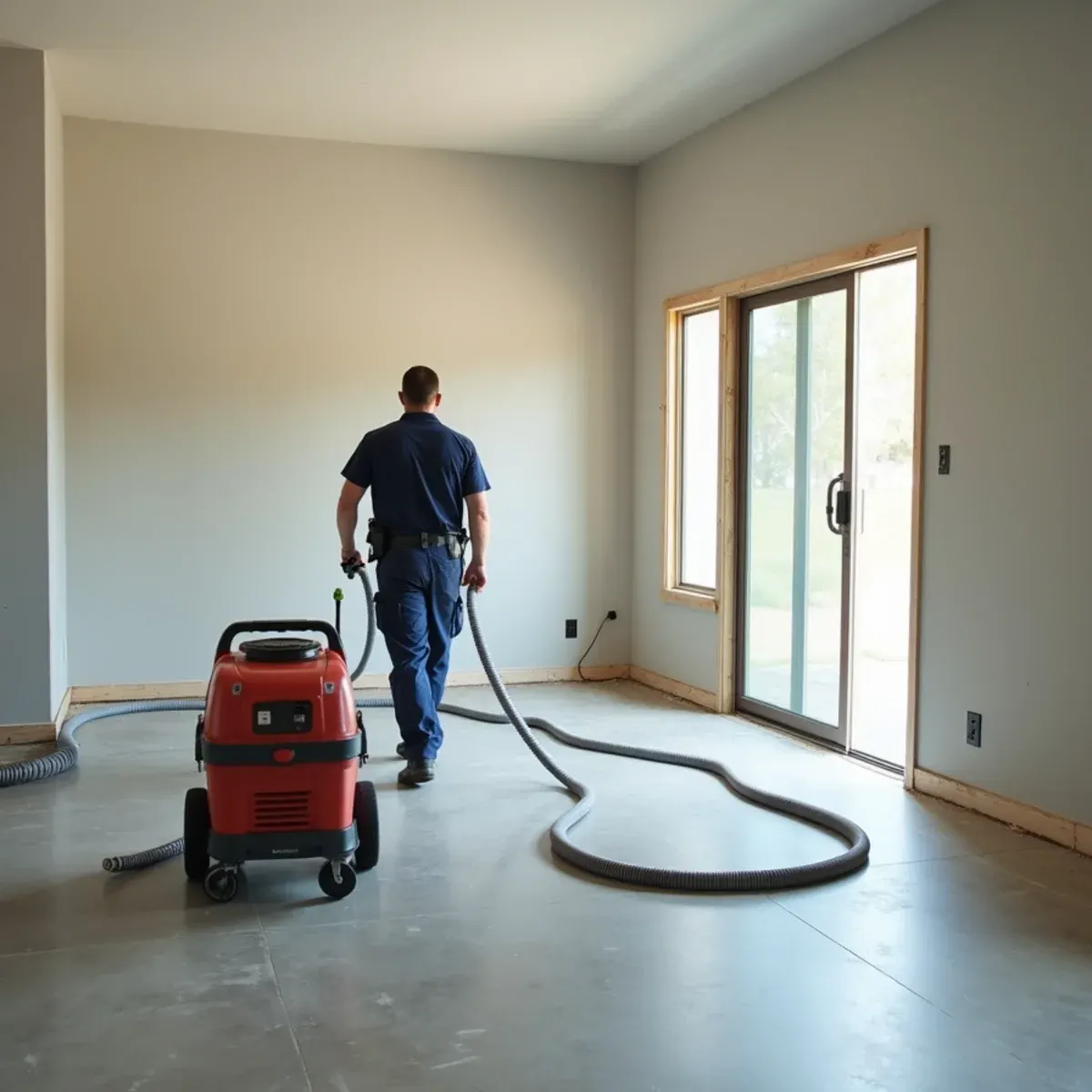
Air that stays near saturation half the morning changes what drying can do. Costa Mesa gets strong marine influence and sits over a shallow water table, and on the Eastside, where small 1920s to 1940s cottages sit on raised foundations under heavy tree canopy, that combination keeps sub-area soil damp most of the year. Open the crawl-space vents on a foggy June morning and you are pulling in air wetter than what is already under the house. That is why musty odor here so often outlives the leak that started it.
Elsewhere in the city it looks different. Mesa Verde is 1960s slab tract, where residue sits in pad and wall base and drying goes predictably once the material is out. The Westside mixes light industrial with housing, so we handle a shop and a house on the same street under different rules. And near the Santa Ana River on the western edge, ground moisture at the slab edge stays high after storms, which stretches the drying schedule. Rush it and you leave exactly the residue that starts smelling in August.
What Costa Mesa Changes About Odor Removal
1Ventilation alone will not dry an Eastside sub-area
Cross-vents work when the outside air is drier than the air under the house. Through a Costa Mesa marine morning it often is not. Under those cottages we run controlled dehumidification in the sub-area rather than relying on vents, then deal with the soil, the vapor barrier and the sagging insulation that hold odor after the water itself is gone.
2Tree canopy keeps the perimeter from drying
The mature canopy over the Eastside is one of the best things about the neighborhood and one reason sub-areas stay damp. Shade, leaf litter piled against the stem wall and roots holding moisture all slow evaporation around the perimeter. Clearing the grade line and getting real airflow under the floor is a lasting fix; a fragrance treatment lasts until the next fog.
3Shallow water table under the whole city
Groundwater sits close to the surface here, especially toward the Santa Ana River. That raises baseline moisture in sub-area soil and at slab edges, and it means a proper vapor barrier matters more than it does inland. Where we find a barrier missing or shredded under an older cottage, replacing it is part of the odor work rather than an upsell after it.
How the Work Runs
The method is the same one we use on every odor removal job, documented to the IICRC S500:2025 standard. Here it is in short — the full odor removal & deodorization process explains each stage in detail.
- Locate the residue
- Remove what holds it
- Clean the surfaces that stay
- Filter the air while we work
- Seal only what cannot be cleaned
- Treat the air, then verify
The Costa Mesa Background Worth Knowing
Under a raised Eastside cottage there is bare soil, and that soil is supposed to stay dry because the foundation vents exchange air with the outside. That system depends on the outside air being drier than the space under the house. For a good part of the year in Costa Mesa it is not. The marine layer holds humidity high through the night and well into the morning, so the crawl space never gets the dry stretch it needs, and moisture that arrives from a plumbing drip, a downspout, or an irrigation line just accumulates.
There is more on the housing stock, drainage and plumbing history of this city on our water damage restoration in Costa Mesa page.
Costa Mesa at a glance
- Dominant construction era
- 1920–1980
- Foundation type
- mixed on grade
- Supply piping found here
- original 1920s–1940s piping on the Eastside, galvanized steel, under-slab copper
- Drain line materials
- cast iron, clay
- Terrain and water table
- coastal-flat, shallow water table
- Most common local failure
- crawl-space moisture under Eastside cottages, held in by a marine layer that slows every natural drying process
- Highest-value local prevention
- confirming crawl-space vents are actually open and that the ground under the house is dry
What It Costs in Costa Mesa
We do not quote a number over the phone before seeing the property — anyone who does is guessing. The variables that actually move the price on a odor removal job are how much material comes out, where the residue ended up, the type of odor involved, and they are broken down in full on the odor removal & deodorization page. The assessment and the written estimate are free anywhere in Costa Mesa, day or night, with no obligation.
Odor Removal Questions from Costa Mesa Homeowners
Because the fog is part of the mechanism. If the soil under the house is still damp and the barrier is incomplete, humid marine air coming through the vents keeps the sub-area near saturation and odor keeps rising through the floor. Cleaning removed material; it did not change the moisture. A sealed vapor barrier over the soil plus controlled dehumidification under the floor is what stops those mornings from being an event.
It may mask it for a few weeks. Rental units are usually undersized for a whole structure, and they treat air rather than the material producing the odor. They also should not run with anyone home, and long heavy cycles can degrade rubber seals, leather, and paint sheen. If the residue sits in a wall cavity or under the flooring, no amount of ozone reaches it.
Because residue was left somewhere. That is the answer nearly every time. The usual spots are attic insulation, the inside of flex duct, the wall cavity behind drywall that was replaced but never cleaned, the subfloor under new flooring, and the back of a cabinet run. Drying a structure to standard does not remove residue, so a job dried correctly can still smell if cleaning stopped at visible surfaces.
Almost always the crawl space. On these raised 1920s to 1940s houses the soil under the floor stays damp when the foundation vents are blocked and the marine layer keeps outside air humid overnight. That moisture moves up through the subfloor and into the rooms above it. Before assuming anything, walk your perimeter and see whether a planter, a poured patio or landscaping has covered the vents that are supposed to be breathing.