
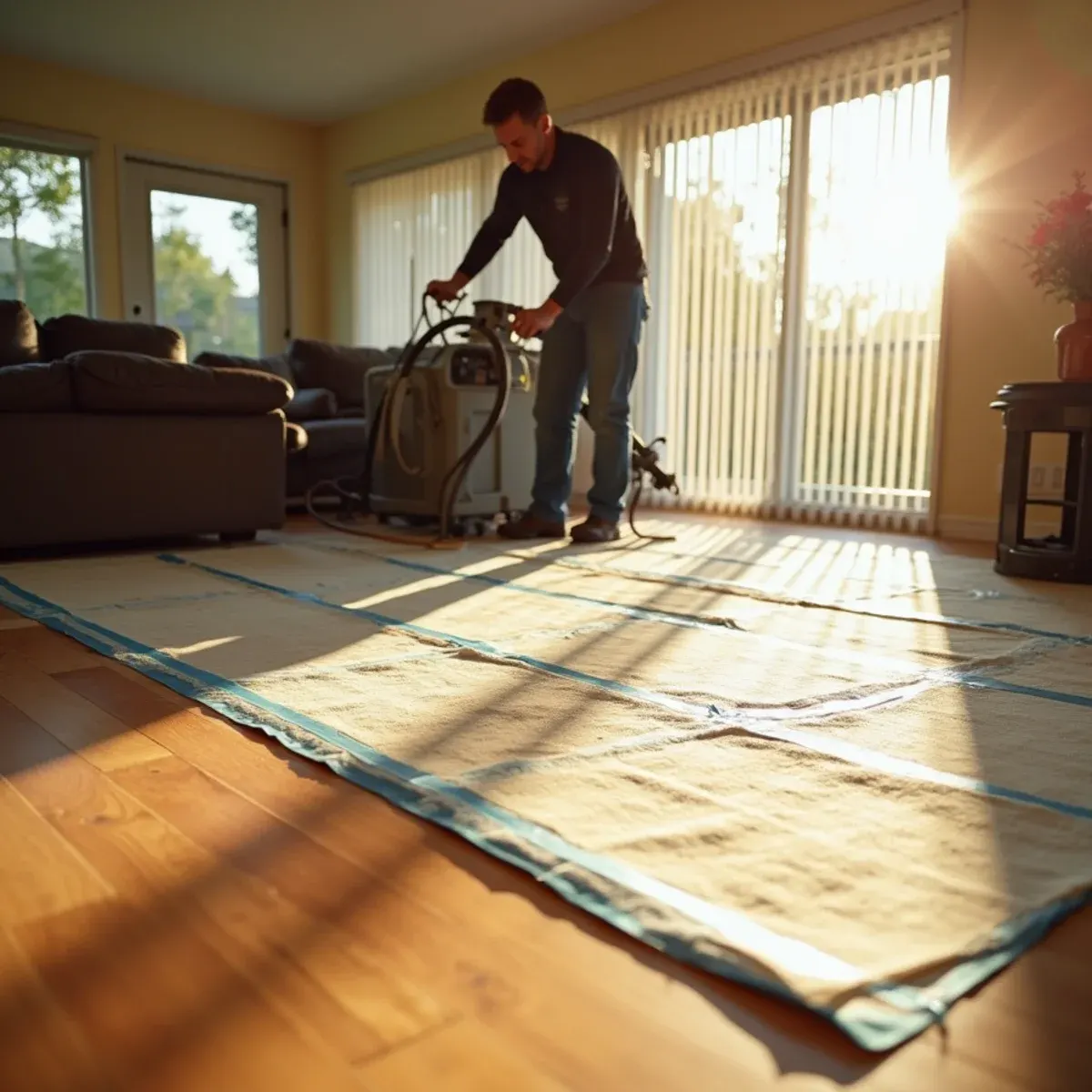
The call usually starts the same way here. A section of hardwood in a hallway begins to cup, there's no visible water anywhere, and the boards feel warm underfoot. That's an under-slab copper leak, and in Placentia's 1950s-to-1970s tracts it's the single most common reason a wood floor fails. The water never runs across the floor. It comes up through the slab as vapor and liquid into the underside of the plywood or the adhesive, which is the worst possible direction for wood.
The tract stock between Kraemer and Alta Vista is uniform enough that when we dry one house, we tend to see neighbors within a year. Same builder, same era of copper, same routing. The important part for your floor is sequence: mat drying works, but not against a live leak. The plumber isolates and repairs first, then we set mats and pull moisture up through the seams. Starting the other way around just runs equipment while the slab keeps feeding water back in.
What Placentia Changes About Hardwood Floor Drying
1The copper gets repaired first
Mat drying pulls moisture up through the board seams under negative pressure, and it works well. It does not out-run a live under-slab leak. Until the plumber isolates and repairs the line, the slab keeps feeding water back into the floor and every reading we take is meaningless. We'll set containment and start extraction, but the real dry-out clock begins after the repair.
2One neighbor's leak predicts the next
The tracts off Kraemer and Chapman went up in the same few years with the same copper routed the same way. When we dry a floor on one street we often see two more on it within a year. If a neighbor has had a slab leak, run your own water-meter test with everything shut off. Catching it before the floor moves is the whole game with wood.
3Wood over slab dries one direction
There's no crawl space here, so every bit of moisture has to come up through the surface. That means longer equipment runs, closer monitoring and realistic expectations about the days involved. It also means the plywood or sleeper layer under the finished floor matters as much as the boards you can see, and we take readings in both.
How the Work Runs
The method is the same one we use on every hardwood floor drying job, documented to the IICRC S500:2025 standard. Here it is in short — the full hardwood floor water damage drying process explains each stage in detail.
- Measure before deciding anything
- Extract from below the surface
- Control the drying rate deliberately
- Dry the subfloor and any cavity below
- Let it acclimate before judging it
- Sand and refinish only if needed
The Placentia Background Worth Knowing
Copper under a slab fails in two directions at once. From the inside, decades of water flow erode thin spots at bends and fittings, especially on the hot side where the metal runs warmer and the water moves faster. From the outside, soil chemistry and stray current attack the pipe wall. Either way the result is a pinhole rather than a burst, which is precisely why these losses are so expensive by the time we see them. A pinhole under concrete can run for months, soaking the sub-base, wicking up into the slab, and surfacing at the edge of the carpet as a stain nobody can explain.
There is more on the housing stock, drainage and plumbing history of this city on our water damage restoration in Placentia page.
Placentia at a glance
- Dominant construction era
- 1955–1980
- Foundation type
- slab on grade
- Supply piping found here
- under-slab copper, galvanized steel
- Drain line materials
- cast iron
- Terrain and water table
- flat, moderate water table
- Most common local failure
- under-slab copper reaching the end of its service life across whole tracts at once
- Highest-value local prevention
- the annual water-meter test, and treating a neighbor's slab leak as information
What It Costs in Placentia
We do not quote a number over the phone before seeing the property — anyone who does is guessing. The variables that actually move the price on a hardwood floor drying job are square footage under the mat system, solid versus engineered wood, what is underneath, and they are broken down in full on the hardwood floor water damage drying page. The assessment and the written estimate are free anywhere in Placentia, day or night, with no obligation.
Hardwood Floor Drying Questions from Placentia Homeowners
Two checks before you call anyone. Shut off every fixture and appliance, including the ice maker, then watch the water meter's low-flow indicator for fifteen minutes — movement means a leak somewhere in the system. Then walk the floor barefoot. A warm band along a hallway usually means a hot-water line under the slab. Humidity cupping is broad and even across a room. A slab leak cups in a lane, following the pipe.
Frequently, yes. Cupping is caused by uneven moisture between the top and bottom of each board, and when the moisture equalizes during controlled drying, much of the deformation reverses. Full flattening can take two to four weeks of acclimation after the equipment comes out, which is why we do not recommend sanding immediately.
Five to ten days under the mat system is typical, which is longer than drywall because wood gives up moisture slowly and has to be dried at a controlled rate. Rushing it causes splitting and permanent gapping, so the extra days are doing real work.
Worried is the wrong word, but you should start paying attention. These tracts were built in tight windows with the same copper at the same depth in the same soil, so failures cluster on a street rather than scattering randomly. Treat a neighbor's slab leak as a service bulletin for your own house. Run the meter test, listen for the water heater cycling at odd hours, and check the hallway and bedroom floors for warm or damp patches every so often.