
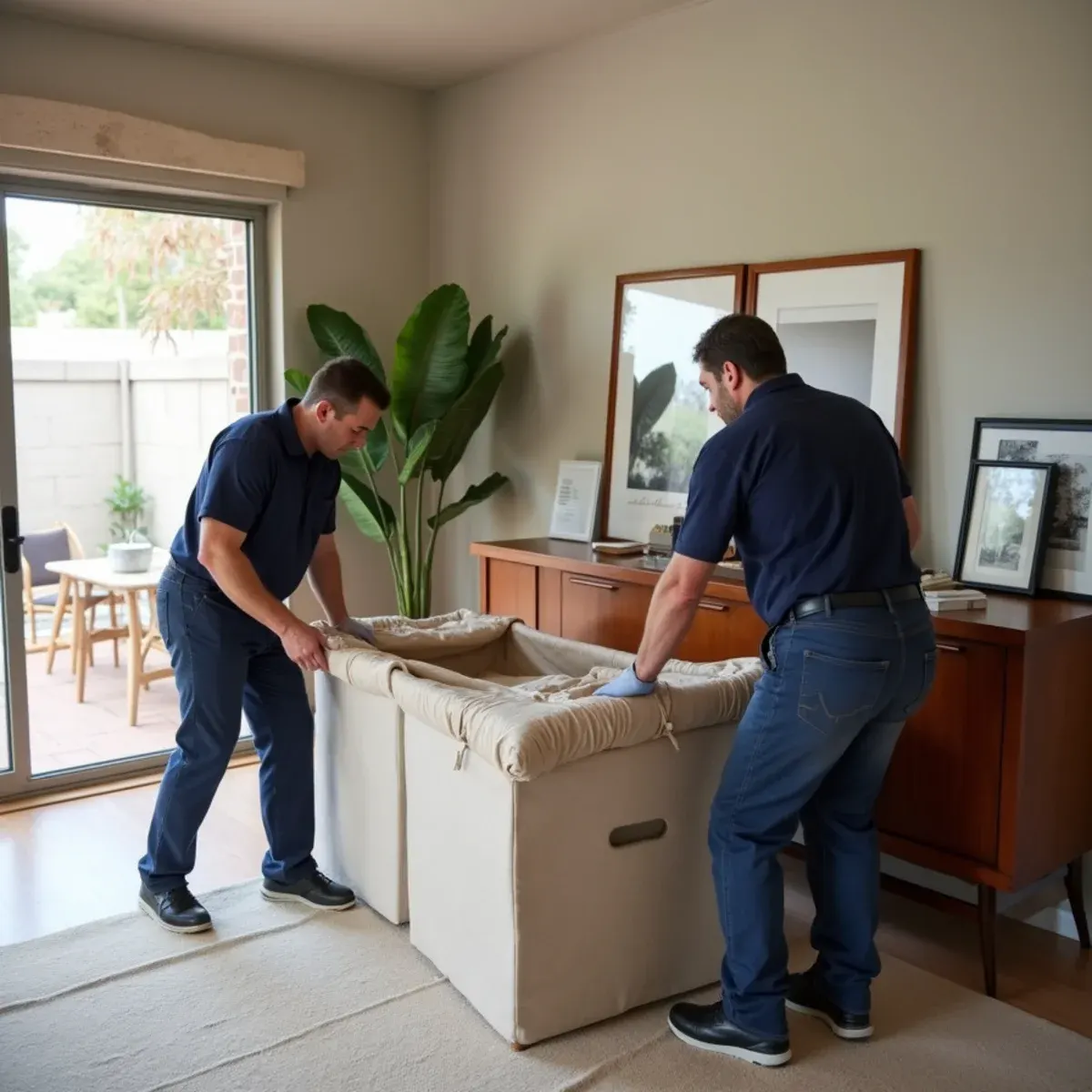
La Habra is not flat, and that changes where your belongings get wet. The ground rolls gently at the head of the Coyote Creek watershed, the same creek that runs past our Cypress base, so every lot has a high side and a low side. Fifty years of added patios, driveway extensions and pool decks have quietly redirected where runoff goes. Water shows up at the low corner of the property, which on most of these 1950s to 1970s houses is the garage, the laundry room, or a room somebody added later without matching the original grade.
Inside, the failure is what you would expect from this era: under-slab copper reaching the end of its life in uniform tract housing across Westridge, Vista Grande and the Idaho Street area. Those leaks wet from below and low. The older downtown stock and the multi-family along the Whittier Boulevard corridor behave differently again, with stacked units where the household above decides what happens to the household below. We ask which of those you are before planning anything, because the contents at risk sit in completely different rooms.
What La Habra Changes About Contents & Pack-Out
1Converted rooms hold the worst storage
Add-on family rooms and enclosed patios on these lots often sit slightly lower than the original slab and were finished with materials that do not tolerate water: pressed-board cabinetry, direct-glue flooring, wall paneling. They are also where households keep the overflow, including files, photo boxes and seasonal storage. When water enters low, that room loses more contents per square foot than the rest of the house combined.
2Water heaters share the garage with your archive
Most garages here still hold the water heater, and most still hold the household archive stacked on the slab beside it. A tank failure puts forty or more gallons across that floor in minutes and finds the cardboard first. Raising stored boxes onto shelving or pallets is the cheapest contents protection available in this city, and almost nobody has done it.
3Stacked units mean two separate claims
Along the Whittier Boulevard corridor, a failure in an upper unit pushes water into the unit below, and the two households almost never share an insurer. We photograph, inventory and store each household's property separately, tagged by unit, so the tenant downstairs is not waiting on the owner upstairs to move first. Essentials, meaning medication, documents, work laptops and a change of clothes, come out the same day.
How the Work Runs
The method is the same one we use on every contents & pack-out job, documented to the IICRC S500:2025 standard. Here it is in short — the full contents restoration & pack-out process explains each stage in detail.
- Room-by-room photographic inventory
- Triage into three categories
- Careful packing and transport
- Cleaning and restoration by material type
- Climate-controlled storage
- Delivery and placement back
The La Habra Background Worth Knowing
Copper is good pipe. What it is not is immortal, and the way it went in during this era shortened its life. Soft copper tubing was laid in the sand under the slab before the pour, sometimes in direct contact with aggregate, often with tight bends that thinned the wall on the outside of the curve. Add fifty to seventy years of water moving through the inside and soil chemistry working on the outside, and it develops pinholes. The hot line almost always goes first, because heat accelerates every part of that process.
There is more on the housing stock, drainage and plumbing history of this city on our water damage restoration in La Habra page.
La Habra at a glance
- Dominant construction era
- 1950–1980
- Foundation type
- slab on grade
- Supply piping found here
- under-slab copper, galvanized steel
- Drain line materials
- cast iron
- Terrain and water table
- rolling, moderate water table
- Most common local failure
- under-slab copper failures in 1960s tract housing, plus drainage that decades of added hardscape has redirected
- Highest-value local prevention
- watching where water actually runs during the first storm, because the ground here is not flat
What It Costs in La Habra
We do not quote a number over the phone before seeing the property — anyone who does is guessing. The variables that actually move the price on a contents & pack-out job are volume of contents, proportion of specialty items, storage duration, and they are broken down in full on the contents restoration & pack-out page. The assessment and the written estimate are free anywhere in La Habra, day or night, with no obligation.
Contents & Pack-Out Questions from La Habra Homeowners
Get them off the slab today. A wire shelf or a pallet costs almost nothing and defeats the most common contents loss in La Habra. Then move photographs and paper into sealed bins rather than cardboard, since cardboard on a garage floor wicks even without visible flooding. If they do get wet, call before you try to separate them. Wet photographs go straight into a freezer to stop the emulsion fusing, and pulling them apart dry destroys the image.
It depends on the scope. For a contained single-room loss we often move contents to an unaffected part of the home and block furniture in place. When the drying chamber covers most of the living area or reconstruction is extensive, off-site pack-out is usually both safer and faster.
Every item is photographed and barcoded at your home and tracked through cleaning, storage, and delivery. You receive the inventory, and at delivery we reconcile it with you item by item before we leave.
Do a meter test. Shut off every fixture and the irrigation, note the leak indicator, and check it again a few hours later with nobody using water. If it moved, something is losing water. In 1960s La Habra tract homes that is most often the hot line under the slab, and the giveaway is a warm patch of floor or the sound of water running behind a closed system.