
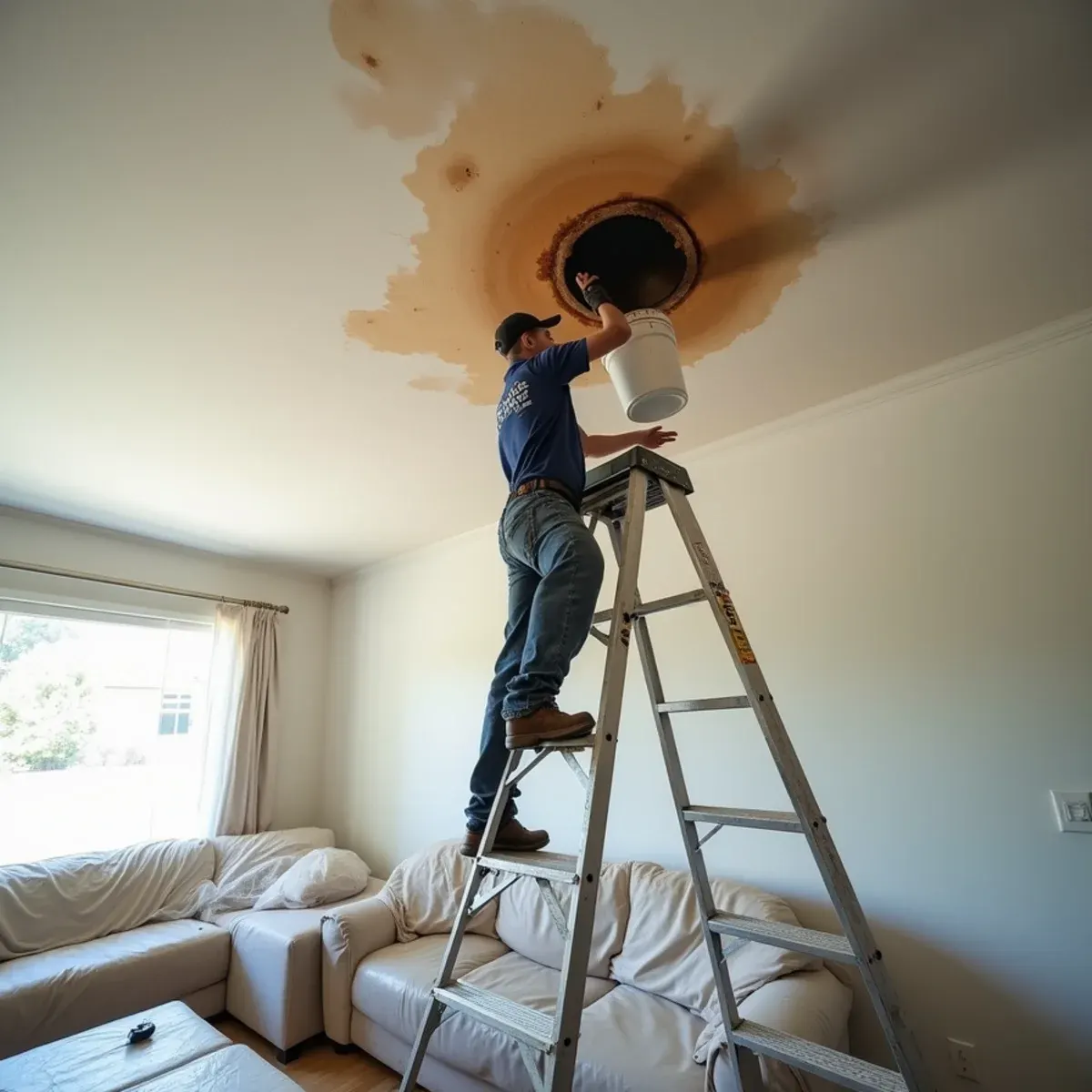
The first question we ask on a Long Beach ceiling call is not where the water is. It is what year the house was built. A 1926 Craftsman in California Heights has lath and plaster over skip sheathing, holds several times the water drywall does, and can be dried and saved if the crew knows what it is looking at. A 1958 house in Los Altos has drywall, blown-in insulation and a conventional attic, and it wants a completely different approach. Cutting before identifying the assembly is the most expensive mistake made in this city, and it is made constantly.
Geography changes the job again. Out in Naples the canal-front homes sit on filled ground with decks and balconies over living space, so the ceiling stain is often a coating failure at a threshold rather than anything on the roof. Belmont Shore lots are narrow with no driveway and tight parking, so equipment staging has to be worked out before the truck arrives. And in East Long Beach near the Cypress line, the tracts around El Dorado Park behave almost exactly like the homes in our own city, which makes them the most predictable calls we take here.
What Long Beach Changes About Ceiling & Roof Leaks
1Plaster in Bluff Park, drywall in Los Altos
The same size leak produces two different jobs depending on which side of the city you are on. Plaster demands desiccant capacity and patience; the keys holding it to the lath soften while wet, so the risk is a heavy release rather than a slow sag. Postwar drywall ceilings dry faster and cut back cleanly at a joist. We confirm the assembly first, then scope.
2Belmont Shore staging and hose runs
On the narrow lots off Second Street there is no driveway and often no place to park a truck near the door. We plan long hose runs, use compact equipment, and check what the panel can carry before we load circuits on service that predates most of what is plugged into it. Working that out in advance is usually the difference between starting immediately and losing an hour to logistics.
3Naples decks and canal-front exposure
Canal-front homes combine walking decks over interior rooms with constant salt-laden air, which is hard on coatings, perimeter metal and fasteners. Ceiling stains below a deck are usually a threshold or edge-metal failure rather than a roof problem, and the framing has to be opened up before it will dry. Coating over a wet bay hides the water and guarantees a larger repair later.
How the Work Runs
The method is the same one we use on every ceiling & roof leaks job, documented to the IICRC S500:2025 standard. Here it is in short — the full ceiling & roof leak water damage process explains each stage in detail.
- Emergency tarping or temporary dry-in
- Controlled relief of trapped water
- Trace the intrusion to its real source
- Remove wet insulation and compromised drywall
- Dry the attic and the ceiling assembly
- Restore the ceiling completely
The Long Beach Background Worth Knowing
The postwar tracts around El Dorado Park, Los Altos, and the neighborhoods near the Cypress border were built in the same era and largely the same way as the housing in our home city. Single-story slab construction, plumbing routed under the concrete, and a fifty-to-seventy-year age on the supply lines.
There is more on the housing stock, drainage and plumbing history of this city on our water damage restoration in Long Beach page.
Long Beach at a glance
- Dominant construction era
- 1920–1980
- Foundation type
- mixed on grade
- Supply piping found here
- original 1920s piping, galvanized steel, under-slab copper
- Drain line materials
- cast iron, clay
- Terrain and water table
- coastal-flat, shallow water table
- Most common local failure
- the approach changing entirely by neighborhood — a 1926 plaster wall and a 1955 drywall wall are different restoration problems
- Highest-value local prevention
- identifying the construction type before anyone starts cutting
What It Costs in Long Beach
We do not quote a number over the phone before seeing the property — anyone who does is guessing. The variables that actually move the price on a ceiling & roof leaks job are how long the leak has been active, ceiling texture and finish, attic access and insulation type, and they are broken down in full on the ceiling & roof leak water damage page. The assessment and the written estimate are free anywhere in Long Beach, day or night, with no obligation.
Ceiling & Roof Leaks Questions from Long Beach Homeowners
Usually not all of it. Plaster that is still firmly keyed to the lath can be dried in place with enough dehumidification and time, and only areas that have lost their keys need to come out. What we will not do is guess. We meter through the assembly, check it from the attic where access allows, and mark the field before anything is opened. Keep everyone clear of any bulging section while you wait, since a plaster ceiling lets go in heavy pieces rather than sagging first.
Clear the room and keep everyone out from underneath it, including pets. Move furniture if you can do it from the side. Put a bucket down if you can place it safely without standing under the bulge. Then call us — we relieve it deliberately, which is safer and preserves much more of the ceiling than letting it fail on its own.
We tarp immediately to stop the intrusion and coordinate the roofing repair with a licensed roofer, then handle all the interior restoration ourselves. You get one point of contact and one schedule instead of managing two trades during a storm week.
All of it, with the fastest response to East Long Beach — El Dorado Park Estates, Los Altos, and the neighborhoods near the Cypress border, which are typically twenty to twenty-five minutes. Coastal and downtown areas run a little longer, and we will give you a realistic ETA when you call.