
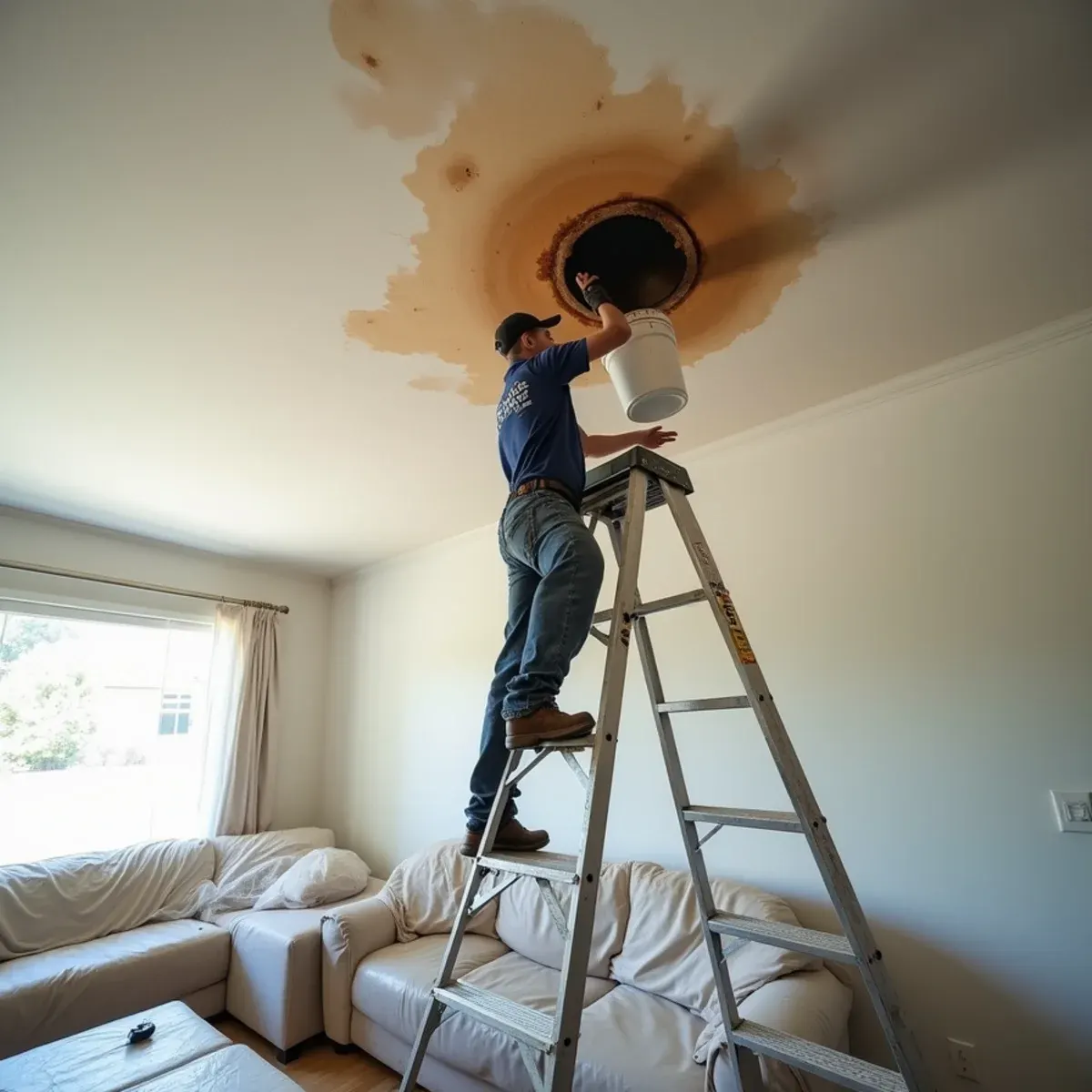
In Leisure World the ceiling is yours and the roof usually is not, and that single fact shapes everything about how a leak here gets handled. These early 1960s buildings are attached single-story units, and the space above the ceiling often runs past your demising wall. Water entering above one unit does not respect the line on the plot map. By the time three residents have noticed staining, there are three interiors, one mutual, a management company and potentially several policies involved, and the paperwork becomes as important as the drying.
The rest of the city is nothing like that. Old Town sits on tight lots within a few blocks of the pier, where salt air has been working on flashing, drip edge and fasteners since the day they were installed. Corroded metal at a chimney or a wall transition is the most common entry we find down there, and it fails in wind-driven rain rather than a calm shower. Out at College Park the houses behave like standard inland tract homes. Three environments, one city name, and the right approach is different in each one.
What Seal Beach Changes About Ceiling & Roof Leaks
1The mutual owns the roof
In Leisure World the roof and the exterior are generally the mutual's responsibility while your interior is yours, and getting the sequence right protects you. Report to the mutual immediately in writing, note the date and time, and photograph the ceiling before anything is touched. We document each affected unit separately from the first hour so no resident's damage disappears into a single building-wide summary.
2Salt corrosion at flashings near the water
Within about a mile of the pier, exterior metal has a much shorter life than the manufacturer's numbers suggest. Galvanized drip edge, vent collars and step flashing corrode from the cut edges outward, and the resulting gap only leaks when rain is being driven sideways. That is why an Old Town roof can pass a hose test and still leak in a real storm off the water.
3The marine layer slows attic drying
Ambient humidity here stays high for long stretches, so an attic will not dry by ventilation alone through much of the year. We dry these assemblies as closed systems with dehumidification sized for the real conditions, and equipment stays in place until the framing and sheathing meet the drying goals set out in IICRC S500:2025, not until the drywall feels dry to the hand.
How the Work Runs
The method is the same one we use on every ceiling & roof leaks job, documented to the IICRC S500:2025 standard. Here it is in short — the full ceiling & roof leak water damage process explains each stage in detail.
- Emergency tarping or temporary dry-in
- Controlled relief of trapped water
- Trace the intrusion to its real source
- Remove wet insulation and compromised drywall
- Dry the attic and the ceiling assembly
- Restore the ceiling completely
The Seal Beach Background Worth Knowing
Structural drying works by creating a vapor pressure differential — dry air pulls moisture out of wet materials. When the surrounding air is already carrying a heavy moisture load, that differential shrinks and everything slows down.
There is more on the housing stock, drainage and plumbing history of this city on our water damage restoration in Seal Beach page.
Seal Beach at a glance
- Dominant construction era
- 1920–1965
- Foundation type
- mixed on grade
- Supply piping found here
- galvanized steel, copper, shared community mains
- Drain line materials
- cast iron, clay
- Terrain and water table
- coastal-flat, shallow water table
- Most common local failure
- losses that cross shared walls between attached units, involving several policies and a mutual at once
- Highest-value local prevention
- documenting each affected unit separately from the first hour
What It Costs in Seal Beach
We do not quote a number over the phone before seeing the property — anyone who does is guessing. The variables that actually move the price on a ceiling & roof leaks job are how long the leak has been active, ceiling texture and finish, attic access and insulation type, and they are broken down in full on the ceiling & roof leak water damage page. The assessment and the written estimate are free anywhere in Seal Beach, day or night, with no obligation.
Ceiling & Roof Leaks Questions from Seal Beach Homeowners
Generally the mutual is responsible for the roof and building exterior, while the interior finishes fall to you or your policy, but your mutual's governing documents control and they vary. What protects you is the record: notify the mutual in writing right away, photograph everything before work starts, and keep the drying documentation for your unit separate from the building's. We produce per-unit readings and photos specifically so you are not relying on someone else's summary.
Clear the room and keep everyone out from underneath it, including pets. Move furniture if you can do it from the side. Put a bucket down if you can place it safely without standing under the bulge. Then call us — we relieve it deliberately, which is safer and preserves much more of the ceiling than letting it fail on its own.
We tarp immediately to stop the intrusion and coordinate the roofing repair with a licensed roofer, then handle all the interior restoration ourselves. You get one point of contact and one schedule instead of managing two trades during a storm week.
Coastal marine layer conditions keep ambient humidity high for extended periods, which reduces the vapor pressure differential that drives drying. Jobs near the water need sealed chambers and more dehumidification capacity than an equivalent loss inland, and the equipment stays on longer.