
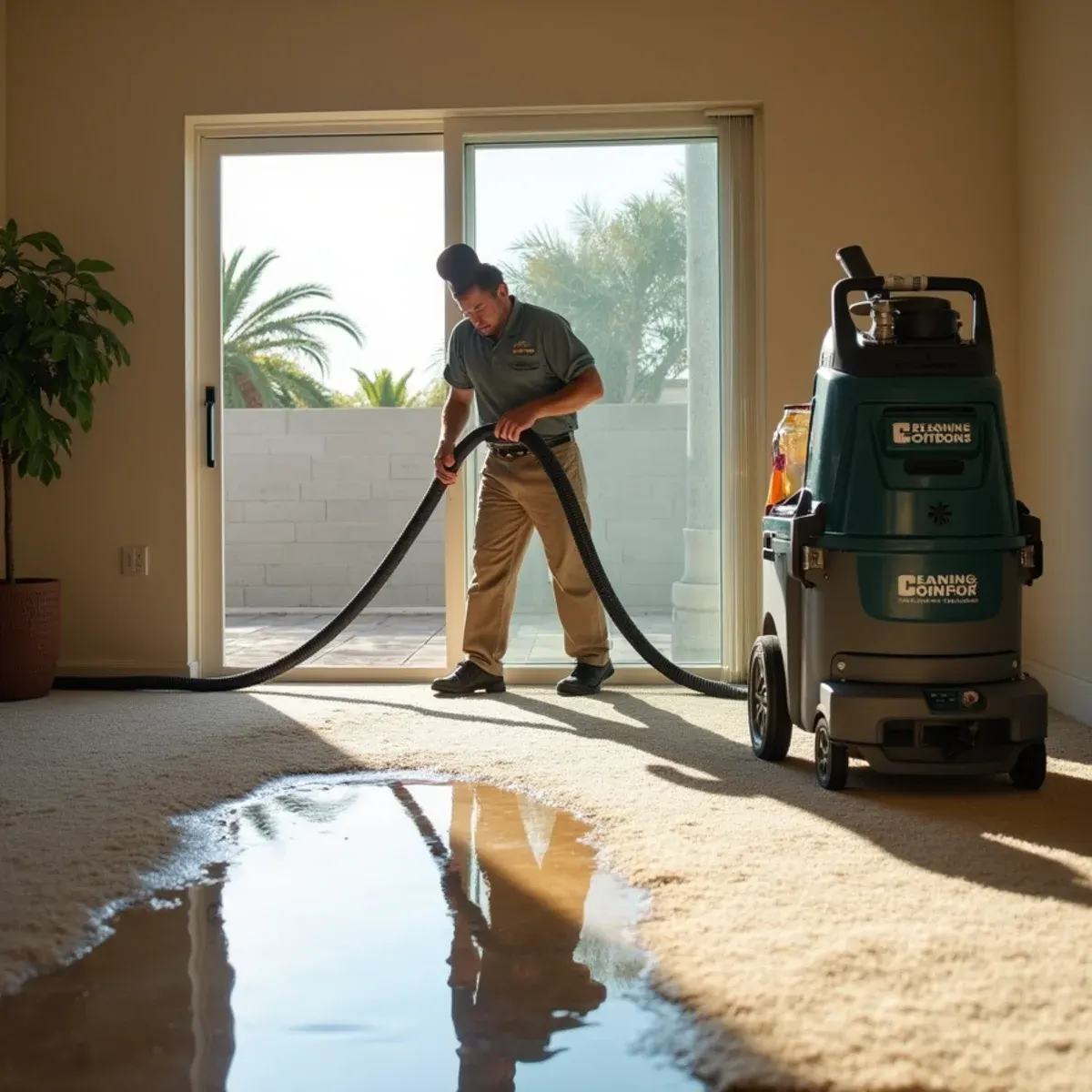
The first question on a La Habra carpet call is not how wet, it is where from. This city has two common paths to the same wet floor: under-slab copper letting go in the 1950s-to-1980s tracts, and exterior water pushed back at the house by decades of added patios, planters and hardscape on gently rolling ground. One is clean water, where the carpet and sometimes even the pad can be saved. The other is category two the moment it crossed soil. Same puddle on the floor, opposite verdicts on the material.
La Habra sits at the head of the Coyote Creek watershed, the same creek that runs down past our Cypress base, and it butts right against the Los Angeles County line with La Habra Heights climbing away on the LA side. The grade here is gentle but it is real, and it means storm water keeps moving through yards rather than standing in them. We look at where the water crossed before it reached the tack strip, and that determination goes in the report your adjuster reads, because it is what justifies the pad decision.
What La Habra Changes About Carpet Drying
1Category is decided at the entry point
We trace the path before we set equipment. Water from a pinholed under-slab copper line is clean at the break. Water that crossed a planter bed or a lawn is not, whatever it looks like. In La Habra both are routine, so we do not assume based on the room it showed up in. That single determination decides whether your pad gets dried or bagged.
2Rolling ground moves water through yards
The gentle fall across La Habra lots means runoff keeps traveling instead of ponding where it lands. Patios and raised planters added over the years have quietly redirected it back toward foundations. When we find carpet wet along an exterior wall and dry everywhere else, we go outside first, because drying that room without addressing the grade only sets up a repeat.
3County-line addresses, one dispatch
Plenty of our La Habra work sits within sight of the county line, with La Habra Heights on the LA side bringing its own hillside conditions. We work both. We do not promise the 60-minute window we hold inside Cypress out here. We dispatch as fast as conditions allow, and the assessment is free either way.
How the Work Runs
The method is the same one we use on every carpet drying job, documented to the IICRC S500:2025 standard. Here it is in short — the full carpet water damage & drying process explains each stage in detail.
- Map the real wet perimeter
- Identify the pad and the category
- Weighted extraction, pass after pass
- Float the carpet or pull the pad
- Dry the slab or subfloor
- New pad, re-stretch, reinstall
The La Habra Background Worth Knowing
Copper is good pipe. What it is not is immortal, and the way it went in during this era shortened its life. Soft copper tubing was laid in the sand under the slab before the pour, sometimes in direct contact with aggregate, often with tight bends that thinned the wall on the outside of the curve. Add fifty to seventy years of water moving through the inside and soil chemistry working on the outside, and it develops pinholes. The hot line almost always goes first, because heat accelerates every part of that process.
There is more on the housing stock, drainage and plumbing history of this city on our water damage restoration in La Habra page.
La Habra at a glance
- Dominant construction era
- 1950–1980
- Foundation type
- slab on grade
- Supply piping found here
- under-slab copper, galvanized steel
- Drain line materials
- cast iron
- Terrain and water table
- rolling, moderate water table
- Most common local failure
- under-slab copper failures in 1960s tract housing, plus drainage that decades of added hardscape has redirected
- Highest-value local prevention
- watching where water actually runs during the first storm, because the ground here is not flat
What It Costs in La Habra
We do not quote a number over the phone before seeing the property — anyone who does is guessing. The variables that actually move the price on a carpet drying job are whether the pad is salvageable, square footage and equipment days, what sits under the pad, and they are broken down in full on the carpet water damage & drying page. The assessment and the written estimate are free anywhere in La Habra, day or night, with no obligation.
Carpet Drying Questions from La Habra Homeowners
We look at pattern and content, not guesswork. A slab leak usually wets from the middle of a room outward and often reads warm on the hot side. Exterior intrusion in La Habra wets from an exterior wall inward and shows soil load at the tack strip. We meter the slab, check the exterior grade and hardscape, and where it is genuinely ambiguous we bring your plumber in for a pressure test before deciding whether the pad can stay.
Frequently it can be saved. The deciding factors are water category, how many hours it sat, and whether the backing has delaminated. Clean supply-line water caught within a day, on carpet that was in decent shape beforehand, usually means we replace the pad and keep the carpet. Anything past Category 1, or carpet that has come apart at the backing, is a different answer. We take the readings and check the backing before saying either way.
No, but it does more often than not. On a clean-water loss we reach quickly, we can float the carpet, push dry air into the pad space, and dry it in place. Moisture-barrier pad, dense slab rubber, and anything that sat overnight in gray water comes out. S500:2025 treats pad as non-restorable once contamination is involved, and field experience supports that. It is inexpensive material against a real risk.
Do a meter test. Shut off every fixture and the irrigation, note the leak indicator, and check it again a few hours later with nobody using water. If it moved, something is losing water. In 1960s La Habra tract homes that is most often the hot line under the slab, and the giveaway is a warm patch of floor or the sound of water running behind a closed system.