
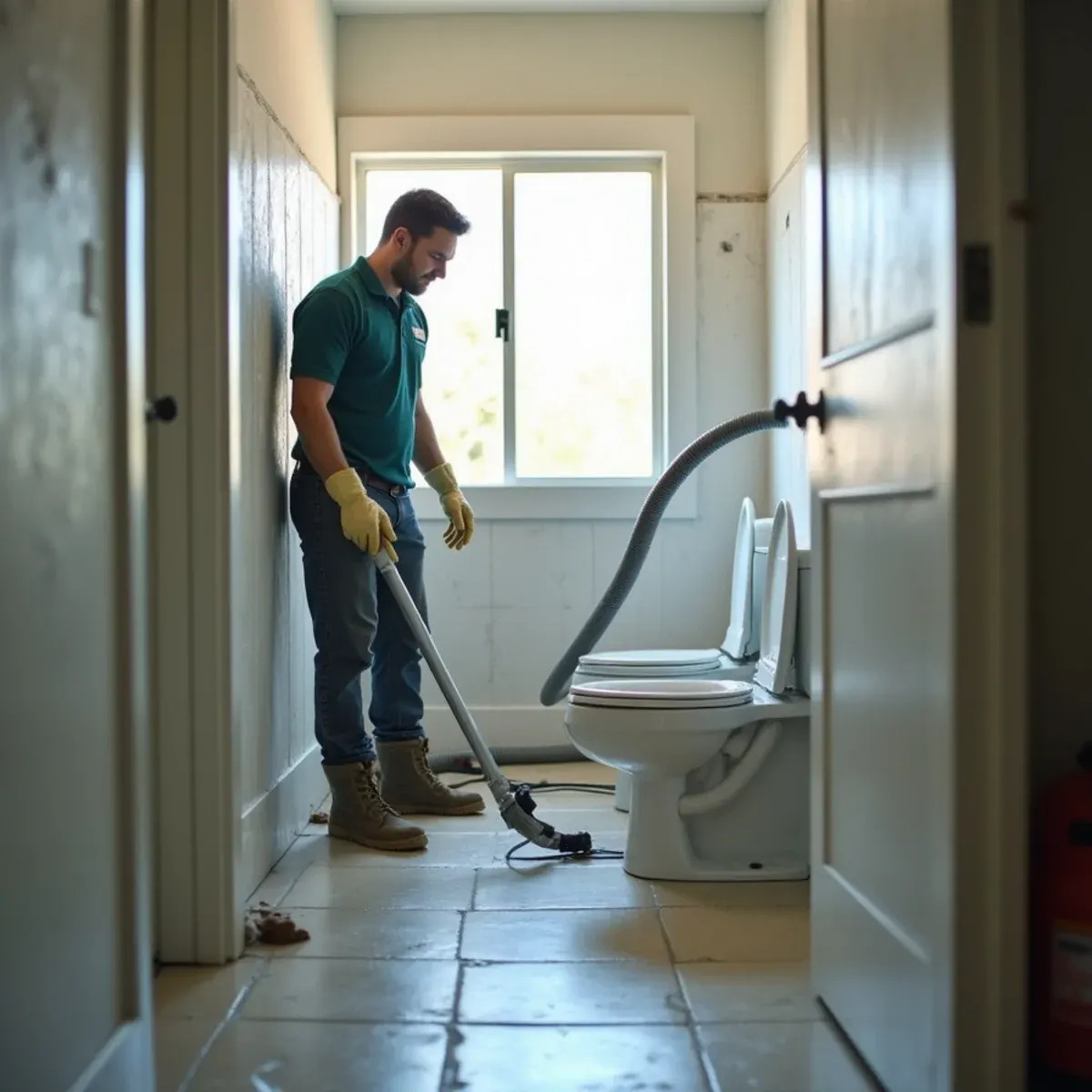
The call usually starts the same way in La Habra: the toilet backed up, the city came out, checked the main, said it was clear, and left. Now what. That's the moment we get dialed, and it's a fair question in a city that sits directly against the county line — La Habra is Orange County, La Habra Heights next door is Los Angeles County, and homeowners here have reason to be unsure who owns which pipe. The short version is that if the public main is clear, the blockage is in your lateral.
Physically, most of the city is 1950s through 1970s slab tract on gently rolling ground at the head of the Coyote Creek watershed — the same creek that runs past our Cypress yard a few miles downstream. Single-story houses, hall bathrooms, under-slab supply nearing the end of its service life, and laterals of the same vintage. Decades of added patios and planters changed where surface water goes, but on this service the water that matters started inside, and the category decides everything after that.
What La Habra Changes About Toilet Overflow
1Clear main, blocked lateral, your claim
When the city clears the public main and the problem persists, the blockage is on the private side and the cleanup becomes a homeowner claim. That doesn't make the job worse, it changes the paperwork. We document the source, the water category and the affected assemblies in a format adjusters accept, and we bill the carrier directly rather than making you float the cost.
2Rolling ground, one-story houses, one bathroom
La Habra's tracts sit on gentle grades, and inside the house that means the floor isn't perfectly level. Overflow water in a single-story hall bath doesn't spread evenly — it picks a direction and gets into bedroom carpet on the low side. We map the actual travel with a meter instead of assuming a tidy circle around the toilet base.
3Storm weeks bring clustered backups
Sitting at the top of the Coyote Creek watershed means La Habra sheds water rather than collecting it, but the older laterals still take on infiltration during sustained rain. That extra flow is often what turns a marginal root blockage into a full backup, which is why our calls here bunch into the same wet weeks instead of spreading through the year.
How the Work Runs
The method is the same one we use on every toilet overflow job, documented to the IICRC S500:2025 standard. Here it is in short — the full toilet overflow cleanup process explains each stage in detail.
- Stop the water, stabilize the room
- Determine the category before scoping
- Extract, then remove only what must go
- Pull the toilet, inspect the flange
- Dry the subfloor and the ceiling below
- Disinfect to category, verify, reset
The La Habra Background Worth Knowing
Copper is good pipe. What it is not is immortal, and the way it went in during this era shortened its life. Soft copper tubing was laid in the sand under the slab before the pour, sometimes in direct contact with aggregate, often with tight bends that thinned the wall on the outside of the curve. Add fifty to seventy years of water moving through the inside and soil chemistry working on the outside, and it develops pinholes. The hot line almost always goes first, because heat accelerates every part of that process.
There is more on the housing stock, drainage and plumbing history of this city on our water damage restoration in La Habra page.
La Habra at a glance
- Dominant construction era
- 1950–1980
- Foundation type
- slab on grade
- Supply piping found here
- under-slab copper, galvanized steel
- Drain line materials
- cast iron
- Terrain and water table
- rolling, moderate water table
- Most common local failure
- under-slab copper failures in 1960s tract housing, plus drainage that decades of added hardscape has redirected
- Highest-value local prevention
- watching where water actually runs during the first storm, because the ground here is not flat
What It Costs in La Habra
We do not quote a number over the phone before seeing the property — anyone who does is guessing. The variables that actually move the price on a toilet overflow job are the category of the water, how far it traveled from the base, what your floor is built from, and they are broken down in full on the toilet overflow cleanup page. The assessment and the written estimate are free anywhere in La Habra, day or night, with no obligation.
Toilet Overflow Questions from La Habra Homeowners
In most La Habra cases, yes — the lateral from your house to the main is private property, and so is the mess it made. Get that in writing from the city crew, because your carrier will want it. From our side, the important thing isn't ownership, it's category. Waste that came up from the lateral is Category 3 no matter who is responsible for the pipe, and it gets containment, removal and disinfection rather than a mop.
Clear water lowers the health risk, not the drying requirement. Clean water still soaks into carpet pad, particle board, and the cut edge of subfloor around the flange, and it still causes swelling and mold growth if it stays. What clean water does change is the scope: no containment, no PPE, usually no demolition. If it stayed on sealed tile and you got it up quickly, you may genuinely be fine. If it reached anything porous, it needs real drying.
Three checks. Did the water rise in the bowl without anyone flushing it? Does another fixture gurgle, drain slowly, or fill up when you run water elsewhere in the house? Is there visible soil or a sewer odor in what came out? Any one of those points at the main line. A stuck fill valve, by contrast, gives you clear water, a bowl that overflows steadily, and a tank you can hear running continuously.
Do a meter test. Shut off every fixture and the irrigation, note the leak indicator, and check it again a few hours later with nobody using water. If it moved, something is losing water. In 1960s La Habra tract homes that is most often the hot line under the slab, and the giveaway is a warm patch of floor or the sound of water running behind a closed system.