
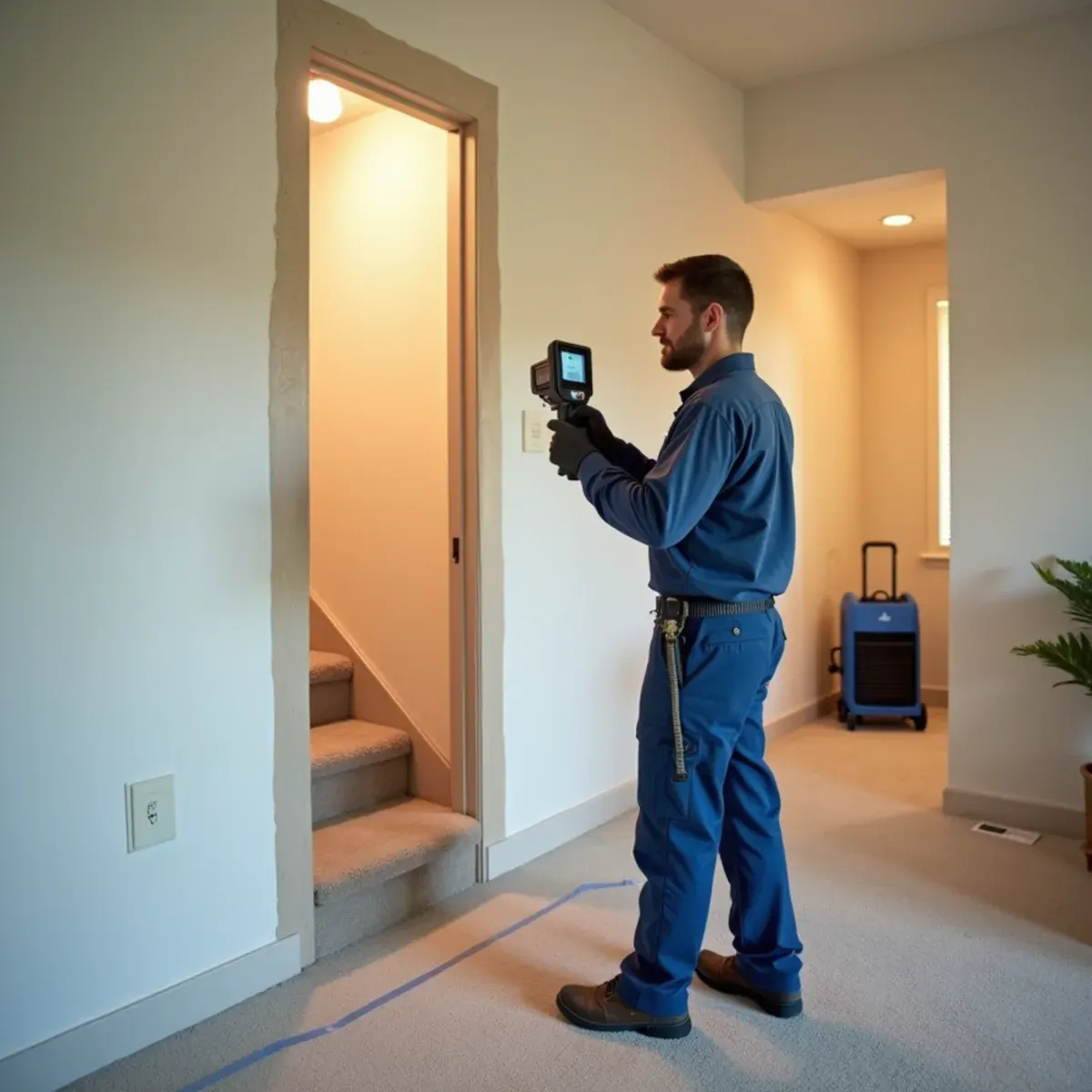
The hardest drywall repair to hide isn't a heavily textured wall. It's a perfectly smooth one. That matters in Tustin more than anywhere near us, because Tustin Legacy — the post-2005 neighborhoods on the former Marine Corps Air Station — is built with smooth, level-finish walls and tall ceilings. There's no texture to break up the light, so the float has to be wide, sanded flat and primed across the whole plane before paint. Rush it and you'll see the patch in raking afternoon light for the rest of the time you own the house.
Drive fifteen minutes and the rules change. Old Town's 1880s through 1920s Victorians and Craftsman sit on raised foundations with plaster walls and crawl spaces where a supply leak can run for weeks before anything shows. The 1960s through 1980s slab tract in between is conventional half-inch board over wood studs with orange peel or knockdown, and those patch cleanly. We ask for the cross streets before we quote, because in Tustin the era of the street tells us more about the job than the size of the wet area.
What Tustin Changes About Drywall Repair
1Smooth Legacy walls need wide floats
Post-2005 Tustin Legacy homes are finished smooth, with no texture to break up light. A patch that would vanish on knockdown reads as a shadow on a smooth wall in afternoon sun. We float wide, sand flat, prime the full plane and plan on repainting corner to corner. It's more work than a textured repair, and we'd rather quote it honestly than surprise you at the end.
2Old Town crawl spaces hide the source
The 1880s through 1920s houses in Old Town sit on raised foundations. A leak there wets joists and subfloor while the finished wall above still looks fine, and drywall in a remodeled bathroom or kitchen may be the last thing to show it. We get under the house before deciding what comes out upstairs, because the finished surface understates the wet area almost every time.
3Stacked flats: their leak, your ceiling
Legacy's attached and stacked units put someone else's plumbing directly over your living room. When the ceiling holds water the paper face bulges, and the assembly between units may be rated. That means relieving the load deliberately, drying the cavity, and replacing with the same board type and the same fastening detail rather than whatever sheet is cheapest that week.
How the Work Runs
The method is the same one we use on every drywall repair job, documented to the IICRC S500:2025 standard. Here it is in short — the full drywall water damage repair process explains each stage in detail.
- Meter the wall first
- Decide dry-in-place or remove
- Open the cavity, not the wall
- Cut to a stud and a seam line
- Clear the cavity and dry the framing
- Tape, texture, prime, paint
The Tustin Background Worth Knowing
You can usually place your house without paperwork. Foundation vents around the perimeter and a floor that sits a step or two above grade means a raised foundation and a crawl space, which puts you in the Old Town generation. A slab sitting flush at grade with no vents puts you in the tract era. If you have a second-floor laundry, a tankless heater, or a manifold of colored plastic tubing in a closet, you are in the Legacy generation. Each of those buildings has an entirely different weak point, and knowing yours is most of the battle.
There is more on the housing stock, drainage and plumbing history of this city on our water damage restoration in Tustin page.
Tustin at a glance
- Dominant construction era
- 1880–2020
- Foundation type
- mixed on grade
- Supply piping found here
- original pre-war piping in Old Town, under-slab copper, modern PEX in Tustin Legacy
- Drain line materials
- cast iron, clay, ABS
- Terrain and water table
- flat, moderate water table
- Most common local failure
- wildly different failure modes street to street, because the era of the house decides everything
- Highest-value local prevention
- knowing which of the three Tustins your house belongs to before assuming any advice applies
What It Costs in Tustin
We do not quote a number over the phone before seeing the property — anyone who does is guessing. The variables that actually move the price on a drywall repair job are how much board comes out, cut height and seam count, texture type and match difficulty, and they are broken down in full on the drywall water damage repair page. The assessment and the written estimate are free anywhere in Tustin, day or night, with no obligation.
Drywall Repair Questions from Tustin Homeowners
Please don't stand under it. A bulging ceiling is holding several gallons in what amounts to a paper sack, and it fails without warning. Move furniture out, keep everyone out of the room, and shut off the circuit feeding any light in that ceiling. We relieve it deliberately, from the side, at the low point, into containers, then open the assembly to dry it. In stacked Legacy units that assembly is often rated, so it gets rebuilt to match.
No, and that assumption is why a lot of walls come out that did not need to. Gypsum board that got clean water, still reads firm under thumb pressure, and is coming down in moisture content day over day can usually be dried in place through the cavity. What forces removal is contaminated water, a core that has softened or swelled, visible growth on the paper, or insulation behind it that holds moisture against the board. We take readings before we answer that question.
Usually two feet or four feet above the floor, measured level across the whole run rather than following the stain. Board comes in four-foot widths, so a cut at either height lands the new seam where a factory edge would sit, which is far easier to hide than a seam floating mid-wall. The cut also has to end at the center of a stud on each side, so the patch has something to fasten to. Cutting to the shape of the damage looks thrifty and finishes badly.
New plumbing removes corrosion from the list, not everything else. What fails in Legacy-era homes is connections and appliances: braided washer hoses, refrigerator ice-maker lines, angle stops, dishwasher fittings, and water heaters that are now well into their service life. Second-floor laundry rooms are the biggest single change from older Tustin housing, because a failure up there drains through two ceilings instead of across a garage slab. Age protects you from one category of failure and none of the others.