
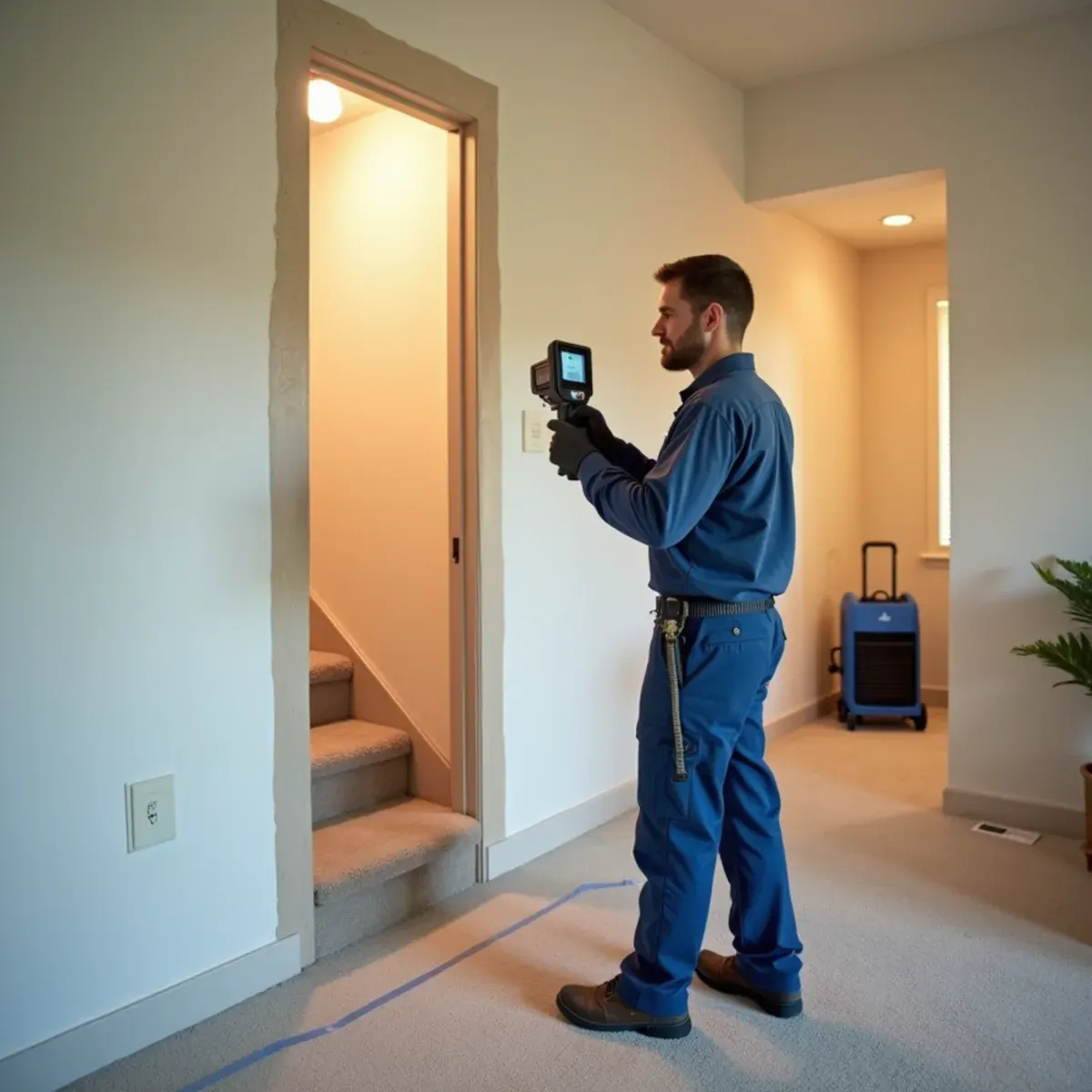
You noticed the carpet was warm in one spot, or the water bill jumped and nothing was running. By the time you call us, the drywall on the nearest wall has usually taken on water at its bottom edge, and the baseboard is holding it there like a dam. That's the standard Placentia sequence. Homes here went up from 1955 through 1980 on slab with copper run under the concrete, and after this many decades those lines are reaching the end together, tract by tract.
The uniformity that makes failures cluster also makes repairs predictable. Streets built out from the old Valencia orange groves share stud spacing, ceiling height and one of a handful of textures, so a patch on one house looks like a patch we've already matched on another. The exceptions are the older pocket near Old Town, where wall assemblies vary, and the student rentals near Cal State Fullerton, where years of quick landlord patching leave three generations of texture on one wall and matching means matching the last guy's work.
What Placentia Changes About Drywall Repair
1Water comes up, so the cut goes low
A slab leak wets the floor covering first, then the bottom edge of the drywall wicks it up behind the baseboard where nothing is visible. By the time a stain appears on the painted face, the paper on the back side has usually been wet for days. The trim comes off, the cut runs at a low seam line, and we check the bottom plate before anything closes.
2Settle the repipe question before we close
Placentia tracts are uniform enough that under-slab copper tends to fail across a neighborhood in the same stretch of years. If yours is the second or third leak, an overhead reroute is probably coming. Tell us before we patch. A reroute needs its own wall and ceiling openings, and combining them into one repair round saves you a second texture-and-paint cycle.
3Rental walls carry layered patchwork
Near Cal State Fullerton, houses rented out for years often show three generations of quick repair on one wall: a smooth patch here, a heavy hand texture there, and paint sheens that don't agree with each other. Matching means matching what is actually on the wall now, not what the builder sprayed in 1972. Sometimes the cleaner answer is re-texturing the full wall.
How the Work Runs
The method is the same one we use on every drywall repair job, documented to the IICRC S500:2025 standard. Here it is in short — the full drywall water damage repair process explains each stage in detail.
- Meter the wall first
- Decide dry-in-place or remove
- Open the cavity, not the wall
- Cut to a stud and a seam line
- Clear the cavity and dry the framing
- Tape, texture, prime, paint
The Placentia Background Worth Knowing
Copper under a slab fails in two directions at once. From the inside, decades of water flow erode thin spots at bends and fittings, especially on the hot side where the metal runs warmer and the water moves faster. From the outside, soil chemistry and stray current attack the pipe wall. Either way the result is a pinhole rather than a burst, which is precisely why these losses are so expensive by the time we see them. A pinhole under concrete can run for months, soaking the sub-base, wicking up into the slab, and surfacing at the edge of the carpet as a stain nobody can explain.
There is more on the housing stock, drainage and plumbing history of this city on our water damage restoration in Placentia page.
Placentia at a glance
- Dominant construction era
- 1955–1980
- Foundation type
- slab on grade
- Supply piping found here
- under-slab copper, galvanized steel
- Drain line materials
- cast iron
- Terrain and water table
- flat, moderate water table
- Most common local failure
- under-slab copper reaching the end of its service life across whole tracts at once
- Highest-value local prevention
- the annual water-meter test, and treating a neighbor's slab leak as information
What It Costs in Placentia
We do not quote a number over the phone before seeing the property — anyone who does is guessing. The variables that actually move the price on a drywall repair job are how much board comes out, cut height and seam count, texture type and match difficulty, and they are broken down in full on the drywall water damage repair page. The assessment and the written estimate are free anywhere in Placentia, day or night, with no obligation.
Drywall Repair Questions from Placentia Homeowners
Stopping the leak stopped the supply. It didn't remove the water already in the wall. Under-slab water spreads across the concrete and climbs the board from below, so the bottom of the wall, the bottom plate and the insulation in those bays can be saturated well past the visible stain. If readings on clean supply water trend down quickly, some of it can dry in place. If they flatten, that board stays wet, and wet paper-faced gypsum grows mold before it dries.
No, and that assumption is why a lot of walls come out that did not need to. Gypsum board that got clean water, still reads firm under thumb pressure, and is coming down in moisture content day over day can usually be dried in place through the cavity. What forces removal is contaminated water, a core that has softened or swelled, visible growth on the paper, or insulation behind it that holds moisture against the board. We take readings before we answer that question.
Usually two feet or four feet above the floor, measured level across the whole run rather than following the stain. Board comes in four-foot widths, so a cut at either height lands the new seam where a factory edge would sit, which is far easier to hide than a seam floating mid-wall. The cut also has to end at the center of a stud on each side, so the patch has something to fasten to. Cutting to the shape of the damage looks thrifty and finishes badly.
Worried is the wrong word, but you should start paying attention. These tracts were built in tight windows with the same copper at the same depth in the same soil, so failures cluster on a street rather than scattering randomly. Treat a neighbor's slab leak as a service bulletin for your own house. Run the meter test, listen for the water heater cycling at odd hours, and check the hallway and bedroom floors for warm or damp patches every so often.