
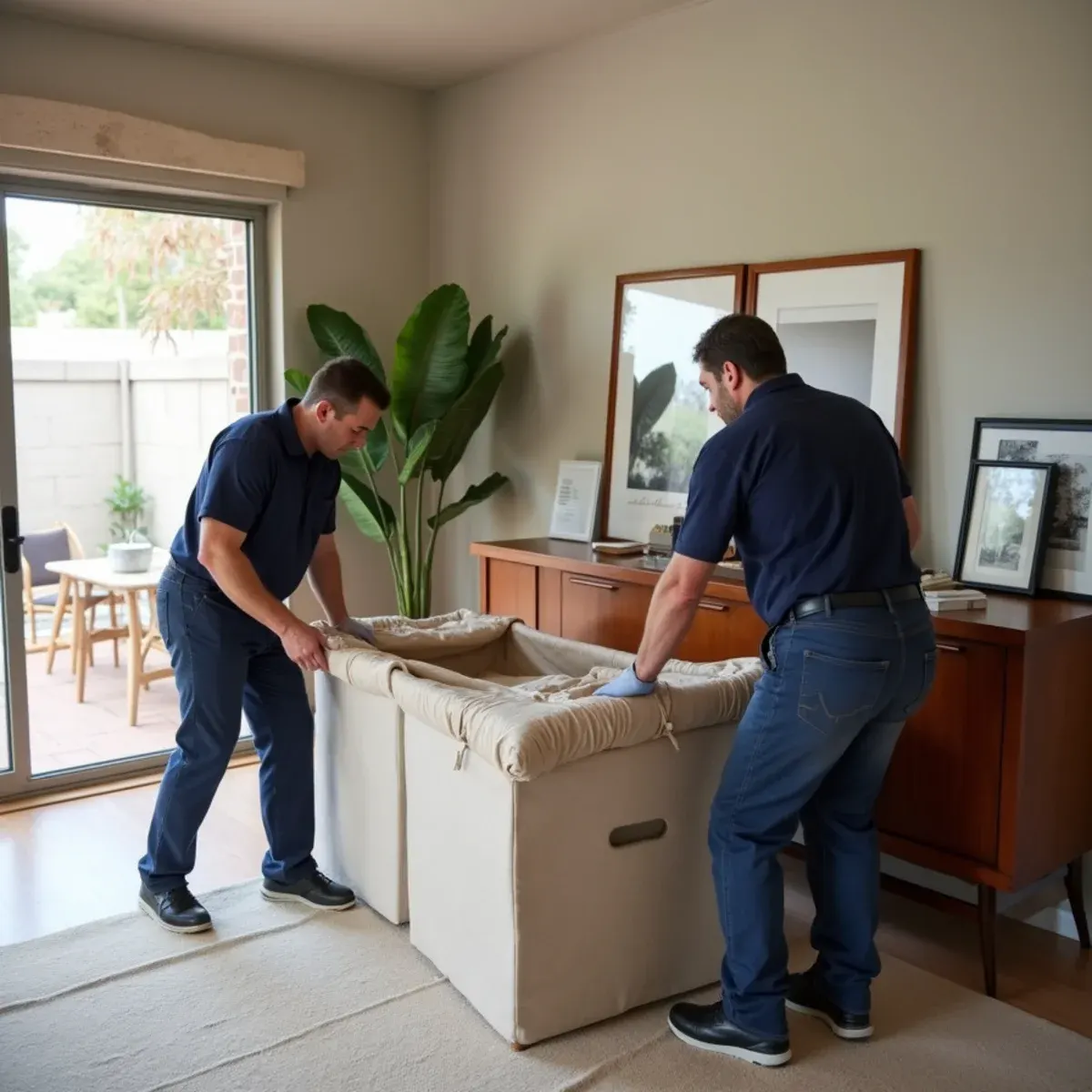
Here is something we cannot fix in Costa Mesa: the air. The coast is close, the marine layer sits in most mornings, and outdoor humidity stays high enough through much of the year that drying anything in an open garage is wishful thinking. In drier inland cities we can sometimes dry contents on site and skip the storage step. Here we usually cannot, and pretending otherwise just moves the mildew from your house into your garage. Belongings that need drying go into climate-controlled space where we set the conditions instead of the ocean setting them.
The city gives us three different buildings to pull contents out of. Eastside cottages from the twenties through the forties sit on raised foundations under a heavy tree canopy, and their crawl spaces hold moisture long after a leak is repaired. The Westside mixes housing with industrial and studio space, so a loss there may be inventory and equipment rather than furniture. Mesa Verde is 1960s slab tract that wets from below. Add a shallow water table near the Santa Ana River and nothing here dries on an inland schedule.
What Costa Mesa Changes About Contents & Pack-Out
1Eastside contents arrive musty, not soaked
Under a raised Eastside cottage, a leak drains into dirt and the crawl space holds it. Upstairs the floor may read close to dry while stored items in closets against exterior walls carry an odor. Those go out for cleaning and controlled drying by material type. Books, papers and textiles hold that smell longest and are the items most often written off far too early.
2Storing it in your garage is the wrong call
Homeowners often ask to keep boxes in the garage to save money on storage. In this city that usually costs more than it saves. A closed garage during a marine morning can run humidity high enough to support growth on damp cardboard and upholstery within a couple of days. We would rather move it once, into controlled conditions, than clean the same items twice.
3Westside losses are often business property
Between the industrial blocks, the creative studios and the retail near South Coast Metro, a good share of Costa Mesa pack-outs involve inventory, tools, artwork in progress and records rather than household goods. That claims under business personal property and needs quantities, model numbers and lot detail rather than tidy room photographs. We document it in the format the carrier will actually accept.
How the Work Runs
The method is the same one we use on every contents & pack-out job, documented to the IICRC S500:2025 standard. Here it is in short — the full contents restoration & pack-out process explains each stage in detail.
- Room-by-room photographic inventory
- Triage into three categories
- Careful packing and transport
- Cleaning and restoration by material type
- Climate-controlled storage
- Delivery and placement back
The Costa Mesa Background Worth Knowing
Under a raised Eastside cottage there is bare soil, and that soil is supposed to stay dry because the foundation vents exchange air with the outside. That system depends on the outside air being drier than the space under the house. For a good part of the year in Costa Mesa it is not. The marine layer holds humidity high through the night and well into the morning, so the crawl space never gets the dry stretch it needs, and moisture that arrives from a plumbing drip, a downspout, or an irrigation line just accumulates.
There is more on the housing stock, drainage and plumbing history of this city on our water damage restoration in Costa Mesa page.
Costa Mesa at a glance
- Dominant construction era
- 1920–1980
- Foundation type
- mixed on grade
- Supply piping found here
- original 1920s–1940s piping on the Eastside, galvanized steel, under-slab copper
- Drain line materials
- cast iron, clay
- Terrain and water table
- coastal-flat, shallow water table
- Most common local failure
- crawl-space moisture under Eastside cottages, held in by a marine layer that slows every natural drying process
- Highest-value local prevention
- confirming crawl-space vents are actually open and that the ground under the house is dry
What It Costs in Costa Mesa
We do not quote a number over the phone before seeing the property — anyone who does is guessing. The variables that actually move the price on a contents & pack-out job are volume of contents, proportion of specialty items, storage duration, and they are broken down in full on the contents restoration & pack-out page. The assessment and the written estimate are free anywhere in Costa Mesa, day or night, with no obligation.
Contents & Pack-Out Questions from Costa Mesa Homeowners
The odor is the reason they have to leave. Crawl-space moisture under these cottages loads the air with spores and volatile compounds that settle into porous contents, and open windows clear none of that while the marine layer is sitting on the street. Textiles, upholstery, books and stored paper get treated off site under controlled humidity. Hard goods often clean in place. We meter and check each category rather than blanket-hauling the whole house.
It depends on the scope. For a contained single-room loss we often move contents to an unaffected part of the home and block furniture in place. When the drying chamber covers most of the living area or reconstruction is extensive, off-site pack-out is usually both safer and faster.
Every item is photographed and barcoded at your home and tracked through cleaning, storage, and delivery. You receive the inventory, and at delivery we reconcile it with you item by item before we leave.
Almost always the crawl space. On these raised 1920s to 1940s houses the soil under the floor stays damp when the foundation vents are blocked and the marine layer keeps outside air humid overnight. That moisture moves up through the subfloor and into the rooms above it. Before assuming anything, walk your perimeter and see whether a planter, a poured patio or landscaping has covered the vents that are supposed to be breathing.