
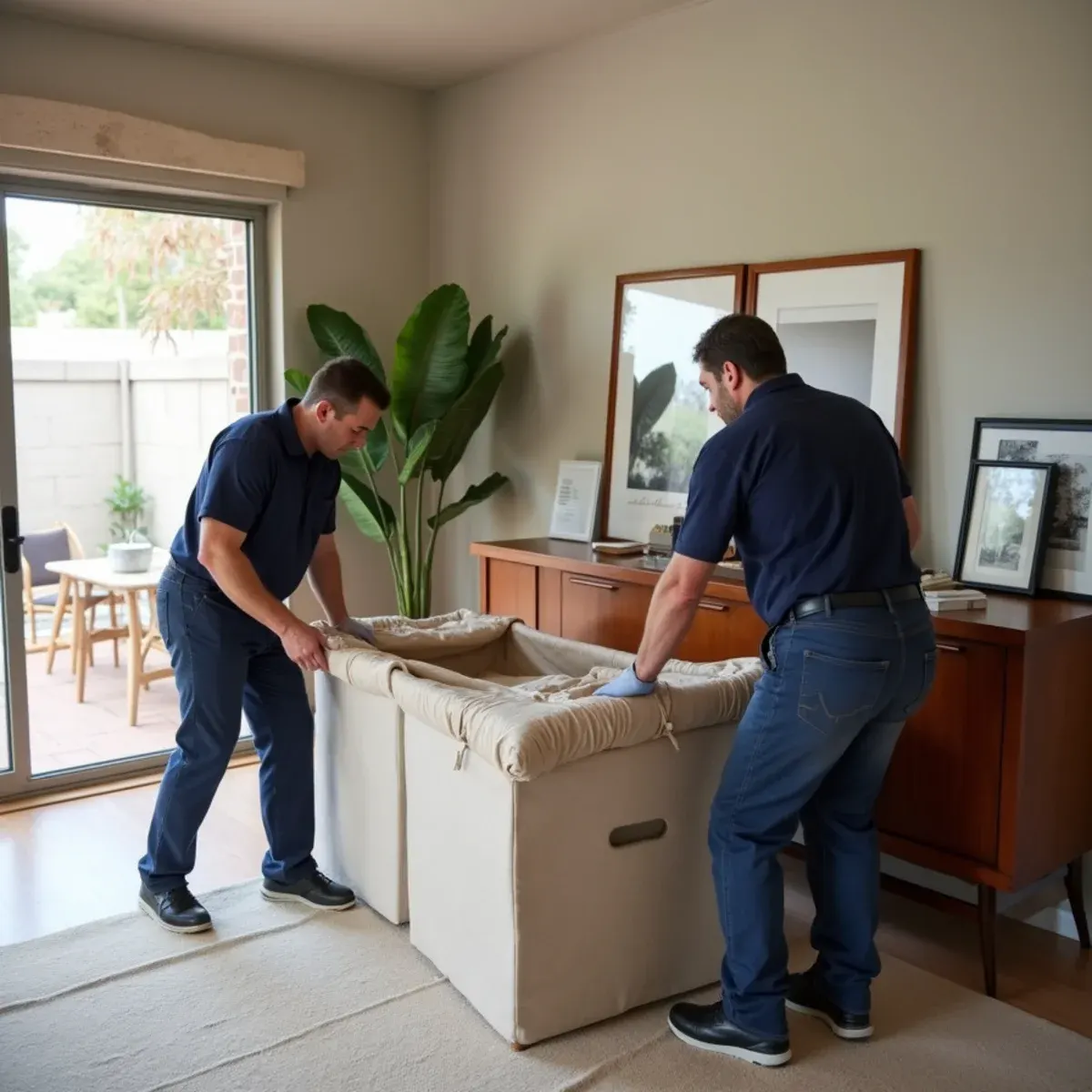
The hardest part of a downtown Huntington Beach pack-out is usually the first fifty feet. Lots off Main Street are narrow, most have no driveway, street parking is contested, and a box truck cannot get within a hundred feet of the front door. That means a long carry, a parking conversation, and a crew sized for the walk rather than the volume. We plan the staging before we plan the packing, because on these lots the staging is what sets the clock for the whole day.
Out in Huntington Harbour the constraint changes. Waterfront and canal-front homes sit on tidal groundwater behind seawalls, docks and boat lifts, and salt air has been working on every flashing and sealant on the building for decades. Wind-driven rain through corroded window flashing is a routine source of loss here, and it arrives at the top of the wall and runs down through drapery, upholstery and whatever is stored in the closets on that elevation. Sustained marine humidity keeps everything drying slower than inland.
What Huntington Beach Changes About Contents & Pack-Out
1Salt residue changes how contents are cleaned
Water that came in past corroded flashing carries salt and grit, and salt keeps drawing moisture long after an item feels dry. Rinsing matters more than wiping on hard goods, and textiles need washing rather than surface cleaning. We separate salt-exposed items at packing so they never get bagged with clean-water items and quietly corrode a set of tools in storage.
2Long carries and no driveway
Downtown lots on the numbered streets have no room to back a truck in. We shuttle with smaller vehicles, run floor protection down the walk and the alley, and box tighter than we would in a tract home because every carton gets carried further. It is worth asking about parking permits before the day, since a blocked truck stops the whole job.
3Coastal humidity means storage, not the garage
A garage in Huntington Beach is not a drying environment. Sustained marine humidity keeps ambient levels high enough that damp contents held on site will hold their moisture or grow mold rather than dry out. Salvageable items go to climate-controlled storage the same day they are inventoried, and structural drying gets sized above what an inland house of the same size needs.
How the Work Runs
The method is the same one we use on every contents & pack-out job, documented to the IICRC S500:2025 standard. Here it is in short — the full contents restoration & pack-out process explains each stage in detail.
- Room-by-room photographic inventory
- Triage into three categories
- Careful packing and transport
- Cleaning and restoration by material type
- Climate-controlled storage
- Delivery and placement back
The Huntington Beach Background Worth Knowing
Salt does not damage buildings directly. It damages the details that keep water out, and then water does the rest.
There is more on the housing stock, drainage and plumbing history of this city on our water damage restoration in Huntington Beach page.
Huntington Beach at a glance
- Dominant construction era
- 1960–1990
- Foundation type
- slab on grade
- Supply piping found here
- under-slab copper
- Drain line materials
- cast iron, ABS
- Terrain and water table
- coastal-flat, shallow water table
- Most common local failure
- wind-driven rain entering through salt-corroded window flashing and failed exterior sealant
- Highest-value local prevention
- renewing exterior caulking and flashing on a far shorter cycle than inland guidance suggests
What It Costs in Huntington Beach
We do not quote a number over the phone before seeing the property — anyone who does is guessing. The variables that actually move the price on a contents & pack-out job are volume of contents, proportion of specialty items, storage duration, and they are broken down in full on the contents restoration & pack-out page. The assessment and the written estimate are free anywhere in Huntington Beach, day or night, with no obligation.
Contents & Pack-Out Questions from Huntington Beach Homeowners
They come out. Wind-driven water past salt-corroded flashing is not clean water by the time it reaches your fabrics — it carries salt, grit and whatever was sitting on the exterior wall. Drapery and rugs dried in place will look acceptable and keep pulling humidity for months. We inventory them, get them off site, and clean by fiber type. Rugs with jute backing in particular have to be handled flat and handled fast.
It depends on the scope. For a contained single-room loss we often move contents to an unaffected part of the home and block furniture in place. When the drying chamber covers most of the living area or reconstruction is extensive, off-site pack-out is usually both safer and faster.
Every item is photographed and barcoded at your home and tracked through cleaning, storage, and delivery. You receive the inventory, and at delivery we reconcile it with you item by item before we leave.
Ambient humidity near the coast stays high enough for long enough that materials dry slowly on their own, which widens the window in which growth can establish after any moisture event. Combined with salt-accelerated failures of exterior sealants and flashings, coastal homes simply get more moisture intrusion and dry from it more slowly.