
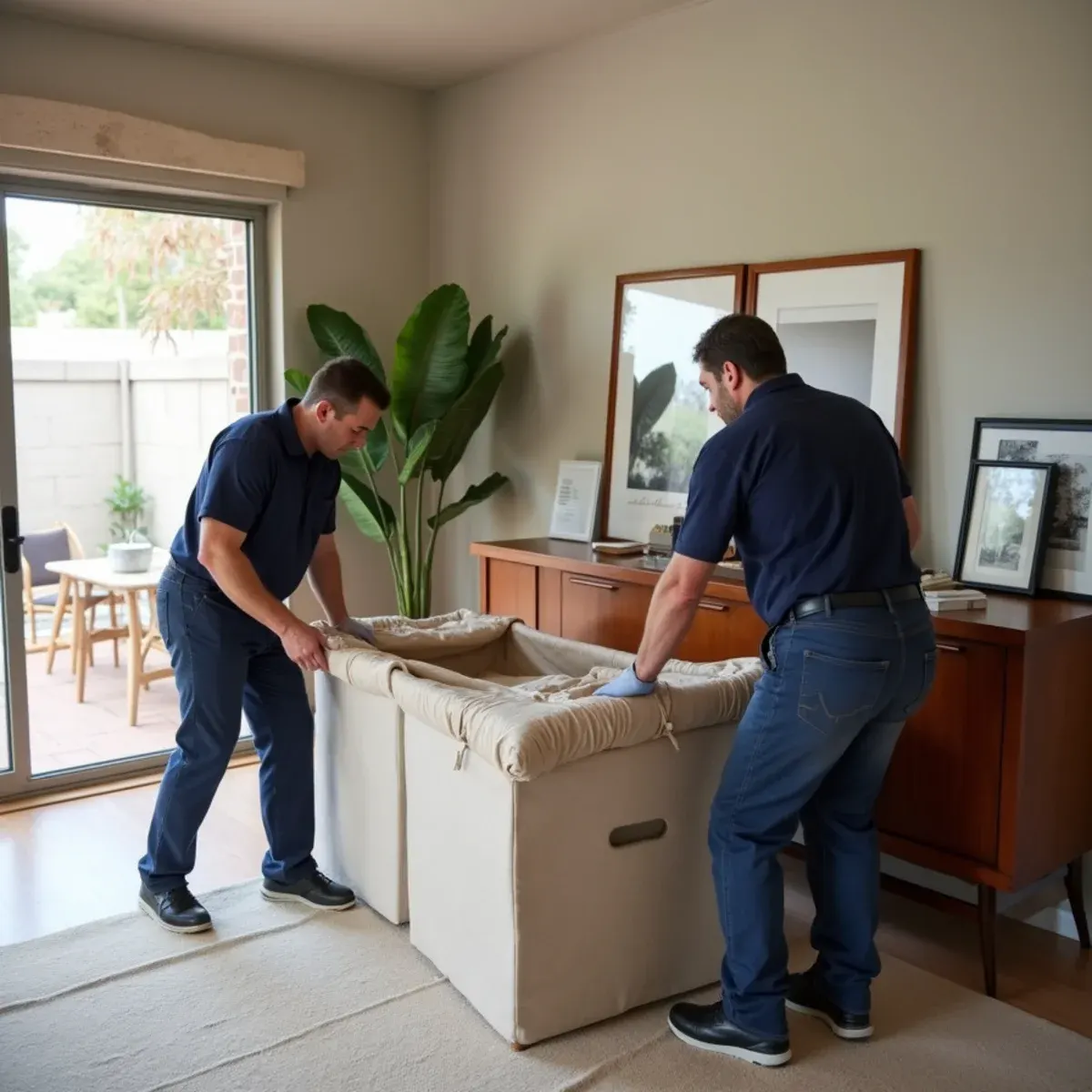
No independent restaurant on Bolsa Avenue has a three-week cushion. The lease runs regardless, there is no corporate reserve behind it, and the staff have rent due. So when a line backs up or a supply line lets go in a Little Saigon kitchen, the contents job is really a reopening job: get the dry goods, the specialty equipment, the woks and steamers and the paper records out and documented, clear the space so drying can start, and get the salvageable equipment cleaned and back on the line.
The buildings make that harder than it sounds. Most of the commercial stock along Bolsa and around the Asian Garden Mall dates to the 1950s and 60s and was never designed around a commercial kitchen. And Westminster sits low and flat near the Bolsa Chica channel with a shallow water table, so slabs here carry a higher baseline moisture load than slabs a few miles inland. That is exactly why we do not stage contents back into a building until the slab has been tested rather than felt.
What Westminster Changes About Contents & Pack-Out
1Food inventory is documented, not just discarded
Dry goods, packaged product and anything in the walk-in that lost temperature are a loss, but they are a claimed loss. We photograph and count before anything goes into a dumpster, including case counts and invoices where the operator keeps them. Health department disposal and insurance documentation are two separate requirements, and both get satisfied on the same pass.
2A shallow water table changes when things return
Slabs in Westminster sit close to groundwater and release vapor as a normal background condition. Boxes and equipment set back onto a slab that is still emitting will pick that moisture up within days, and the customer reasonably blames us. In-situ relative humidity testing of the slab is what actually tells us when contents can come home.
3Kitchen equipment cleans by material, not together
Stainless, cast iron, seasoned carbon steel, plastic bus tubs and wood-handled tools all need different treatment, and a grease-loaded backup is Category 3 water, so cleaning has to be verifiable rather than cosmetic. We separate by material at the point of packing, which is slower on site and considerably faster at the other end.
How the Work Runs
The method is the same one we use on every contents & pack-out job, documented to the IICRC S500:2025 standard. Here it is in short — the full contents restoration & pack-out process explains each stage in detail.
- Room-by-room photographic inventory
- Triage into three categories
- Careful packing and transport
- Cleaning and restoration by material type
- Climate-controlled storage
- Delivery and placement back
The Westminster Background Worth Knowing
Westminster's shallow groundwater means many slabs here carry a higher baseline moisture load than slabs a few miles inland. In an undamaged home with breathable flooring that is usually a non-issue. It becomes an issue in two situations.
There is more on the housing stock, drainage and plumbing history of this city on our water damage restoration in Westminster page.
Westminster at a glance
- Dominant construction era
- 1950–1970
- Foundation type
- slab on grade
- Supply piping found here
- under-slab copper, galvanized steel
- Drain line materials
- cast iron
- Terrain and water table
- coastal-flat, shallow water table
- Most common local failure
- flooring installed over a slab that was never tested and is still releasing vapor
- Highest-value local prevention
- in-situ slab relative humidity testing before any new floor goes down
What It Costs in Westminster
We do not quote a number over the phone before seeing the property — anyone who does is guessing. The variables that actually move the price on a contents & pack-out job are volume of contents, proportion of specialty items, storage duration, and they are broken down in full on the contents restoration & pack-out page. The assessment and the written estimate are free anywhere in Westminster, day or night, with no obligation.
Contents & Pack-Out Questions from Westminster Homeowners
Equipment usually returns well before the building is finished. Once we have packed out, the kitchen dries far faster empty, and the stainless, hoods and hard goods get cleaned and staged while floor and walls are still being worked. The limiting factor is almost never your equipment — it is the slab and the wall cavities. We give you a written return schedule so you can plan staffing instead of guessing week to week.
It depends on the scope. For a contained single-room loss we often move contents to an unaffected part of the home and block furniture in place. When the drying chamber covers most of the living area or reconstruction is extensive, off-site pack-out is usually both safer and faster.
Every item is photographed and barcoded at your home and tracked through cleaning, storage, and delivery. You receive the inventory, and at delivery we reconcile it with you item by item before we leave.
Westminster has a shallow water table, so slabs here carry more baseline moisture than slabs further inland. Normally that is harmless, but it matters when installing flooring over the slab and it means drying after a loss takes longer. We test with in-situ relative humidity probes before any new floor goes down.