
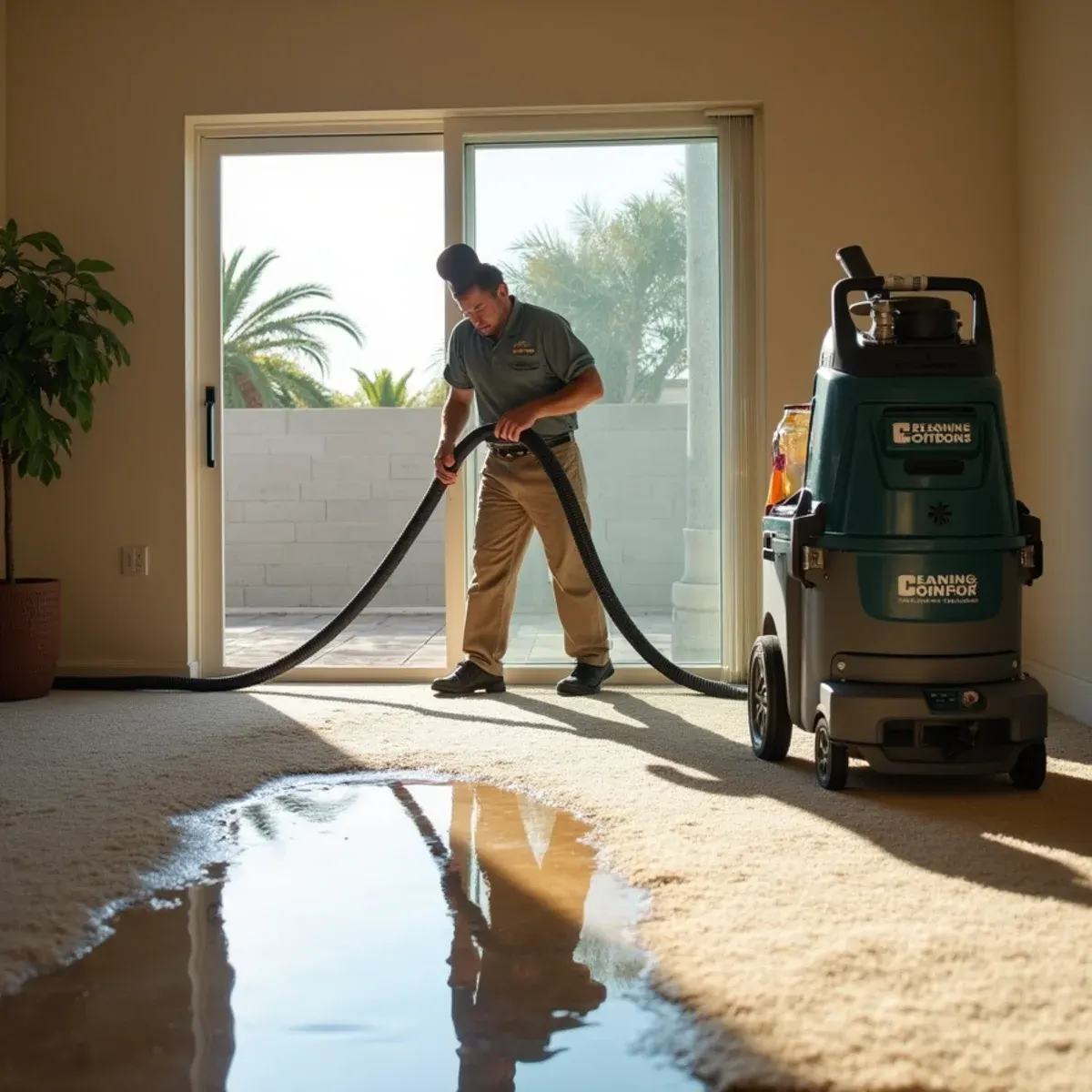
The arithmetic in a Hawaiian Gardens apartment building is simple and unkind. A shared vertical plumbing stack fails on an upper floor, the water follows the stack down through the chase, and every additional hour before somebody shuts it off tends to add another unit's worth of soaked carpet and pad. This is the smallest city in Los Angeles County by area, under a square mile, and among the most densely populated per acre anywhere in the region. That density is stacked vertically rather than spread across lots, and water uses the vertical.
Most of the stock is dense apartments built between 1950 and 1975 over slab, and most of the people in them are renters. That shapes how a job starts here more than the construction does. The person standing in the wet carpet usually can't authorize the work, the owner or manager can, and the ground-floor unit that took the whole column is often the one nobody called about. We start stabilizing and documenting while authorization sorts itself out, because waiting on paperwork is how a salvageable pad stops being salvageable.
What Hawaiian Gardens Changes About Carpet Drying
1Ground-floor units absorb the whole column
Water dropping through a stack passes through every unit but accumulates at the bottom. The ground-floor carpet and pad frequently take more volume than the unit where the failure actually happened, and that resident often finds out last. On a stack call we check the bottom of the column early rather than working strictly from the top down.
2Renters can't authorize, owners must
If you rent, the carpet belongs to the building and the decision belongs to the owner or the management company. We'll still come out, document conditions, extract standing water and protect your belongings while we reach whoever can approve the work. Your own property sitting on that carpet is separate and falls under renters coverage if you carry it.
3No staging room in small units
These apartments are compact, and pulling pad means every piece of furniture and every box has to go somewhere. There's no spare bedroom to stage in. We move contents to the truck or a dry corner, block what can't be moved, and photograph it all first. It adds an hour and it prevents most of the disputes that follow these jobs.
How the Work Runs
The method is the same one we use on every carpet drying job, documented to the IICRC S500:2025 standard. Here it is in short — the full carpet water damage & drying process explains each stage in detail.
- Map the real wet perimeter
- Identify the pad and the category
- Weighted extraction, pass after pass
- Float the carpet or pull the pad
- Dry the slab or subfloor
- New pad, re-stretch, reinstall
The Hawaiian Gardens Background Worth Knowing
In a multi-story apartment building, plumbing runs vertically through shared chases connecting stacked units. When a supply line or drain fails in that chase, water follows it downward through every unit below — and it does not stop politely at unit boundaries.
There is more on the housing stock, drainage and plumbing history of this city on our water damage restoration in Hawaiian Gardens page.
Hawaiian Gardens at a glance
- Dominant construction era
- 1950–1975
- Foundation type
- slab on grade
- Supply piping found here
- galvanized steel, copper, shared vertical stacks
- Drain line materials
- cast iron
- Terrain and water table
- flat, moderate water table
- Most common local failure
- stack failures that travel down through every unit below, expanding by one unit for roughly every extra hour of delay
- Highest-value local prevention
- immediate written notice to management, because in a stacked building the clock does more damage than the water
What It Costs in Hawaiian Gardens
We do not quote a number over the phone before seeing the property — anyone who does is guessing. The variables that actually move the price on a carpet drying job are whether the pad is salvageable, square footage and equipment days, what sits under the pad, and they are broken down in full on the carpet water damage & drying page. The assessment and the written estimate are free anywhere in Hawaiian Gardens, day or night, with no obligation.
Carpet Drying Questions from Hawaiian Gardens Homeowners
Move what you can off the floor, especially anything sitting on carpet in the water's path, and photograph the room before it changes. Then notify the manager or owner in writing, not just by phone, and call us. We can extract standing water and start airflow while authorization is arranged, which matters because pad quality drops by the hour in a stack loss. Your furniture and belongings fall under your renters policy if you have one, separate from the building's.
Frequently it can be saved. The deciding factors are water category, how many hours it sat, and whether the backing has delaminated. Clean supply-line water caught within a day, on carpet that was in decent shape beforehand, usually means we replace the pad and keep the carpet. Anything past Category 1, or carpet that has come apart at the backing, is a different answer. We take the readings and check the backing before saying either way.
No, but it does more often than not. On a clean-water loss we reach quickly, we can float the carpet, push dry air into the pad space, and dry it in place. Moisture-barrier pad, dense slab rubber, and anything that sat overnight in gray water comes out. S500:2025 treats pad as non-restorable once contamination is involved, and field experience supports that. It is inexpensive material against a real risk.
Photograph and video everything before moving anything, notify your property manager in writing immediately, and move belongings out of the affected area if it is safe to do so. Do not wait for the neighbor upstairs to act — the damage compounds every hour and the written timeline protects you.