
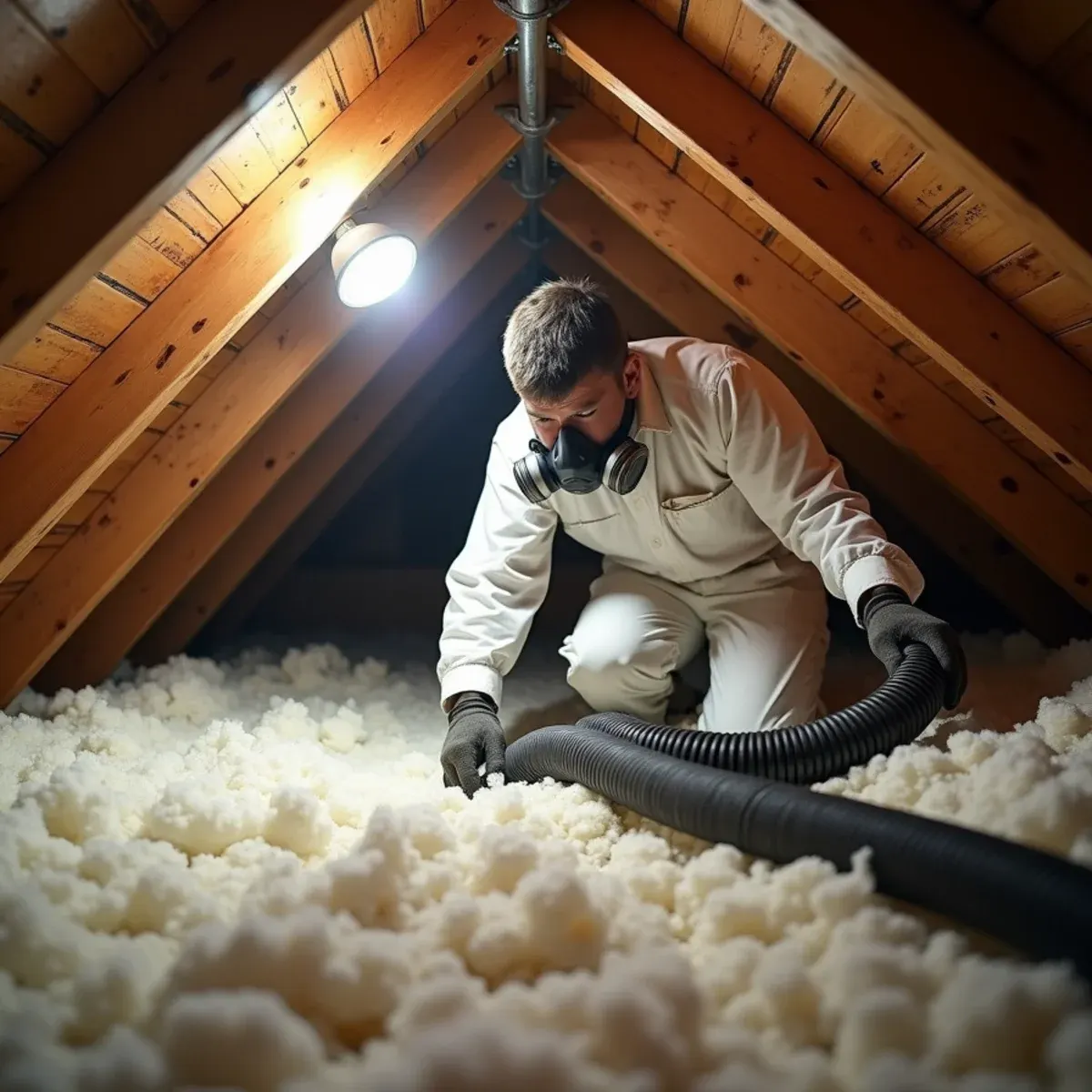
Open the vents and let it dry works fine in a lot of places. It works poorly in Pico Rivera during a wet stretch. The city sits on the strip of ground between the San Gabriel River and the Rio Hondo, the water table is shallow, and after a few days of sustained rain the ground is saturated and the outside air is not dry enough to pull moisture out of anything. Moving that air through an attic just circulates humidity past a wet roof deck and gives everyone the impression that something is being accomplished.
So we close the attic off and dry it as a contained space with dehumidification, monitoring the deck and the joists with meters instead of guessing by feel. The housing is postwar tract, roughly 1945 to 1965, slab on grade, built out on both sides before Pico and Rivera merged in 1958. Most of these attics have had insulation added in layers over the decades, original thin batts with blown-in fiberglass on top. That layering matters, because the upper layer can feel dry while the batt underneath holds water against the ceiling drywall.
What Pico Rivera Changes About Attic & Insulation
1Saturated ground, saturated air, stalled drying
Position between two flood-control channels with a shallow water table sets the humidity for the whole city during a storm week. Passive attic ventilation depends on outside air being drier than inside air, and for days at a time here it is not. Contained drying with dehumidification is not an upsell in Pico Rivera, it is what makes the meter readings actually move.
2Layered insulation hides the wet layer
Sixty years of retrofits left most of these attics with blown-in sitting over original batts. Water passes through the loose fill and soaks into the mat underneath, where it sits against the drywall. The top can feel dry to a hand while the bottom is holding. We probe and meter through the full depth rather than judging from the surface, and if the lower layer is wet, both layers come out.
3Storm weeks cluster calls citywide
When a sustained system parks over the basin, this city produces a lot of simultaneous losses because the ground gives up early. We triage honestly: emergency containment and temporary protection first so nothing gets worse, then insulation removal and drying in sequence. If we cannot be at your house in the next two hours during a storm week, we will tell you that instead of letting you sit by the window.
How the Work Runs
The method is the same one we use on every attic & insulation job, documented to the IICRC S500:2025 standard. Here it is in short — the full attic water damage & insulation replacement process explains each stage in detail.
- Map the wet area before touching it
- Contain the hatch and protect the path
- Vacuum out the saturated insulation
- HEPA vacuum and treat the plane
- Dry the deck, joists, and top plates
- Reinstall insulation and check the details
The Pico Rivera Background Worth Knowing
On a hillside, storm water leaves. In Pico Rivera it soaks in, and when the soil is already near capacity it stops soaking in and simply stands. That is why a yard here can hold water two days after the rain stops while a yard up in the Whittier hills is dry by morning. The lawn is not draining badly. The ground underneath it is full. Once that happens, every path water can take toward your house becomes the path it takes: the garage threshold, the slider track, the gap where a patio slab has settled back toward the wall.
There is more on the housing stock, drainage and plumbing history of this city on our water damage restoration in Pico Rivera page.
Pico Rivera at a glance
- Dominant construction era
- 1945–1965
- Foundation type
- slab on grade
- Supply piping found here
- original galvanized steel, copper
- Drain line materials
- cast iron
- Terrain and water table
- flat, shallow water table
- Most common local failure
- ground saturating fast during sustained storms because the water table between two channels sits high
- Highest-value local prevention
- clearing area drains and confirming downspouts discharge well away from the foundation
What It Costs in Pico Rivera
We do not quote a number over the phone before seeing the property — anyone who does is guessing. The variables that actually move the price on a attic & insulation job are how much of the attic got wet, clearance, access, and layout, the type of insulation up there, and they are broken down in full on the attic water damage & insulation replacement page. The assessment and the written estimate are free anywhere in Pico Rivera, day or night, with no obligation.
Attic & Insulation Questions from Pico Rivera Homeowners
During a dry Santa Ana stretch, sometimes. During the storm weeks when most of this damage happens, no. With the ground saturated between the two channels and outside air near saturation, a fan moves humid air across your roof deck and the readings barely change. We seal the attic off, run dehumidification inside that envelope, and track the deck, joists and ceiling until the numbers hold. Then insulation goes back in, not before.
Only the affected area plus a margin back to dry, lofted material. If the wet section covers a small part of the attic, that is all that comes out. Once it reaches roughly half the plane, replacing the whole field usually costs less than blending old and new to an even depth, and it leaves you with one consistent R-value instead of a patchwork ceiling that performs unevenly room to room.
Most attics take a few days once the wet insulation is out, but we will not promise a number on day one, and you should be careful with anyone who does. Plywood sheathing dries at a different rate than old plank decking, a sealed attic dries faster than a heavily vented one, and marine-layer mornings slow everything down. The daily readings decide when equipment leaves, not the calendar.
Not in the way people picture it. The channels are engineered, and what we actually see is a groundwater and surface drainage problem rather than a channel overtopping. Because the water table between the two runs high and the ground is flat, soil here reaches saturation faster than it does a few miles inland. Once it does, storm water stops soaking in and starts looking for the lowest opening in your house, which is almost always the garage.