
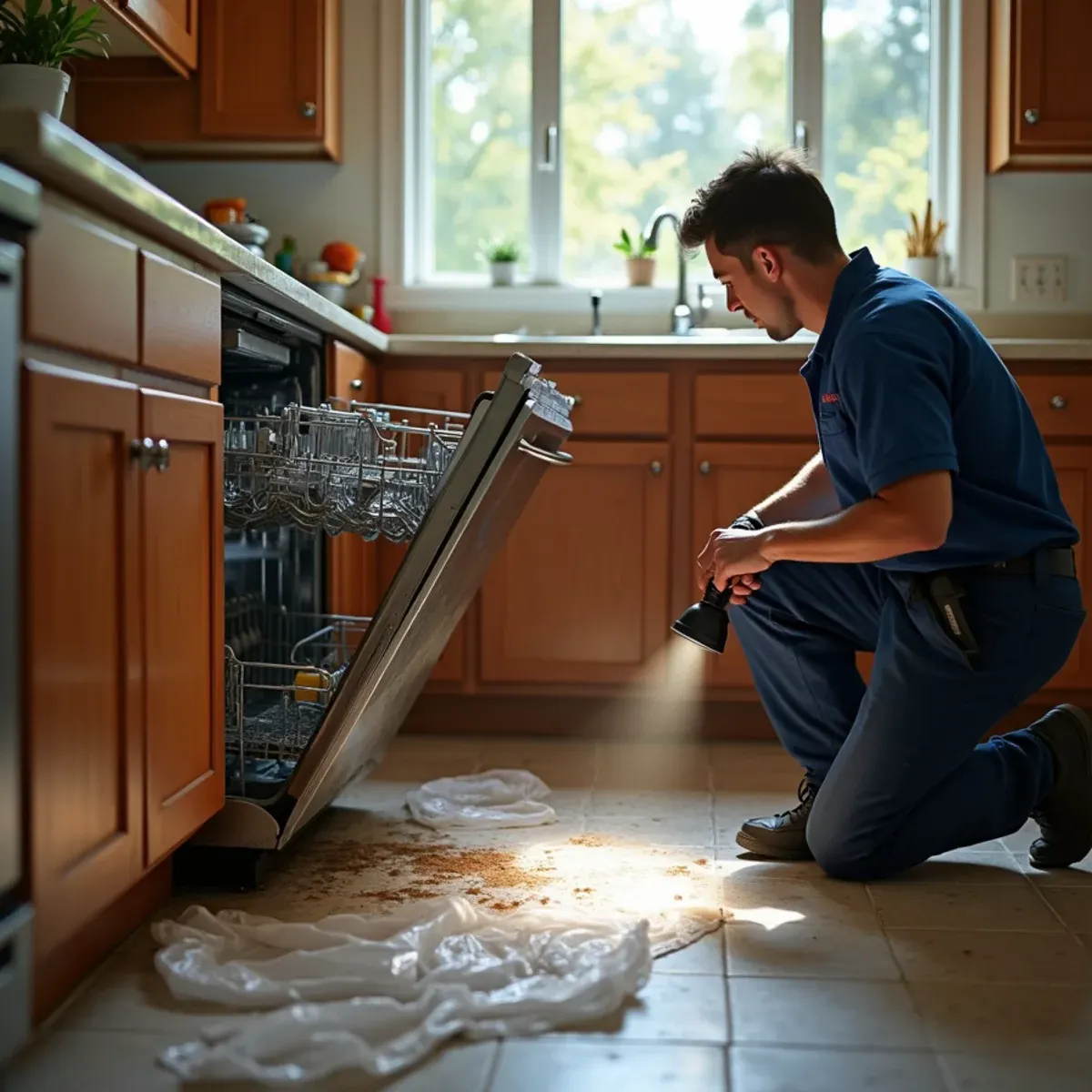
Old Towne is why appliance leaks behave differently here. A square mile of 1890s to 1920s houses radiating out from the Plaza traffic circle, nearly all on raised foundations, with kitchens and laundry porches remodeled two or three times since. When a dishwasher line weeps or a washer hose lets go on one of those service porches, the water doesn't pool. It runs through the seams in the fir subfloor and drips into the dirt below. The first sign is usually a smell, not a puddle, and by then you've lost joists.
Everywhere else in the city the rules flip. El Modena, Santiago Hills and the postwar tracts are slab on grade, so appliance water has nowhere to go but sideways, under the vinyl, into the cabinet toe-kicks and up the drywall behind the base cabinets. In Orange Park Acres, the half-acre properties tend to put laundry in a back wing nobody walks through daily. We're about thirteen minutes west of you in Cypress and dispatch as fast as traffic on Chapman and Katella allows, day or night.
What Orange Changes About Appliance Leaks
1Crawl spaces under Old Towne kitchens
On a raised foundation the crawl space is the first place we look, not the last. We get under the house with lights and a meter, check the joists and subfloor directly beneath the appliance, and look at the dirt, which holds water long after the framing surface feels dry. Vents get opened, insulation that has taken on water comes out, and drying runs from below where the floor above is worth saving.
2Original floors we would rather not pull
Old fir and oak floors in these houses cup before they crown, and cupping alone does not mean they are lost. Where the crawl space gives us access, we dry the assembly from underneath and keep the finished floor in place, monitoring daily until readings hold. We will tell you plainly when that is not going to work, usually when a floating floor or a modern underlayment traps vapor against the wood.
3Rentals near Chapman with delayed reporting
A leaking dishwasher in a student rental off Palm or Cypress Street can run for a full semester before anyone mentions it. By the time we arrive the loss has changed category under IICRC S500:2025 and the scope is structural, not cosmetic. If you own rental property in Old Towne, ask tenants to report any damp cabinet floor the same week, and we will document what we find for your carrier.
How the Work Runs
The method is the same one we use on every appliance leaks job, documented to the IICRC S500:2025 standard. Here it is in short — the full appliance leak water damage cleanup process explains each stage in detail.
- Isolate the supply
- Pull the appliance and read behind it
- Open cabinet bases where needed
- Extract and remove unsalvageable material
- Targeted drying of the enclosed spaces
- Rebuild and reinstall
The Orange Background Worth Knowing
A slab leak announces itself eventually because concrete has nowhere to put the water. A crawl-space leak has somewhere to put it. Dirt absorbs a slow drip almost indefinitely, so the loss never produces the one thing homeowners watch for, which is water on a floor. Meanwhile the humidity under the house climbs, the fiberglass insulation between the joists soaks up moisture and sags, the subfloor picks up that moisture from below, and mold begins on the joists where it is invisible and undisturbed. Everything about this failure is built to stay quiet.
There is more on the housing stock, drainage and plumbing history of this city on our water damage restoration in Orange page.
Orange at a glance
- Dominant construction era
- 1888–1975
- Foundation type
- mixed on grade
- Supply piping found here
- original turn-of-century piping, galvanized steel, under-slab copper
- Drain line materials
- cast iron, clay
- Terrain and water table
- flat, moderate water table
- Most common local failure
- crawl-space leaks under raised-foundation historic homes, running for weeks because water drips into the dirt instead of pooling on a floor
- Highest-value local prevention
- an annual crawl-space inspection, which almost nobody does and which catches nearly everything early
What It Costs in Orange
We do not quote a number over the phone before seeing the property — anyone who does is guessing. The variables that actually move the price on a appliance leaks job are slow leak versus sudden failure, how much cabinetry is affected, subfloor condition, and they are broken down in full on the appliance leak water damage cleanup page. The assessment and the written estimate are free anywhere in Orange, day or night, with no obligation.
Appliance Leaks Questions from Orange Homeowners
Usually far less than people expect. Because these houses sit on raised foundations, most of the drying happens from the crawl space, which means original flooring, baseboards and plaster often stay where they are. What comes out is wet insulation and anything already deteriorated. We document readings daily so there is a record for your carrier and, if you go on to do repairs that touch the exterior, for the city's historic review process.
Yes. Dishwasher leaks run backward and sideways under the unit into the cabinet bases and subfloor, which is why the visible floor often looks untouched. A free moisture reading takes twenty minutes and will tell you definitively whether anything behind or beneath is wet.
Often only the affected base or toe-kick, not the whole box. Particleboard bottoms that have swollen and delaminated have to be replaced, but the cabinet frame, doors, and countertop can usually stay. We repair at the smallest reasonable scope.
Pick a dry day, open the hatch, and use a good flashlight. You are looking at the soil directly under the bathrooms, kitchen, and laundry for dark damp patches, at the insulation for sagging or fallen batts, and at the piers and foundation vents for rust or white staining. Trust your nose as much as your eyes. If the access is too tight or you would rather not go under, we will do the inspection and photograph what is down there.