
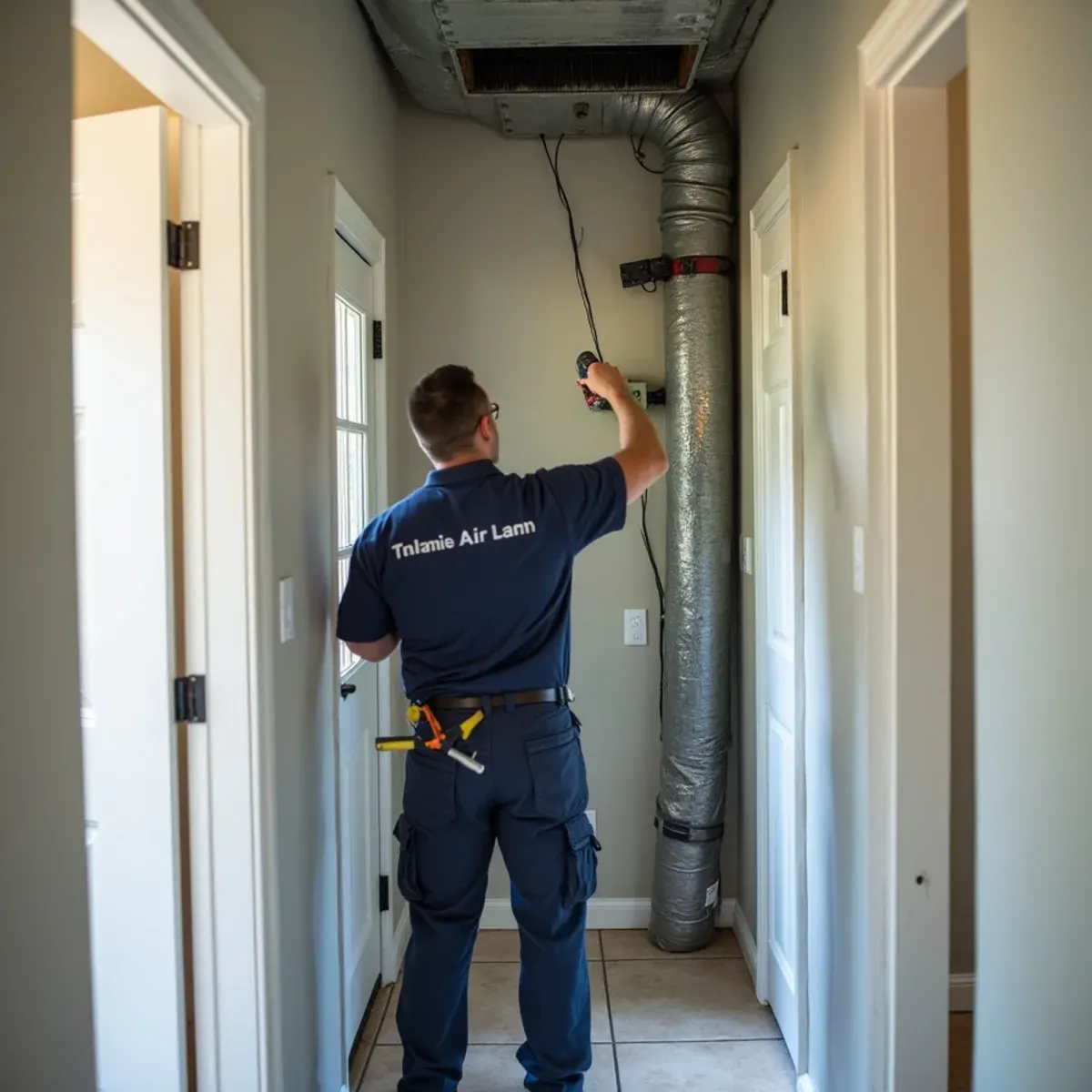
In Floral Park, French Park and Washington Square the constraint is not the ducting, it is what you have to cut through to reach it. Ceilings are lath and plaster, walls are plaster over wood lath, and the trim and old-growth hardwood have no modern equivalent to replace them with. Historic preservation review applies to work that changes what is visible, and it can reach exterior vent penetrations. So the first conversation on a Santa Ana historic-district job is about access routes, not about equipment.
These are the county's oldest houses, many of them built before central heating existed, with ducting added in the 1950s or later, some threaded through attics and some run beneath raised floors. Plaster key failure is the signature problem: wet plaster releases from the lath, and a ceiling that looks intact from below may be hanging on paint. The rest of Santa Ana is dense postwar apartments, which is a completely different job, with tenants in place and shared attics over each building.
What Santa Ana Changes About Air Ducts & HVAC
1Plaster ceilings do not patch like drywall
Every access hole in a plaster ceiling is a repair with a texture and a thickness that has to be matched afterward. That changes how we plan duct access. We work from the attic where clearance allows, open at existing register cutouts where it does not, and avoid new holes in the field of a ceiling. Fewer, better-placed openings cost less than a fast job that leaves visible patches.
2Preservation review reaches the visible details
Original cast or stamped floor and wall registers, ceiling medallions and exterior vent locations are part of what the district protects. We do not swap a decorative grille for builder stock because it was quicker. Salvageable registers come out, get cleaned and go back, and where a new penetration is unavoidable we place it out of view and put it in the documentation before it gets cut.
3Apartments are the other half of the city
Away from the districts, Santa Ana is dense postwar rental housing: closet furnaces, short runs, continuous attics over a building and tenants who cannot vanish for a week. That work is scheduled around occupancy, contained unit by unit and billed to the building's carrier. It looks nothing like a Floral Park job and it should not be priced like one either.
How the Work Runs
The method is the same one we use on every air ducts & hvac job, documented to the IICRC S500:2025 standard. Here it is in short — the full air duct cleaning & hvac restoration process explains each stage in detail.
- Inspect before we quote
- Contain and seal the system
- Clean or replace the ducting
- Clean the air handler and coil
- Replace filters and treat surfaces
- Seal, balance, and verify
The Santa Ana Background Worth Knowing
Lath and plaster is wood strips nailed across the studs with several coats of plaster troweled over them. The plaster that squeezes through the gaps between lath forms keys that hook over the wood and hold the whole wall in place. That construction is why plaster walls last a century — and why they behave so differently from drywall when wet.
There is more on the housing stock, drainage and plumbing history of this city on our water damage restoration in Santa Ana page.
Santa Ana at a glance
- Dominant construction era
- 1900–1970
- Foundation type
- mixed on grade
- Supply piping found here
- original early-century piping, galvanized steel, copper
- Drain line materials
- cast iron, clay
- Terrain and water table
- flat, moderate water table
- Most common local failure
- plaster key failure, where wet plaster softens and releases from the wood lath holding it to the wall
- Highest-value local prevention
- starting aggressive drying within hours on any plaster loss — waiting is the one thing that costs you the wall
What It Costs in Santa Ana
We do not quote a number over the phone before seeing the property — anyone who does is guessing. The variables that actually move the price on a air ducts & hvac job are cleaning versus replacing flex duct, number of supply runs and returns, what kind of contamination it is, and they are broken down in full on the air duct cleaning & hvac restoration page. The assessment and the written estimate are free anywhere in Santa Ana, day or night, with no obligation.
Air Ducts & HVAC Questions from Santa Ana Homeowners
They should, and we plan for it. Original registers come out first, get labeled by opening, and are cleaned by hand rather than run through anything abrasive. If a boot below has to be replaced, we adapt the new boot to the old register opening instead of the other way around. Where a grille is cracked or a damper is seized, we show you before doing anything, because these are not parts you can buy again.
Fair question, and often it is an upsell. The honest answer depends on whether contamination actually reached the system. If the HVAC ran during the loss or the demolition, if water got into the attic where the ducting lives, or if the loss involved sewage or fire, the system is in scope. If none of that happened, it probably is not. We run a camera and show you before you decide anything.
It depends on where the moisture is. If the inner liner got damp and the fiberglass behind it stayed dry, cleaning and drying the run works. If water got through a torn jacket into the insulation, that fiberglass is porous, it holds moisture and growth, and there is no reliable way to clean it or verify it is clean. Those runs get replaced. We show you which is which rather than guessing on your behalf.
Usually, if drying starts quickly. Plaster holds much more water than drywall and dries far more slowly, so it needs more equipment and often desiccant dehumidification. The risk is the plaster keys softening and releasing from the lath, which is why waiting is the one thing that genuinely costs you the wall.