
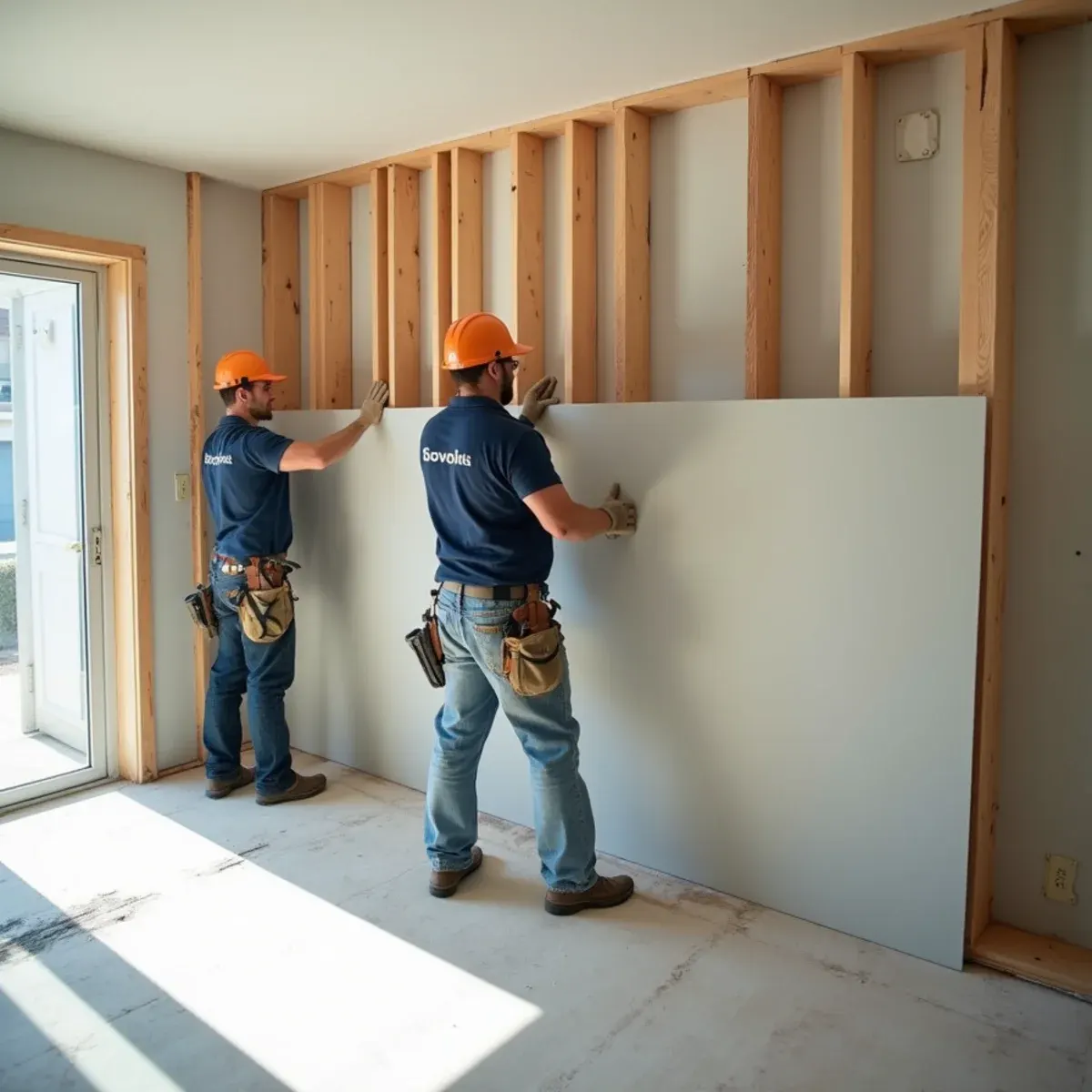
The copper under a Placentia slab gives up quietly. A pinhole in a hot line off Kraemer or the Morse Avenue tracts warms a section of floor, the water bill climbs, and by the time anyone opens the concrete the moisture has already traveled under the slab and up into the bottom plate of two walls. The plumber's part is a day. The part that takes longer is the concrete patch, the framing at the base of those walls, the flooring, the cabinet toe kicks and the paint.
Placentia was built out of the Valencia orange groves between the mid-fifties and the late seventies, and the tracts are uniform enough that failures cluster. When one house on the street loses a slab line, the neighbors' copper is the same age and the same gauge. That uniformity helps the rebuild too: floor plans repeat, so we already know where a flooring run will want to continue and where a wall can honestly stop. Old Town Placentia, near Bradford House, is the exception — older, mixed, and scoped house by house.
What Placentia Changes About Repair & Reconstruction
1Continuous flooring and the adjuster's line
Most of these tracts run one flooring material from the entry through the hall and into the living room with no threshold. When a slab leak wets part of that run, replacing only the wet portion leaves a visible seam in the middle of a continuous floor. That's a documented argument, not an opinion, and we photograph the transitions and grade the match so the adjuster can see what a partial repair would actually look like.
2Cutting and patching a 1960s slab
Reconstruction after a slab repair starts with the concrete. The trench gets backfilled and compacted properly, the patch is poured level with the surrounding slab, and it has to cure and dry before any flooring adhesive touches it. Rushing that step is the single most common cause of a floor that fails twice. On post-tension slabs we confirm the plumber's cut locations before we close anything up.
3One tract, one texture, one paint era
The wall texture across most of Placentia's tract housing is a light knockdown or orange peel applied by the same crews in the same decade. It's repeatable, which is good news — a skilled hand can blend a patch into it without redoing a full wall. Where it fails is the paint: forty years of sun through west-facing windows shifts color enough that we usually recommend painting to the nearest corner.
How the Work Runs
The method is the same one we use on every repair & reconstruction job, documented to the IICRC S500:2025 standard. Here it is in short — the full water damage repair & reconstruction process explains each stage in detail.
- Scope and estimate while mitigation finishes
- Agree the scope with you and the carrier
- Material selection
- Rough work and inspections
- Finishes
- Walkthrough and warranty
The Placentia Background Worth Knowing
Copper under a slab fails in two directions at once. From the inside, decades of water flow erode thin spots at bends and fittings, especially on the hot side where the metal runs warmer and the water moves faster. From the outside, soil chemistry and stray current attack the pipe wall. Either way the result is a pinhole rather than a burst, which is precisely why these losses are so expensive by the time we see them. A pinhole under concrete can run for months, soaking the sub-base, wicking up into the slab, and surfacing at the edge of the carpet as a stain nobody can explain.
There is more on the housing stock, drainage and plumbing history of this city on our water damage restoration in Placentia page.
Placentia at a glance
- Dominant construction era
- 1955–1980
- Foundation type
- slab on grade
- Supply piping found here
- under-slab copper, galvanized steel
- Drain line materials
- cast iron
- Terrain and water table
- flat, moderate water table
- Most common local failure
- under-slab copper reaching the end of its service life across whole tracts at once
- Highest-value local prevention
- the annual water-meter test, and treating a neighbor's slab leak as information
What It Costs in Placentia
We do not quote a number over the phone before seeing the property — anyone who does is guessing. The variables that actually move the price on a repair & reconstruction job are how much came out during mitigation, finish level and material availability, texture and finish matching difficulty, and they are broken down in full on the water damage repair & reconstruction page. The assessment and the written estimate are free anywhere in Placentia, day or night, with no obligation.
Repair & Reconstruction Questions from Placentia Homeowners
Probably a similar one, yes. These tracts went up in the same few years with the same under-slab copper, so when one house fails the others on the street are running on the same clock. What differs is the rebuild. If your leak is under a bedroom on carpet, the repair is small. If it's under the kitchen or a continuous tile run through the hall, the reconstruction is the expensive half, and it's worth knowing that before you choose between a spot repair and a repipe.
Both, under one contract. The same team that documented and dried your loss handles the rebuild — drywall, texture, flooring, cabinetry, trim, and paint — so you are not managing multiple contractors or explaining the scope twice.
A single-room repair is typically one to two weeks after drying finishes. Kitchen or multi-room rebuilds run three to six weeks, and jobs requiring permits and inspections take longer because of the inspection windows. You get a written schedule before work starts.
Worried is the wrong word, but you should start paying attention. These tracts were built in tight windows with the same copper at the same depth in the same soil, so failures cluster on a street rather than scattering randomly. Treat a neighbor's slab leak as a service bulletin for your own house. Run the meter test, listen for the water heater cycling at odd hours, and check the hallway and bedroom floors for warm or damp patches every so often.