
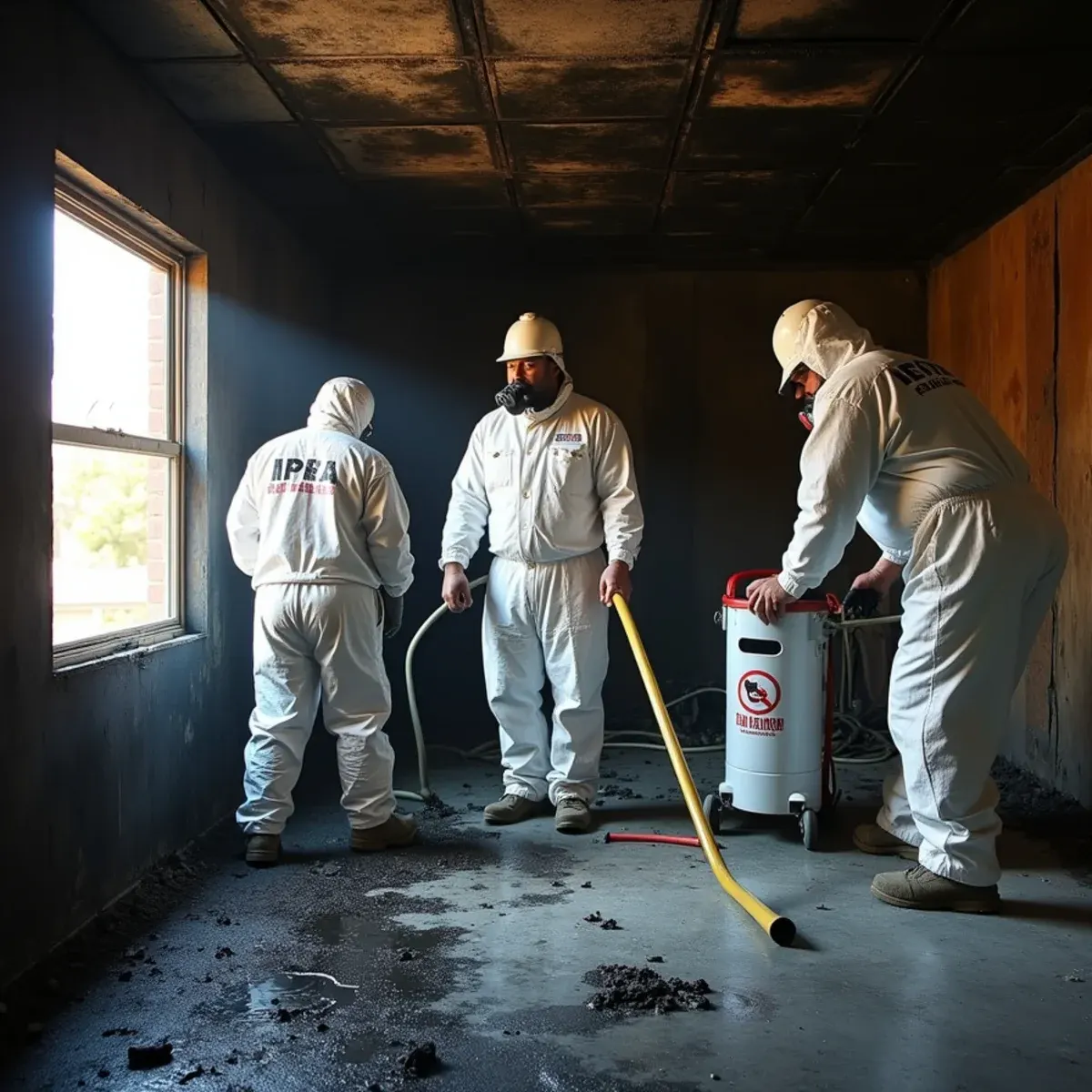
Most of the fire calls we take in Yorba Linda come from houses that never burned. When a wind-driven fire runs the hills the way the Freeway Complex Fire did in 2008 through the north and east of the city, the structures that survive are still full of smoke and fine ash. It enters through attic and soffit vents, through whole-house fans, and through the outside air intake on the HVAC. From the street the house looks untouched. The attic insulation and the duct system are a different story.
The rest of it is hillside geometry. Yorba Linda is newer than almost anywhere else we serve and built into engineered slopes with retaining walls, terrace drains and heavy irrigation rather than onto a flat plain. In East Lake Village, Bryant Ranch and Vista del Verde, suppression water and hydrant flow do not pond. They run downhill and arrive at the house below with velocity. We have dried lower-level rooms in homes two lots away from the structure that actually caught fire, for owners who had no idea they were affected.
What Yorba Linda Changes About Fire & Smoke Damage
1Wildfire ash is not kitchen soot
Vegetation ash mixed with burned structures is alkaline and abrasive, and it carries different contaminants than a grease fire. Wiping it with a damp cloth grinds it into finishes and can etch glass and metal. It also loads HVAC filters and settles in duct runs where the system redistributes it every cycle. Cleaning has to start with the mechanical system or you will be dusting the same rooms all season.
2Attics and ducts before living space
Blown insulation traps ash and odor, and no amount of surface cleaning below fixes that. We inspect the attic, the return plenum and accessible duct runs first, then work down. On the larger Yorba Linda floor plans with two or three HVAC zones, one contaminated system can recontaminate rooms we already finished, so zones get isolated before anyone starts cleaning.
3Runoff reaches you from uphill
Terrace drains and v-ditches on these slopes are engineered to move water fast, and they do not distinguish between rain and fire flow. A hose line running for an hour uphill sends water across pads and against foundations below. If a neighbor above you had a fire and your lower level took on water, that is a documentable loss even though your house never saw flame.
How the Work Runs
The method is the same one we use on every fire & smoke damage job, documented to the IICRC S500:2025 standard. Here it is in short — the full fire & smoke damage restoration process explains each stage in detail.
- Secure the structure
- Water extraction and drying first
- Assess residue type room by room
- Remove non-salvageable material and clean the rest
- Deodorize at the source
- Contents restoration and rebuild
The Yorba Linda Background Worth Knowing
A hillside lot in Yorba Linda is a drainage system with a house attached. Terrace drains cut across the face of the slope to intercept water before it gains speed. Brow ditches run along the top to keep runoff from ever reaching the slope face. Down-drains carry the collected water to the street or a storm connection. Retaining walls have weep holes and, behind them, a gravel subdrain that relieves pressure on the wall. Every one of those was engineered as part of the pad. Every one of them silts up, roots over, or gets buried by landscaping.
There is more on the housing stock, drainage and plumbing history of this city on our water damage restoration in Yorba Linda page.
Yorba Linda at a glance
- Dominant construction era
- 1970–2005
- Foundation type
- slab on grade
- Supply piping found here
- under-slab copper, later PEX and CPVC
- Drain line materials
- ABS, cast iron
- Terrain and water table
- hillside-mixed, deep water table
- Most common local failure
- exterior water from failed slope drainage, terrace drains and retaining-wall systems rather than from plumbing
- Highest-value local prevention
- clearing terrace and slope drains before the season, since a blocked one turns an engineered hillside into a funnel
What It Costs in Yorba Linda
We do not quote a number over the phone before seeing the property — anyone who does is guessing. The variables that actually move the price on a fire & smoke damage job are extent of structural burn, how far the smoke traveled, residue type, and they are broken down in full on the fire & smoke damage restoration page. The assessment and the written estimate are free anywhere in Yorba Linda, day or night, with no obligation.
Fire & Smoke Damage Questions from Yorba Linda Homeowners
Yes, and it is a large share of what we do here. Smoke and ash intrusion without fire damage is a real, insurable loss when residue is present. We assess the attic, the HVAC system, soft contents and surfaces, and we tell you honestly if the odor is transient outdoor air rather than deposited residue. Where residue is there, cleaning it out of the insulation and ductwork is what actually ends the smell, not fogging the living room.
Fire suppression uses enormous volumes of water in a short time — often thousands of gallons. That water saturates ceilings, insulation, walls, and floors well beyond the burned area, and it has to be extracted and dried like any other water loss, on top of the fire work.
Yes, when the residue is removed completely — including inside wall cavities, ductwork, attic insulation, and behind cabinetry. Odor that returns later always means residue was left somewhere. Masking agents and ozone alone do not solve it.
Seeping from the weep holes is usually the wall doing its job, relieving water pressure from the soil behind it. The concerning version is the opposite: weep holes that stay dry through a storm while the ground above stays soggy, which suggests the subdrain behind the wall is plugged and pressure is building. Also watch for new cracking, bulging, or a wall that has tipped slightly. Those are engineering questions rather than restoration ones, and we will say so.