
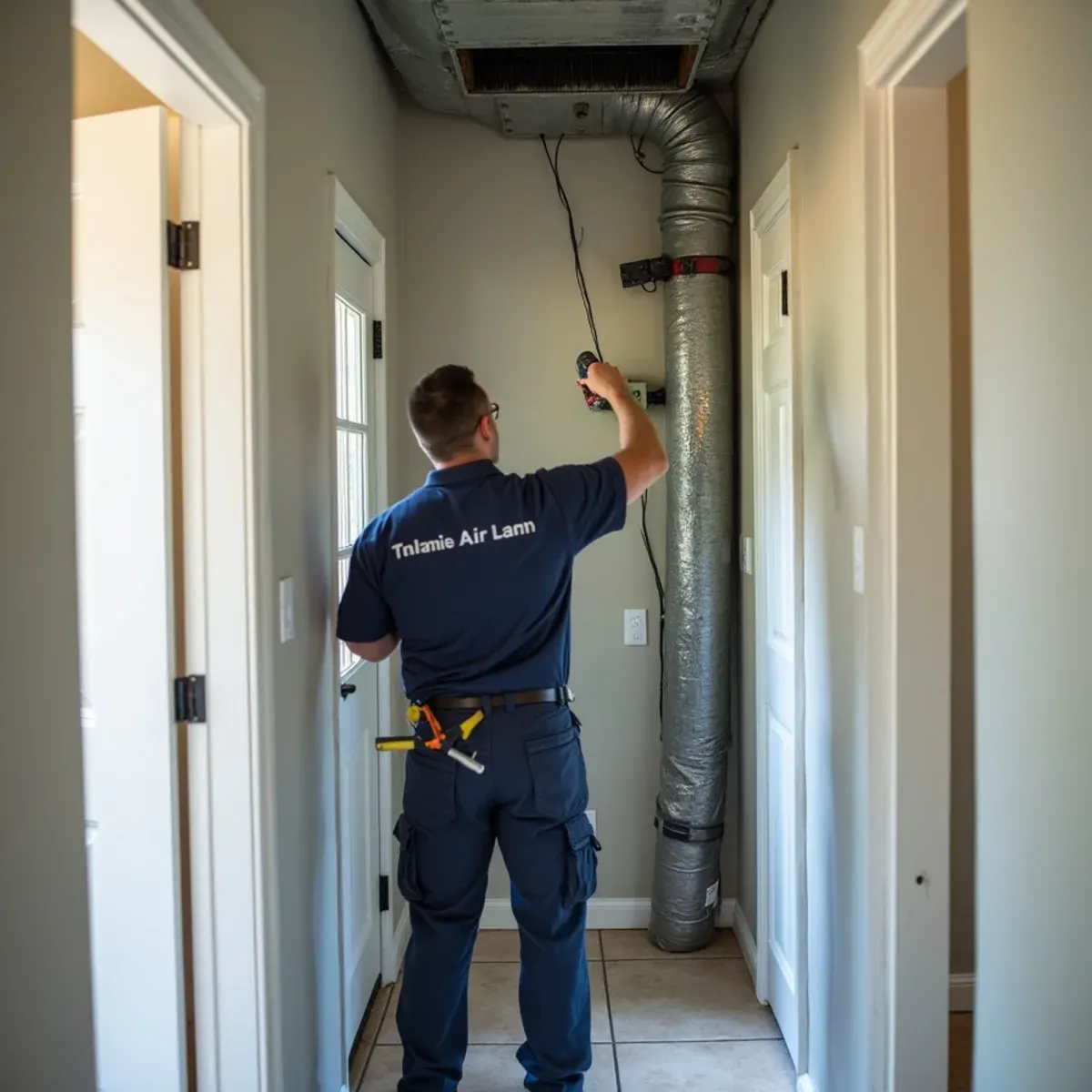
The call usually comes after the repairs are done. Drywall replaced, flooring back in, and three weeks later the house smells again every time the air kicks on. La Habra sits on gently rolling ground at the head of the Coyote Creek watershed — the same creek that runs past our Katella Avenue shop down in Cypress — and its 1950 to 1980 slab homes take water two ways: under-slab copper giving out after decades, and added hardscape steering storm water back at the foundation.
Both routes end in the same place. Most houses here have the air handler in the garage or a garage-adjacent closet, with the supply plenum turning up into the attic from there. A garage that took exterior water, or a slab leak on that side of the house, is sitting directly at the intake for the entire building. That's why we open the filter cabinet, the blower wheel and the first ten feet of supply before discussing anything else — that's where the odor is being manufactured and recirculated.
What La Habra Changes About Air Ducts & HVAC
1Garage air handlers sit at the intake
A garage floor that took water, then dried on its own, still leaves a damp slab edge and wet drywall bottoms right beside the equipment. Every cycle pulls that air across the filter and coil and pushes it into bedrooms. We meter the garage wall base and slab, not just the living space, because on La Habra floor plans that's the room deciding what the rest of the house breathes.
2Hardscape that redirects water to the foundation
Decades of added patios, raised planters and block walls on rolling ground have reversed drainage on a lot of these lots. Water reaches the slab edge, wicks into wall base and pad, and the return does the rest. Fixing the duct without identifying the intrusion path just buys you a few months, so we document where the water is entering as part of the assessment.
3Slab-leak humidity with nothing visible
Under-slab copper failures here often present as elevated indoor humidity and a musty note rather than standing water. That vapor moves into the return and condenses on the coil and in attic flex above the hallway. Comparing humidity at the return grille against the supply registers is a quick, cheap way to confirm it before anyone opens a ceiling.
How the Work Runs
The method is the same one we use on every air ducts & hvac job, documented to the IICRC S500:2025 standard. Here it is in short — the full air duct cleaning & hvac restoration process explains each stage in detail.
- Inspect before we quote
- Contain and seal the system
- Clean or replace the ducting
- Clean the air handler and coil
- Replace filters and treat surfaces
- Seal, balance, and verify
The La Habra Background Worth Knowing
Copper is good pipe. What it is not is immortal, and the way it went in during this era shortened its life. Soft copper tubing was laid in the sand under the slab before the pour, sometimes in direct contact with aggregate, often with tight bends that thinned the wall on the outside of the curve. Add fifty to seventy years of water moving through the inside and soil chemistry working on the outside, and it develops pinholes. The hot line almost always goes first, because heat accelerates every part of that process.
There is more on the housing stock, drainage and plumbing history of this city on our water damage restoration in La Habra page.
La Habra at a glance
- Dominant construction era
- 1950–1980
- Foundation type
- slab on grade
- Supply piping found here
- under-slab copper, galvanized steel
- Drain line materials
- cast iron
- Terrain and water table
- rolling, moderate water table
- Most common local failure
- under-slab copper failures in 1960s tract housing, plus drainage that decades of added hardscape has redirected
- Highest-value local prevention
- watching where water actually runs during the first storm, because the ground here is not flat
What It Costs in La Habra
We do not quote a number over the phone before seeing the property — anyone who does is guessing. The variables that actually move the price on a air ducts & hvac job are cleaning versus replacing flex duct, number of supply runs and returns, what kind of contamination it is, and they are broken down in full on the air duct cleaning & hvac restoration page. The assessment and the written estimate are free anywhere in La Habra, day or night, with no obligation.
Air Ducts & HVAC Questions from La Habra Homeowners
Because the system is the delivery mechanism, not the source. In most La Habra houses the air handler sits in or beside the garage, drawing through a return at floor level. When the blower starts, it pulls air off whatever is still damp — a garage wall base, a slab edge, insulation around a slab leak — and pushes it through the ducts to every register at once. That's why the smell appears on a cycle rather than constantly.
Fair question, and often it is an upsell. The honest answer depends on whether contamination actually reached the system. If the HVAC ran during the loss or the demolition, if water got into the attic where the ducting lives, or if the loss involved sewage or fire, the system is in scope. If none of that happened, it probably is not. We run a camera and show you before you decide anything.
It depends on where the moisture is. If the inner liner got damp and the fiberglass behind it stayed dry, cleaning and drying the run works. If water got through a torn jacket into the insulation, that fiberglass is porous, it holds moisture and growth, and there is no reliable way to clean it or verify it is clean. Those runs get replaced. We show you which is which rather than guessing on your behalf.
Do a meter test. Shut off every fixture and the irrigation, note the leak indicator, and check it again a few hours later with nobody using water. If it moved, something is losing water. In 1960s La Habra tract homes that is most often the hot line under the slab, and the giveaway is a warm patch of floor or the sound of water running behind a closed system.