
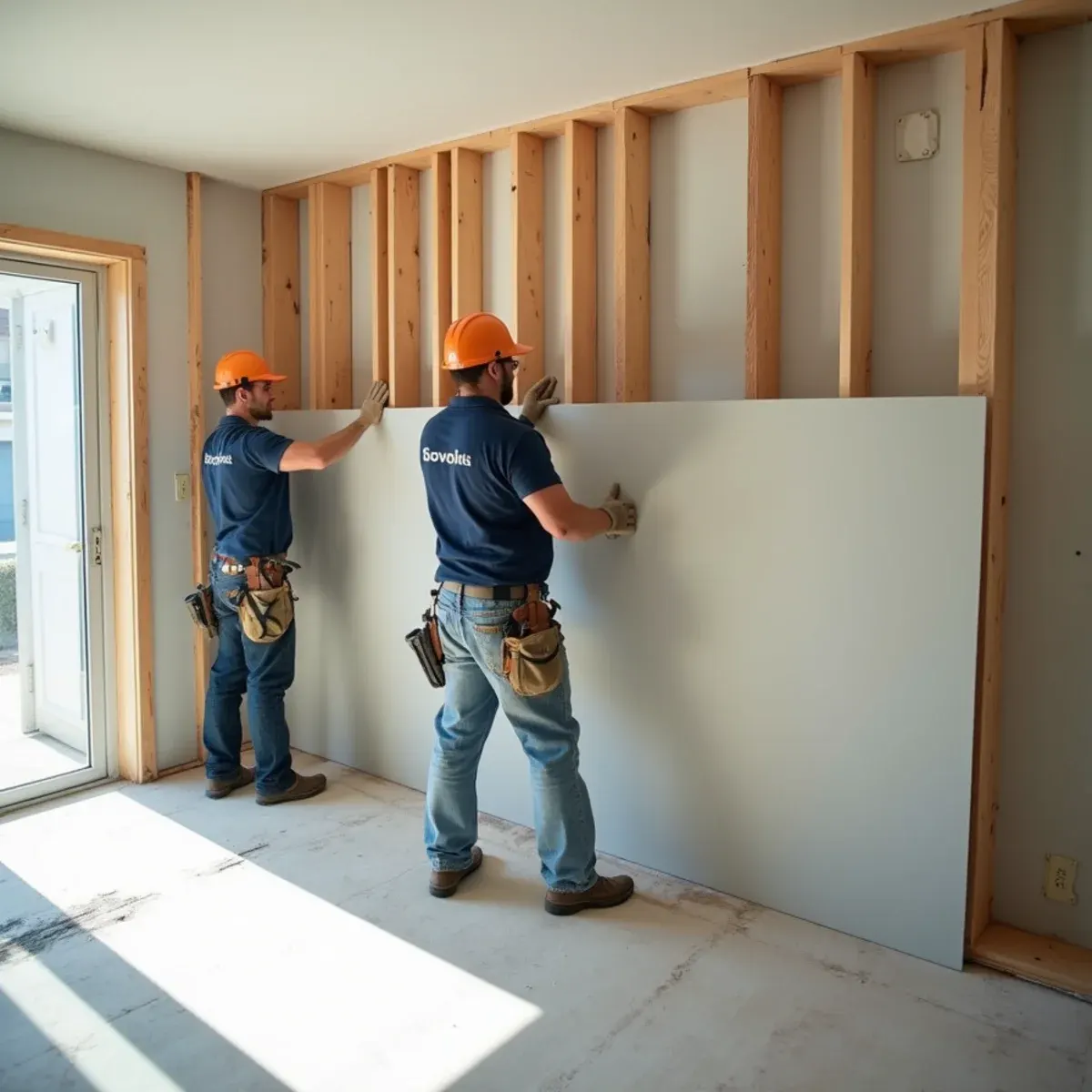
A line breaks over a weekend in a Paramount Boulevard building and by Monday two things are wet: a shop floor with product on it, and the wall of the house on the other side of the property line. That mix is normal here. Paramount was assembled from the old Hynes and Clearwater dairy communities and built out with housing packed tightly between industrial corridors, so a single loss often touches a residence and a business at once. The two need different scopes, different schedules and usually different policies.
The residential side is compact postwar housing on small lots with very little permeable ground — driveway, patio slab, walkway, and a strip of dirt. When a storm loads those lots faster than the area drains can carry it, water comes in at the door threshold rather than through a pipe, and the rebuild starts with flooring, base and the bottom of the drywall. Original galvanized supply and cast-iron drains from the forties and fifties account for most of the rest. The Los Angeles River channel runs the western edge.
What Paramount Changes About Repair & Reconstruction
1Commercial rebuilds priced in downtime
For a manufacturer or distributor on Rosecrans or Somerset, the cost that matters isn't drywall — it's the days a line or a bay is out. We scope commercial reconstruction in phases, work nights where the building allows it, and put temporary partitions and floor protection in so the unaffected half keeps running. That gets written into the estimate, not improvised on site.
2Storm-water entry at the threshold
Water that comes in across a threshold picks up whatever was on the driveway and the street, which changes the category and therefore the scope. Carpet and pad come out. Base and the lower drywall come out. We also look at the area drains and hardscape that let it happen, because on a lot with almost no permeable ground the same rain will do the same thing next year.
3Two building types, two sets of rules
A house gets residential permits and residential finishes. A tilt-up or a metal building gets commercial requirements — fire-rated assemblies, sprinkler coverage, accessibility triggers when you touch certain areas. We keep those separate in the estimate so a homeowner isn't reading commercial line items and a business owner isn't getting residential-grade material in a warehouse office.
How the Work Runs
The method is the same one we use on every repair & reconstruction job, documented to the IICRC S500:2025 standard. Here it is in short — the full water damage repair & reconstruction process explains each stage in detail.
- Scope and estimate while mitigation finishes
- Agree the scope with you and the carrier
- Material selection
- Rough work and inspections
- Finishes
- Walkthrough and warranty
The Paramount Background Worth Knowing
On a typical Paramount lot, the house, the driveway, the walkways and the rear slab cover most of the parcel. What is left is a narrow side yard, and everything that lands on the roof and the paving is supposed to leave through a couple of small area drains. That system has no margin. When a grate silts up, when a downspout dumps straight onto paving, or when the outlet at the curb has been crushed by a parked truck, the water has no soil to soak into and nowhere else to be. It ponds against the slab edge and comes in at the lowest threshold, which is usually a garage or a side door.
There is more on the housing stock, drainage and plumbing history of this city on our water damage restoration in Paramount page.
Paramount at a glance
- Dominant construction era
- 1945–1965
- Foundation type
- slab on grade
- Supply piping found here
- original galvanized steel, copper
- Drain line materials
- cast iron
- Terrain and water table
- flat, moderate water table
- Most common local failure
- residential and commercial losses on the same block, needing very different handling
- Highest-value local prevention
- clearing area drains before the season on lots with very little permeable ground
What It Costs in Paramount
We do not quote a number over the phone before seeing the property — anyone who does is guessing. The variables that actually move the price on a repair & reconstruction job are how much came out during mitigation, finish level and material availability, texture and finish matching difficulty, and they are broken down in full on the water damage repair & reconstruction page. The assessment and the written estimate are free anywhere in Paramount, day or night, with no obligation.
Repair & Reconstruction Questions from Paramount Homeowners
Usually two, and sometimes two different carriers. A commercial policy covers the building and business property, a renters or dwelling policy covers the residential side, and each adjuster wants their own documented scope. We write them separately from the start — separate photo sets, separate moisture logs, separate estimates — while running the actual work as one job with one crew. That keeps the reconstruction efficient without giving either adjuster a reason to send the file back.
Both, under one contract. The same team that documented and dried your loss handles the rebuild — drywall, texture, flooring, cabinetry, trim, and paint — so you are not managing multiple contractors or explaining the scope twice.
A single-room repair is typically one to two weeks after drying finishes. Kitchen or multi-room rebuilds run three to six weeks, and jobs requiring permits and inspections take longer because of the inspection windows. You get a written schedule before work starts.
Almost certainly your area drains. Paramount lots have very little permeable ground, so everything that falls on the roof and the paving has to leave through a couple of small drains. If a grate silts up or the outlet is crushed, the water ponds against the slab and enters at the lowest threshold, which is usually the garage. Rodding the drains and checking the outlet before the season costs far less than drying the garage wall afterward.