
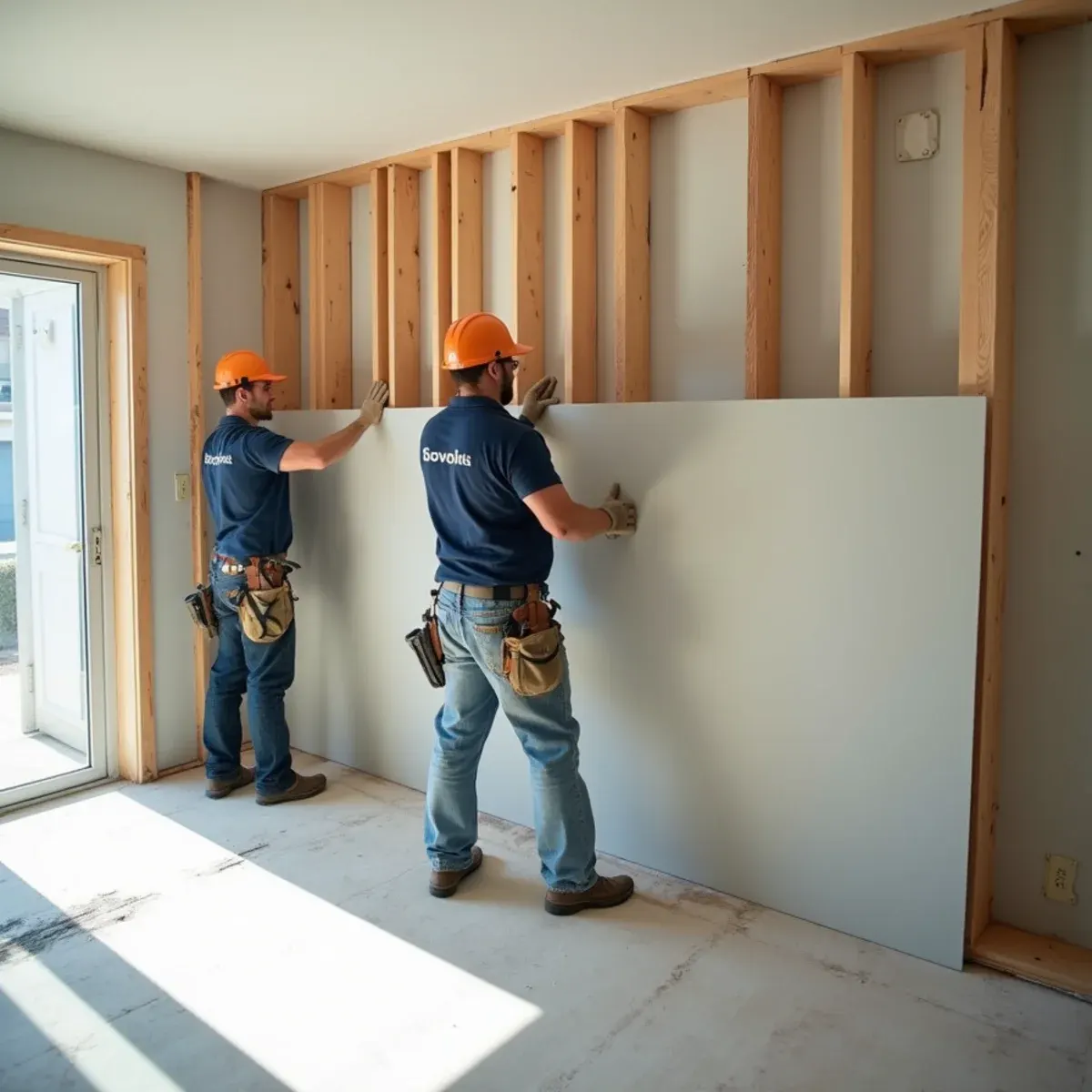
The marine layer is a factor in every Costa Mesa rebuild, and it shows up in the finish work more than anywhere else. Joint compound takes longer to release its water. Paint stays open longer and flashes differently. Wood flooring needs a real acclimation period rather than a token two days, because the moisture content it reaches sitting in an Eastside cottage two miles from the beach is not the moisture content it left the warehouse with. Rushing any of that produces cracked joints and cupped boards a month after we leave.
The stock is three different problems. Eastside cottages from the twenties through the forties sit on raised foundations under a heavy canopy, and a crawl-space leak there means joists, subfloor and often the bottom of a plaster wall before any finish goes back. The Westside mixes housing with light industrial, so the rebuild sometimes involves commercial framing and concrete. Mesa Verde is 1960s slab tract with continuous flooring runs. Add a shallow water table near the Santa Ana River and the crawl spaces stay damp longer than anyone expects.
What Costa Mesa Changes About Repair & Reconstruction
1Acclimation and cure times need real days
We build humidity into the calendar instead of pretending it isn't there. Flooring sits in the space with a meter on it until its moisture content settles. Compound gets the time it needs between coats. Paint goes on when the substrate and the air allow, sometimes with the drying equipment still running to hold conditions. It adds days. It also prevents the callback.
2Eastside crawl spaces and the structure above
Under a 1930s Eastside cottage the framing sits close to bare dirt with limited clearance and vents that have often been blocked by decades of landscaping. Reconstruction there means replacing or sistering wet joists, new sheathing, new insulation, and confirming the ground and the vents will let the space stay dry. We don't lay finished floor over a crawl space that's still giving off moisture.
3Small cottages leave nowhere to work
An Eastside cottage might be 900 square feet with one bathroom. Losing the kitchen or the only bath to reconstruction means you can't stay, and that's a conversation to have on day one, not week two. We sequence those jobs tight — one trade behind the next, materials staged before demolition — so the displacement window is as short as the work honestly allows.
How the Work Runs
The method is the same one we use on every repair & reconstruction job, documented to the IICRC S500:2025 standard. Here it is in short — the full water damage repair & reconstruction process explains each stage in detail.
- Scope and estimate while mitigation finishes
- Agree the scope with you and the carrier
- Material selection
- Rough work and inspections
- Finishes
- Walkthrough and warranty
The Costa Mesa Background Worth Knowing
Under a raised Eastside cottage there is bare soil, and that soil is supposed to stay dry because the foundation vents exchange air with the outside. That system depends on the outside air being drier than the space under the house. For a good part of the year in Costa Mesa it is not. The marine layer holds humidity high through the night and well into the morning, so the crawl space never gets the dry stretch it needs, and moisture that arrives from a plumbing drip, a downspout, or an irrigation line just accumulates.
There is more on the housing stock, drainage and plumbing history of this city on our water damage restoration in Costa Mesa page.
Costa Mesa at a glance
- Dominant construction era
- 1920–1980
- Foundation type
- mixed on grade
- Supply piping found here
- original 1920s–1940s piping on the Eastside, galvanized steel, under-slab copper
- Drain line materials
- cast iron, clay
- Terrain and water table
- coastal-flat, shallow water table
- Most common local failure
- crawl-space moisture under Eastside cottages, held in by a marine layer that slows every natural drying process
- Highest-value local prevention
- confirming crawl-space vents are actually open and that the ground under the house is dry
What It Costs in Costa Mesa
We do not quote a number over the phone before seeing the property — anyone who does is guessing. The variables that actually move the price on a repair & reconstruction job are how much came out during mitigation, finish level and material availability, texture and finish matching difficulty, and they are broken down in full on the water damage repair & reconstruction page. The assessment and the written estimate are free anywhere in Costa Mesa, day or night, with no obligation.
Repair & Reconstruction Questions from Costa Mesa Homeowners
That's almost always moisture the floor met after installation, and near the coast it comes from two directions. Below, a crawl space or slab still releasing water. Around it, marine air that keeps indoor humidity higher than the manufacturer assumed. We verify the substrate is at dry standard, keep the flooring in the room with a meter until its moisture content stabilizes, and set the expansion gaps for the conditions this house actually sees rather than a spec sheet average.
Both, under one contract. The same team that documented and dried your loss handles the rebuild — drywall, texture, flooring, cabinetry, trim, and paint — so you are not managing multiple contractors or explaining the scope twice.
A single-room repair is typically one to two weeks after drying finishes. Kitchen or multi-room rebuilds run three to six weeks, and jobs requiring permits and inspections take longer because of the inspection windows. You get a written schedule before work starts.
Almost always the crawl space. On these raised 1920s to 1940s houses the soil under the floor stays damp when the foundation vents are blocked and the marine layer keeps outside air humid overnight. That moisture moves up through the subfloor and into the rooms above it. Before assuming anything, walk your perimeter and see whether a planter, a poured patio or landscaping has covered the vents that are supposed to be breathing.